Quranic Answer
Death is one of the most profound realities of life that Affects all individuals, irrespective of age, gender, or social status. It is an inevitable part of the human experience that brings with it a complex array of emotions—grief, sorrow, and sometimes even relief. The subject of death has been explored in many cultures, philosophies, and religions throughout history. Among them, the teachings of the Holy Quran provide a unique perspective that can be particularly comforting for believers. The verses regarding death and resurrection within the Quran serve as a guide for those grappling with the loss of loved ones and searching for a way to cope with this devastating reality. One of the verses that stands out is from Surah Al-Baqarah, verse 155. It states, "And We will surely test you with something of fear and hunger and a loss of wealth and lives and fruits; but give good tidings to the patient." This verse emphasizes that trials and tribulations—including the loss of loved ones—are part of God's divine plan. The phrase "test you" signifies that losing someone dear is a trial meant to shape a person’s character and strengthen faith. It reminds believers that suffering is not arbitrary but rather a test of one’s patience and resilience. Patience is indeed highlighted as a crucial attribute in navigating through the heart-wrenching pain caused by loss. The Quranic perspective encourages individuals to find solace in believing that these hardships carry a purpose. Accepting that loss is part of life allows us to focus on the positive memories of our deceased loved ones rather than solely dwelling on the grief of their absence. Understanding that God Almighty tests us in various ways, and encouraging one another to endure these trials is essential in fostering a supportive community. Furthermore, in Surah Al-Mu'minun (verse 99), the Quran states: "Until, when death comes to one of them, he says, 'My Lord, send me back.'" This moment of longing for another chance at life illustrates a fundamental human trait: the desire for more time with those we love and the yearning to rectify past mistakes. This verse serves as a poignant reminder that the inevitability of death compels us to reflect on the quality of our lives and relationships. While the desire to return may be universal, it reminds us to cherish the moments we have with our loved ones while we are still able to do so. From a broader perspective, it can be inferred that the death of loved ones is a natural progression in the cycle of life. Accepting this fact can be incredibly liberating. It allows individuals to understand that they are not alone in their mourning, and that death is a common experience shared by humanity. Therefore, the response to death should not be one of despair, but rather a call to cultivate patience and strength through one's faith. Engaging in prayers and maintaining faith in an afterlife can significantly alleviate the pain associated with loss. For many believers, the hope of an eternal life after death provides comfort and support during difficult times. These beliefs can act as a balm for the heart, reminding individuals that the separation from their loved ones is temporary, and that they will be reunited in the hereafter. Such thoughts provide solace to those grappling with profound grief. Moreover, it is essential to remember that expressing love and remembrance for the deceased is crucial in the healing process. Acts such as participating in memorials and burials are not merely societal rituals but meaningful opportunities to honor the memory of those we have lost. These moments create a space where family and friends can come together to pay tribute and celebrate the life of the departed. Additionally, performing good deeds in memory of the deceased can serve as a way to keep their spirit alive while also extending their impact on the world. Such actions not only show the continued connection to those who have passed away but also establish a legacy of love and compassion. Acts of charity, kindness, or even just sharing stories and fond memories of the departed can keep their memory vibrant and meaningful. Gathering with family and friends plays a crucial role in easing the pain of loss. During times of mourning, the support of a community can create a cushion against despair. Sharing stories, reminiscing about happy moments, and finding comfort in collective grief can strengthen bonds among those who are left behind. The healing begins when individuals lean on each other, recognizing that they share a collective journey of navigating grief and loss. In the face of death, it is important to recognize one's emotions and to allow oneself to grieve. Suppressing feelings can lead to deeper emotional turmoil, and fostering an environment where individuals feel free to express sorrow is vital. Counseling, support groups, or even simple conversations with trusted friends can help individuals process their emotions and move toward healing. In conclusion, while death is an unavoidable truth of life, the teachings of the Holy Quran offer profound insights into the nature of loss and the process of grieving. Patience, faith, and the beauty of shared memories are invaluable in coping with tragedy. It reinforces the belief that death is not an end, but rather a transition, urging individuals to engage in acts of remembrance, love, and kindness. By focusing on support systems, engaging in meaningful rituals, and holding onto faith, one can navigate the stormy seas of grief and emerge with a deeper appreciation for life itself. In this way, even in the face of such profound loss, there is an opportunity to find purpose and healing.
Related Verses
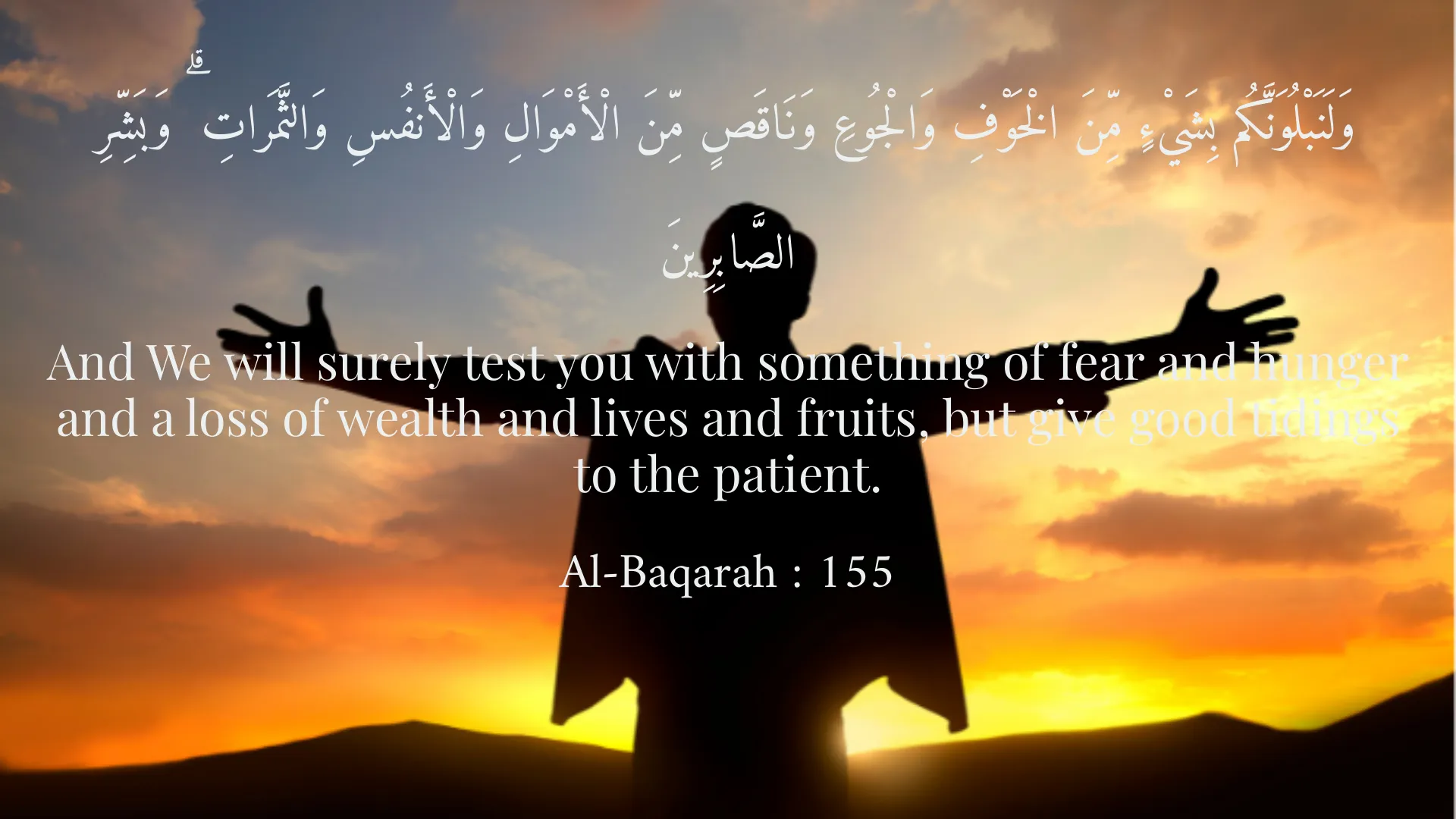
وَلَنَبْلُوَنَّكُم بِشَيْءٍ مِّنَ الْخَوْفِ وَالْجُوعِ وَنَاقَصٍ مِّنَ الْأَمْوَالِ وَالْأَنفُسِ وَالثَّمَراتِ ۗ وَبَشِّرِ الصَّابِرِينَ
And We will surely test you with something of fear and hunger and a loss of wealth and lives and fruits, but give good tidings to the patient.
Al-Baqarah : 155
حَتَّى إِذَا جَآءَ أَحَدَهُمُ الْمَوْتُ قَالَ رَبِّ ارْجِعُونِ
Until, when death comes to one of them, he says, 'My Lord, send me back.'
Al-Mu'minun : 99
Short Story
One day, a young man named Ali faced the death of his father. He was very sad and troubled and did not know how to cope with this pain. A friend told him to turn to the verses of the Quran and prayer, and to do good in memory of his father. After a while, Ali decided to keep his father’s memory alive by helping the needy and holding memorial ceremonies. From that day on, he felt a greater sense of peace, knowing that his father would always live in his heart.