Quranic Answer
The concept of gratitude is a central theme in Islamic teachings, profoundly emphasized in the Holy Quran. God repeatedly highlights His innumerable blessings and invites all of humanity to express gratitude for these divine gifts. These blessings encompass everything from the simple joys of life to the more complex aspects of existence, such as wealth, health, family, and intellect. Throughout the Quran, it is abundantly clear that the correct utilization of these blessings should always be accompanied by gratitude and obedience to God's commands. One of the most significant verses that elucidate the importance of gratitude is found in Surah Ibrahim (14:7), where it states: "And when your Lord proclaimed: If you give thanks, I will surely increase your favor upon you, but if you deny, indeed, My punishment is severe." This profound verse underscores a pivotal message: being thankful for the gifts bestowed upon us by Allah not only draws us closer to His pleasure but also serves as a means through which one can receive even greater blessings. The reciprocal relationship between gratitude and abundance implies that those who acknowledge and appreciate their blessings will find themselves in a continual state of receiving more from the benevolent Creator. Gratitude, as outlined in the Quran, is not a passive state but rather an active practice that requires awareness and reflection. The correct utilization of divine blessings involves understanding their true value, making proper use of them, and sharing them with others in a responsible manner. For example, one who possesses wealth is commanded to use it to assist others and engage in charitable deeds. This reflects a fundamental Islamic principle: the importance of community and the need to uplift those who may be less fortunate. Wealth should not be hoarded or squandered but used as a tool for social justice and empowerment. In conjunction with this, Surah Al-An'am (6:152) further elaborates on the responsible management of wealth and other blessings, stating: "And do not approach the orphan's property except in a way that is best." This verse serves as a crucial reminder of the ethical considerations that accompany the use of divine gifts. The Quran calls for Muslims to be just and fair in their dealings, particularly with the vulnerable members of society. Thus, a fundamental aspect of gratitude is the responsibility to protect and nurture the rights of others, especially those of orphans and the needy. Moreover, gratitude extends beyond material blessings; it encompasses an appreciation for intangible blessings as well. Health, knowledge, and time are all gifts that require recognition and mindfulness. For instance, a person in good health should not take their physical well-being for granted but instead utilize that health to better themselves and serve others. In the same vein, knowledge is a divine blessing that comes with the obligation to impart it and utilize it for the benefit of humanity. The act of expressing gratitude is not merely a personal endeavor but a communal one as well. The Quran establishes a connection between individual and collective accountability. When individuals express gratitude, it fosters a culture of appreciation and responsibility within society, wherein altruism and social harmony become prevalent. Conversely, ingratitude not only leads to a personal disconnection from God's mercy but can also create discord within communities. In the teachings of Islam, gratitude is also a means for spiritual elevation. Engaging in regular practices of remembrance (Dhikr) and prayer (Salah) facilitates a deeper connection with Allah and reinforces an individual’s sense of gratitude. Acknowledging every small and large blessing through prayer cultivates a continual awareness of God's mercy and bounty. When one turns to God in supplication, recognizing His favors and seeking His guidance, it solidifies the foundation of a grateful heart. In practical terms, manifestations of gratitude can take many forms, including prayer, charitable acts, and simply acknowledging the blessings in one's life. The practice of giving thanks does not need to be grandiose; even the smallest acts of kindness can reflect gratitude for the blessings received. Daily reflections, journaling one's blessings, and offering support to others are all ways to cultivate and express this invaluable virtue. Furthermore, it is essential to recognize that true gratitude is not only about acknowledgment but also about action. The Quran repeatedly calls upon believers to embody their gratitude through their actions. This includes acts of worship, fulfilling obligations towards others, and taking care of the environment, as all are interconnected forms of expressing thanks for God's countless blessings. When individuals align their actions with their expressions of gratitude, their faith is strengthened, and their sense of purpose clarified. In conclusion, the teachings of the Holy Quran provide a comprehensive framework for understanding and practicing gratitude. God's blessings are abundant, and recognizing these gifts is a critical part of a believer’s relationship with their Creator. As outlined in Surah Ibrahim and Surah Al-An'am, gratitude must be paired with responsible management, ethical treatment of others, and an active engagement in community welfare. The blessings bestowed upon individuals serve not only as gifts for personal enjoyment but also as communal resources for the upliftment of society. In practicing gratitude, one draws closer to God and finds increased favor and abundance in their life. It is therefore imperative for Muslims to embrace a lifestyle steeped in gratitude — one that acknowledges and utilizes their blessings for the greater good.
Related Verses
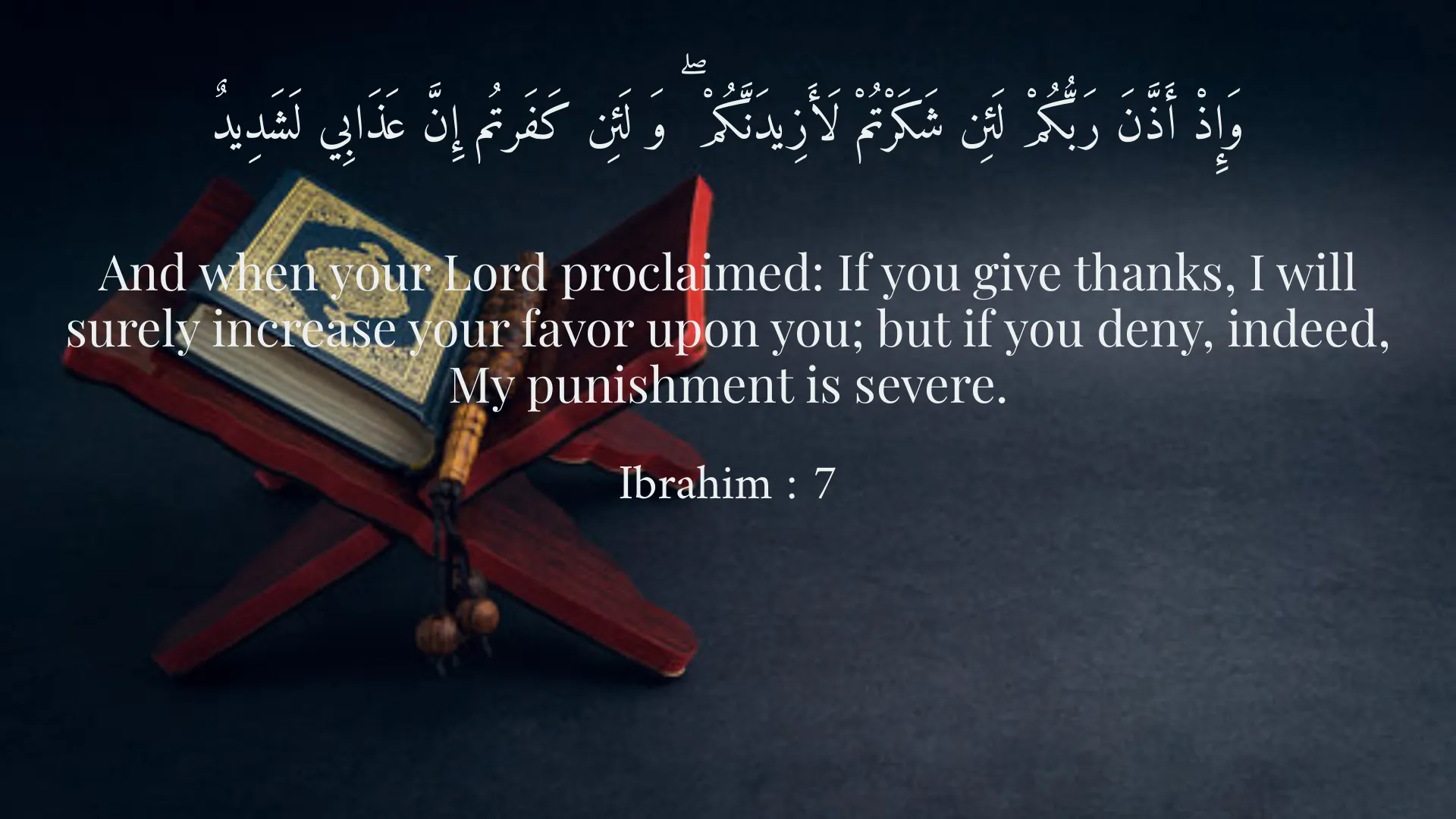
وَإِذْ أَذَّنَ رَبُّكُمْ لَئِن شَكَرْتُمْ لَأَزِيدَنَّكُمْ ۖ وَ لَئِن كَفَرتُم إِنَّ عَذَابِي لَشَدِيدٌ
And when your Lord proclaimed: If you give thanks, I will surely increase your favor upon you; but if you deny, indeed, My punishment is severe.
Ibrahim : 7
وَلا تَقْرَبُوا مَالَ الْيَتِيمِ إِلَّا بِالَّتِي هِيَ أَحْسَنُ
And do not approach the orphan's property except in a way that is best.
Al-An'am : 152
Short Story
One day, Hesam was sitting in his expansive garden, pondering God’s blessings. He wondered how he could best utilize these gifts. Suddenly, he recalled a verse from the Quran that emphasized the importance of gratitude. Therefore, he decided to dedicate part of his garden to planting medicinal herbs and donate the proceeds to those in need. Hesam felt a sense of joy, knowing that his actions would benefit both himself and others.