Quranic Answer
The concept of planning for the Hereafter is a central theme in the Holy Quran, offering believers guidance on how to lead their lives in preparation for the life after death. This vital topic addresses the importance of mindfulness concerning one's actions and decisions in this life, which directly influence one's outcomes in the Hereafter. In various verses throughout the Quran, Allah emphasizes the need for believers to focus on their faith, engage in righteous acts, and ultimately prepare themselves for the Day of Resurrection. This article delves into the teachings of the Quran concerning preparation for the Hereafter, underscoring the significance of faith, charitable actions, repentance, and religious obligations such as prayer and zakat. One of the foundational tenets of Islamic belief is the acknowledgment of the Last Day, a time when all individuals will be held accountable for their actions on Earth. In Surah Al-Baqarah (2:177), we find a powerful assertion about what constitutes righteousness. The verse states, 'Righteousness is not that you turn your faces toward the east or the west, but [true] righteousness is in one who believes in Allah, the Last Day, the Angels, the Book, and the Prophets, and gives his wealth, in spite of love for it, to relatives, orphans, the needy, the traveler, those who ask [for help], and for freeing slaves.' This verse emphasizes that true righteousness transcends mere ritualistic practices; it is fundamentally rooted in sincere belief and selfless action. The mention of charitable giving alongside belief in Allah, the Last Day, and other pillars of faith illustrates the interconnectedness of faith and deeds. In Islam, good deeds serve as a manifestation of one’s faith, and Allah has made it clear that a successful and righteous life must encompass both. This reflects the importance of planning for the Hereafter; believers are encouraged to actively engage in charitable actions, ensuring they are generous and compassionate towards those who are less fortunate. From the Quranic perspective, such acts of charity not only benefit those in need but also serve as a crucial part of one's preparation for the Hereafter. Furthermore, the Quran addresses the inevitable reality of death and the subsequent accountability that awaits every soul. In Surah Al-Imran (3:185), it states, 'Every soul will taste death, and you will only be given your full compensation on the Day of Resurrection.' This verse serves as a reminder that life on Earth is a transient journey and every action has repercussions beyond this temporary existence. It encourages believers to view their lives through the lens of eternity, thereby instilling a sense of urgency to perform good actions while they still have the opportunity. In addition to acts of charity and the cultivation of faith, repentance plays a significant role in planning for the Hereafter. The need for repentance is underscored in Surah Al-Furqan (25:70), which says, 'Except for those who repent, believe and do righteousness.' This highlights that even the most devout believers will stumble and sin; however, it is the act of acknowledging one’s shortcomings, returning to Allah, and striving for righteousness that makes one truly worthy of Allah's mercy. The process of sincere repentance includes feeling genuine remorse, seeking forgiveness, and making a firm intention to refrain from sinful behavior in the future. This facilitates a transformative journey that allows the believer to cleanse their soul and refocus their efforts towards achieving righteousness. In addition to these fundamental aspects of preparation, traditional pillars of practice, such as the five daily prayers (Salah) and the act of giving zakat (obligatory charity), are vital components of a believer's life. Salah serves not only as a means of worship but also as a deliberate reminder to maintain a connection with Allah throughout the day. It acts as a disciplinary measure that helps believers stay grounded in their faith amid the distractions of worldly life. The act of giving zakat reinforces the significance of community and social responsibility, ensuring that wealth flows from those who have it to those who need it. Moreover, pilgrimage to Mecca, known as Hajj, is another major religious duty that holds profound significance in the context of preparing for the Hereafter. Performing Hajj is regarded as a culmination of devotion and an opportunity for believers to purify themselves from sins and renew their commitment to Allah. The pilgrimage serves as a physical representation of humility, as millions of people congregate regardless of their backgrounds and social status, emphasizing the notion of equality before Allah. The act of planning for the Hereafter is ultimately about setting intentions and making conscious choices that align with Islamic principles. Believers are encouraged to live with purposeful intention, recognizing the impact their lives may have on their fate after death. In addition to individual actions, the significance of community cannot be overlooked. By fostering a supportive network that encourages righteousness and collective accountability, believers can strengthen each other’s resolve and commitment to their faith. In conclusion, preparing for the Hereafter is a multifaceted endeavor that encompasses belief, charitable deeds, sincere repentance, and the performance of religious obligations. The Quran profoundly guides believers, urging them to maintain awareness of their actions and decisions in this worldly life, as these will ultimately shape their future in the Hereafter. Additionally, the integration of community values, support systems, and shared intentions serves as a crucial foundation for righteous living. Ultimately, by following the teachings of the Quran and embodying its principles, believers can take meaningful steps towards securing not only their worldly existence but also their eternal destiny in the Hereafter.
Related Verses
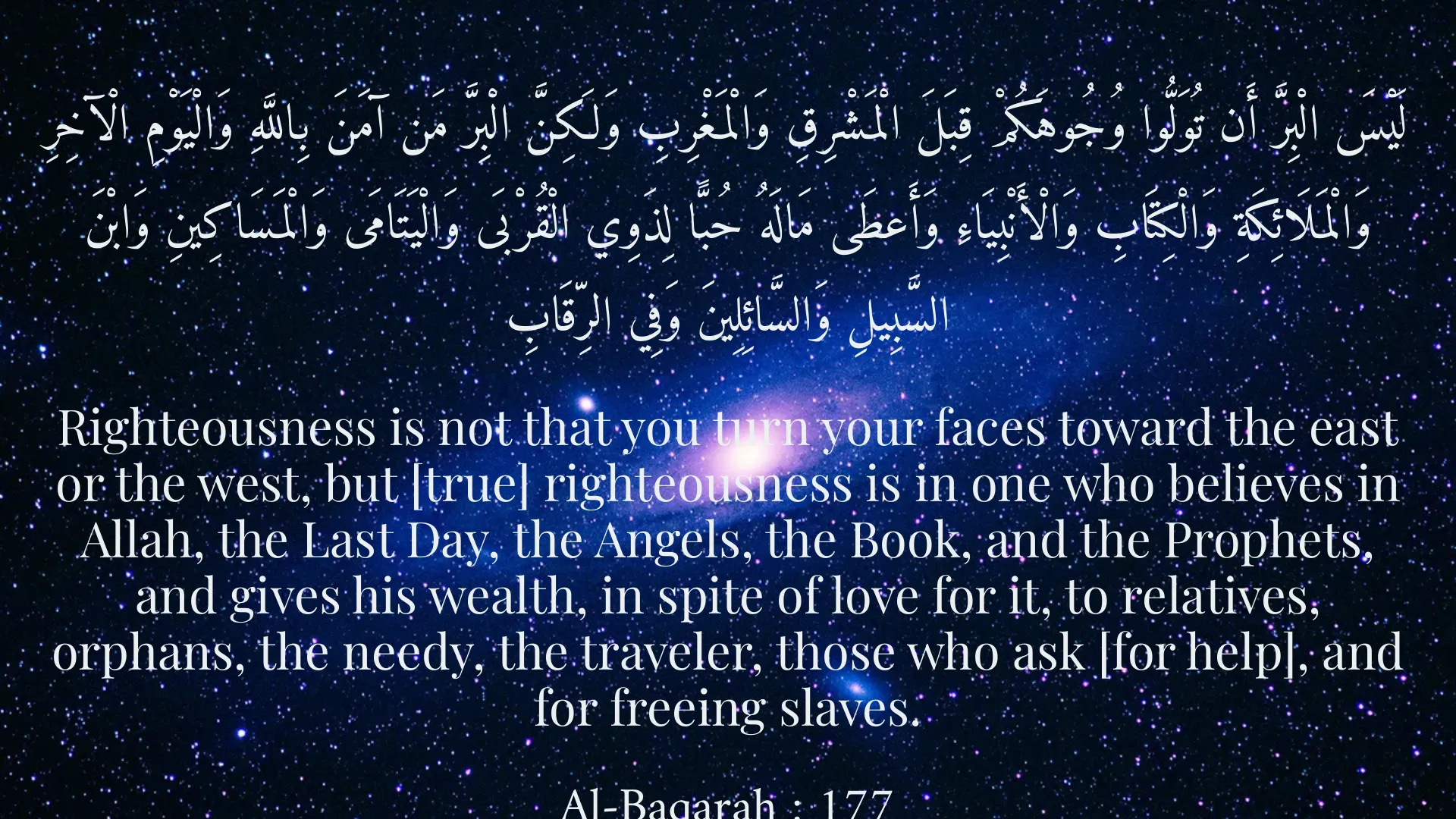
لَيْسَ الْبِرَّ أَن تُوَلُّوا وُجُوهَكُمْ قِبَلَ الْمَشْرِقِ وَالْمَغْرِبِ وَلَكِنَّ الْبِرَّ مَن آمَنَ بِاللَّهِ وَالْيَوْمِ الْآخِرِ وَالْمَلَائِكَةِ وَالْكِتَابِ وَالْأَنْبِيَاءِ وَأَعطَى مَالَهُ حُبًّا لِذَوِي الْقُرْبَى وَالْيَتَامَى وَالْمَسَاكِينِ وَابْنَ السَّبِيلِ وَالسَّائِلِينَ وَفِي الرِّقَابِ
Righteousness is not that you turn your faces toward the east or the west, but [true] righteousness is in one who believes in Allah, the Last Day, the Angels, the Book, and the Prophets, and gives his wealth, in spite of love for it, to relatives, orphans, the needy, the traveler, those who ask [for help], and for freeing slaves.
Al-Baqarah : 177
كُلُّ نَفْسٍ ذَائِقَةُ الْمَوْتِ ۖ وَإِنَّمَا تُوَفَّوْنَ أُجُورَكُمْ يَوْمَ الْقِيَامَةِ ۚ فَمَن زُحْزِحَ عَنِ النَّارِ وَأُدْخِلَ الْجَنَّةَ فَقَدْ فَازَ ۚ وَمَا الْحَيَاةُ الدُّنْيَا إِلَّا مَتَاعُ الْغُرُورِ
Every soul will taste death, and you will only be given your full compensation on the Day of Resurrection. So whoever is removed from the Fire and admitted to Paradise has certainly succeeded. And what is the worldly life except the enjoyment of delusion.
Al-Imran : 185
إِلَّا مَنْ تَابَ وَآمَنَ وَعَمِلَ عَمَلًا صَالحًا ۖ فَأُولَـئكَ يَدْخُلُونَ الْجَنَّاتِ لَا يُظْلَمُونَ شَيْئًا
Except for those who repent, believe and do righteousness. For those will enter Paradise and will not be wronged at all.
Al-Furqan : 70
Short Story
One day, a man named Hossein decided to plan better for his Hereafter. He devoted moments each day to remember God and the Hereafter, striving to perform good deeds. Hossein helped those in need and always prayed in his prayers for God's forgiveness. Over time, he felt a deeper sense of peace and closeness to God, ultimately recognizing that this world is merely a passage and that his greatest goal should be the Hereafter.