Quranic Answer
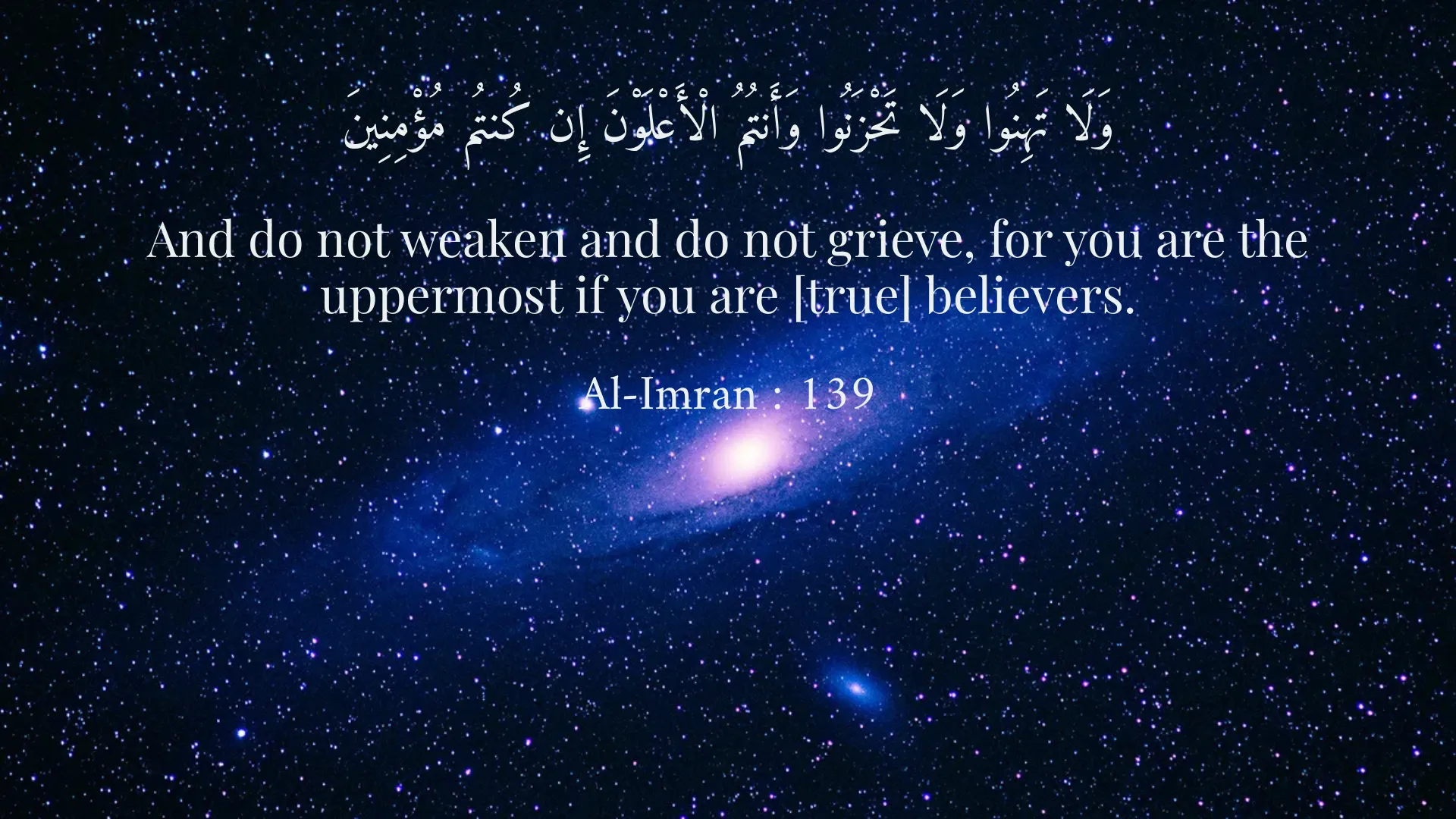
Remaining steadfast on the path of servitude is significantly emphasized in the Holy Quran, a cornerstone of faith for Muslims around the world. The Quran acts as a guide, providing both spiritual and practical direction for believers. Its verses not only inspire but also challenge individuals to develop resilience in their faith. Central to this theme is Surah Al-Imran, verse 139, where Allah advises the believers: 'And do not weaken and do not grieve, for you are the uppermost if you are [true] believers.' This implies that true believers, no matter the external circumstances, have an innate strength and dignity within the realm of their faith. It is fundamentally important to comprehend that these words are not simply rhetorical; they are a reflection of the comprehensive Islamic worldview that underscores the strength and perseverance expected from a believer. Understanding the essence of remaining steadfast necessitates examining the context in which these verses were revealed. During the early days of Islam, Muslims faced severe persecution and challenges. Despite these trials, the message of strength emanating from such verses served not merely as consolation but as actionable guidance. The call to not 'weaken' resonates deeply, especially in our contemporary society where many are subjected to emotional and spiritual trials. The Quran calls believers to anchor their faith, providing them with the resolve needed to navigate through life's adversities. Furthermore, there are other important verses in the Quran that echo the need for steadfastness. One such verse is in Surah Al-Baqarah, verse 286, which states, 'Allah does not burden a soul beyond that it can bear.' This emphasizes two significant principles. First, it reassures believers that they are capable of handling the challenges placed before them. It is an affirmation of the understanding that while life may present trials, these are not thrown at random; Allah is aware of each individual’s capacity and limits. This verse invites believers to trust in God’s wisdom and to lean into the challenges they face, believing that they are fashioned to overcome them. Each trial, therefore, can be perceived as not merely an obstacle, but a test that carries potential for growth and strength. It encourages believers to draw closer to their faith and reassess their capabilities while pushing the boundaries of their comfort zones. In a broader sense, these reminders urge individuals to cultivate resilience and a deep-rooted belief in their faith during moments of uncertainty. Moreover, the importance of returning to the sources of faith, especially during times of difficulty, cannot be overstated. In Surah Taha, verses 25 to 28, we find a profound example of seeking Allah’s assistance through prayer. In this passage, Allah highlights the experience of Prophet Musa (Moses) and his plea: 'He said, My Lord, expand for me my breast and make my task easy for me.' Here, Musa, despite being chosen as a prophet, still sought help from Allah, illustrating that the journey of faith is not devoid of challenges and requests for divine support. This verse teaches the essence of humility in faith — recognizing that believers, regardless of their standing, must continually ask for God's guidance and assistance. The act of supplication, or making dua, is therefore critical in the journey of remaining steadfast. It is a direct channel of communication between the believer and Allah, wherein individuals can express their worries, fears, and desires. This relationship is pivotal; by regularly engaging in prayer and invoking Allah's support, believers fortify their spirits against the trials they inevitably face. The consistent practice of prayer not only strengthens one’s resolve but also cultivates a sense of peace and tranquility amidst chaos. Moreover, kindness to others should be seen as an extension of one’s servitude to Allah. The Quran encourages believers to engage positively with others, reinforcing that the spiritual journey is not one of isolation but rather one that involves community, support, and compassion. When we foster goodwill and kindness, we are not only fulfilling one aspect of our faith but also nurturing an environment conducive to collective strength. Such interactions can remind us of our shared humanity, reinforcing the message that no one needs to face struggles alone. In the modern context, where individuals may grapple with anxiety, depression, and a sense of disconnection, turning back to these Quranic teachings is more crucial than ever. The teachings emphasize the importance of both individual efforts in prayer and support, as well as community actions rooted in compassion and kindness. They form a comprehensive approach towards emotional health in the context of spirituality; the dual emphasis on seeking God’s help and remaining active in serving others work cohesively to create a support system anchored in faith. In conclusion, the verses of the Quran that speak to the importance of steadfastness remind believers of the invincible strength of their faith. In Surah Al-Imran, Allah calls upon believers to avoid weakness and sorrow, reassuring them of their higher status in faith. Surah Al-Baqarah emphasizes the personal capacity to bear life's burdens, while Surah Taha illustrates the importance of seeking assistance and the power of prayer. Together, these teachings collectively encourage believers to deepen their connection with Allah through prayer and cultivate kindness in their interactions with others. As individuals join in servitude with God's guidance, they should carry the assurance that they are never alone in their struggles, and with faith, they can remain undeterred and steadfast in their life’s journey.
Related Verses
وَلَا تَهِنُوا وَلَا تَحْزَنُوا وَأَنتُمُ الْأَعْلَوْنَ إِن كُنتُم مُؤْمِنِينَ
And do not weaken and do not grieve, for you are the uppermost if you are [true] believers.
Al-Imran : 139
لَا يُكَلِّفُ اللَّهُ نَفْسًا إِلَّا وُسْعَهَا
Allah does not burden a soul beyond that it can bear.
Al-Baqarah : 286
قَالَ رَبِّ اشْرَحْ لِي صَدْرِي
He said, 'My Lord, expand for me my breast.'
Taha : 25
Short Story
One day, Mr. Rahmat was walking in the alley, pondering about servitude and the servants of God. He realized that many people in the world were in heedlessness while servitude requires constant reminders and steadfastness. He decided to recite a chapter from the Quran to find solace in the words of God. Each time he repeated the verses, he felt lighter and more peaceful. After this experience, he resolved to spend a day in prayer and worship and teach his friends how to avoid being forgetful of God's remembrance.