Quranic Answer
In the Holy Quran, the trials and tribulations of life are often viewed not merely as challenges to be endured, but as profound opportunities for spiritual growth and progression towards a deeper connection with Allah. The complexities of human experience, particularly during difficult and challenging moments, can serve as catalysts for individuals to remember God more fervently and to seek His guidance and mercy in ways that they might not have otherwise contemplated during times of comfort. Life’s adversities prompt us to call upon Allah, nurturing within us a profound yearning for answers to our prayers, as well as for solace in the face of hardship. One of the most impactful ways through which believers can seek refuge in God during these turbulent times is through prayer and worship. The Holy Quran emphasizes the significance of these acts in many verses, illuminating the pathways to divine mercy and reassurance. For instance, in Surah Al-Baqarah, verse 253, it is stated: 'Allah answers the supplication of the one in distress when they call upon Him.' This powerful verse serves both as a promise and an encouragement for those who find themselves in moments of despair, underscoring the remarkable potency inherent in genuine supplication. When individuals confront overwhelming challenges, the innate human response often inclines towards seeking divine intervention, and the act of prayer becomes a crucial lifeline, connecting the believer's heart and soul to their Creator. Furthermore, Surah Al-Baqarah, verse 153 instructs believers to 'seek help through patience and prayer.' This guidance articulates a dual approach to dealing with life's difficulties, wherein patience and prayer are not just recommended but are framed as essential means of support during trials. Engaging in these two acts fosters a sense of resilience, allowing individuals to navigate through life's storms with a heart anchored in faith and a mind imbued with tranquility. As believers turn to prayer, they simultaneously cultivate an inner peace that shields them from the frenzied chaos often resulting from external adversities, illustrating that prayer serves as a source of both spiritual strength and mental clarity. The Quran profoundly stresses the necessity of reliance on Allah, particularly during testing times. Surah Ali 'Imran, verse 125 articulates this dependence eloquently: 'The believers are those who, when Allah is mentioned, their hearts tremble.' This verse eloquently captures the essence of a true believer’s relationship with God; the very remembering of Him—a simple yet profound act—induces a response rooted in both reverence and hope. The act of remembering Allah brings forth a profound sense of peace that permeates the hearts of believers, allowing them to find strength in their vulnerabilities. In moments of hardship, this remembrance can transform despair into hope, leading individuals to reaffirm their trust in divine wisdom and power. The Quran also advises the faithful to cultivate a strong relationship with God through various forms of remembrance (dhikr), which fortify the soul during times of hardship. Engaging in continuous remembrance of Allah through recitation of Quranic verses, praises, and prayers serves to remind believers of God’s omnipotence and mercy. This conscious effort to remain connected to the divine allows individuals to tap into an inexhaustible source of strength and compassion, regardless of the challenges faced. It instills a sense of assurance that, although trials may be daunting, they are never faced alone. The awareness that God is near, listening and ready to respond to those who sincerely turn to Him, cultivates a steadfast spirit capable of overcoming any obstacle. Moreover, it is essential to recognize that the Quran articulates a holistic understanding of patience and prayer not merely as means of coping but rather as pathways to elevation and spiritual evolution. In Surah Al-Baqarah, verse 286, it is mentioned that 'Allah does not burden a soul except with that within its capacity.' This verse reassures believers that every trial has been ordained with divine wisdom, designed to challenge them, yet also crafted to ensure that they possess the strength to endure. Such insights instill a deep-seated conviction that difficult times are opportunities for personal transformation and the fortification of one’s faith. Through the lens of the Quran, one can begin to see trials not as existential threats but as divine invitations to enhance one’s spirituality and commitment to Allah. As believers strive to maintain their spiritual connection during life's unpredictable journey, it becomes crucial to recognize that prayer is not simply a form of asking for assistance but rather an embodiment of surrendering oneself to God’s will. It is a profound act of love, trust, and hope that signals one’s acknowledgment of Allah’s ultimate authority and benevolence. In every whispered prayer, the act of supplication is laden with sincerity, reflecting the human heart’s deepest desires for peace, guidance, and mercy. In conclusion, the Holy Quran eloquently teaches that the paths to divine refuge during challenging times lie within the sacred acts of prayer and remembrance of Allah. It emphasizes that these moments of trial can serve as catalysts for immense personal and spiritual growth. Through patience and spiritual diligence, believers cultivate not only their relationship with God, but also foster a resilient demeanor that empowers them to face life's adversities. Life’s hardships, underscored by divine wisdom, become invaluable opportunities to seek solace in prayer, reminding us of the importance of turning our hearts toward God, particularly when confronted with the storms of life. By embracing the teachings of the Quran during these testing times, we thus find strength, peace, and ultimately, a deeper connection with Allah.
Related Verses
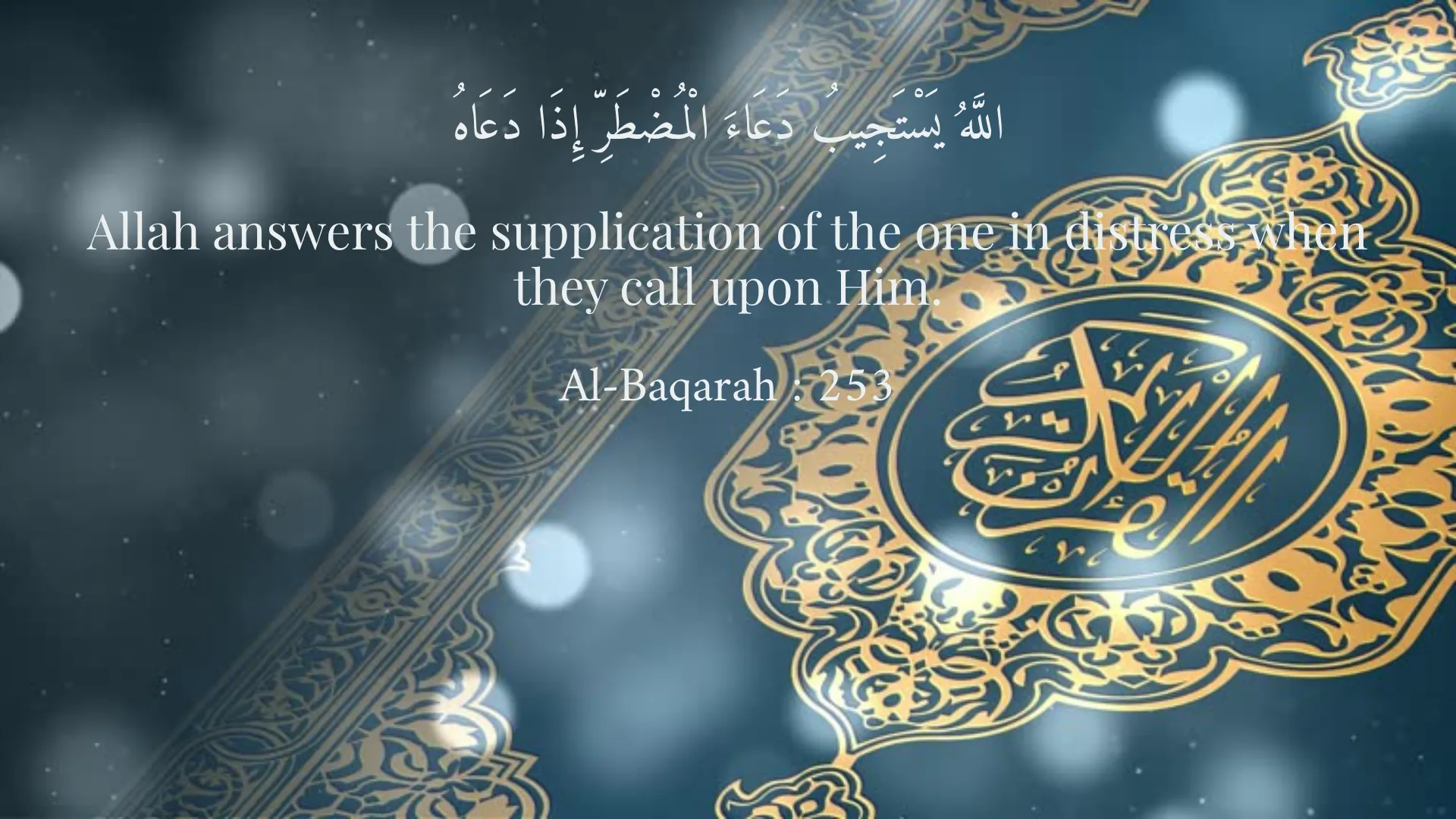
اللَّهُ يَسْتَجِيبُ دَعَاءَ الْمُضْطَرِّ إِذَا دَعَاهُ
Allah answers the supplication of the one in distress when they call upon Him.
Al-Baqarah : 253
يَاأَيُّهَا الَّذِينَ آمَنُوا اسْتَعِينُوا بِالصَّبْرِ وَالصَّلَاةِ ۚ إِنَّ اللَّهَ مَعَ الصَّابِرِينَ
O you who have believed, seek help through patience and prayer. Indeed, Allah is with the patient.
Al-Baqarah : 153
إنما المؤمنون الذين إذا ذكر الله وجلت قلوبهم
The believers are those who, when Allah is mentioned, their hearts tremble.
Ali 'Imran : 125
Short Story
Once upon a time, a man named Hasan was deeply troubled by life's problems. He decided to go to a mountain and talk to God there. As he prayed and remembered God, he felt a heavy burden lifted off his shoulders. He returned to life with hope and peace, realizing he could always seek refuge in God during hardships.