Quranic Answer
Worshiping with love and affection is a vital theme in Islam, intricately woven into the fabric of the faith. The significance of approaching worship with love and sincerity is not merely a guideline; it is a foundational element of one's relationship with Allah. In Islam, worship transcends the mere act of performing rituals; it embodies a profound connection, characterized by devotion, respect, and genuine affection for the Creator. The Holy Quran, serving as the ultimate guide for Muslims, makes it abundantly clear that worship must be performed with a pure and sincere heart, filled with love for God. This theme is resonantly encapsulated in numerous verses of the Holy Quran, where Allah emphasizes the importance of love and sincerity in worship. For instance, in Surah Al-Baqarah, verse 165, Allah states, 'And among the people are those who take other than Allah as equals [to Him]. They love them as they should love Allah. But those who believe are stronger in love for Allah.' This profound statement illustrates that true love must be directed toward God above all else. In this context, love for Allah becomes the measure of a believer's faith, suggesting that the strength of one's love for God surpasses all other affections and allegiances. Worship with love implies that we approach God with every part of our being, wholeheartedly committing ourselves to obedience and reverence. It transforms the mundane actions of life into sacred acts of devotion. When worship is performed with love, it transcends its physical aspect and becomes a heartfelt emotional experience. The emotional connection to one's faith bolsters a believer's commitment, inspiring them to engage more earnestly in prayer, charity, fasting, and other acts of worship. Moreover, this concept goes deeper in its implications. The Quran invites believers to cultivate a relationship with Allah that is rooted in love, highlighting that such interactions are filled with warmth and sincerity. For example, in Surah Al-Ma'idah, verse 29, it states, 'Allah does not want to make things difficult for you; He wants you to be in truth and sincerity.' This verse reassures believers that Allah desires authenticity in their worship. When believers perform acts of worship—be it prayer or fasting—out of love, they experience a sense of tranquility and fulfillment, understanding the immense virtues and benefits tied to each act of worship. The love-driven approach to worship reflects the essence of Islamic teachings, which convey that every act, big or small, can be transformed into an opportunity for spiritual elevation. For instance, the five daily prayers, which are a fundamental pillar of Islam, can become mere routines if performed without sincerity. However, when inflected with love and a deep awareness of Allah’s incomparable mercy and greatness, these prayers emerge as intimate dialogues between the believer and the Divine. Fasting during the holy month of Ramadan also carries an intrinsic connection to love and respect for Allah. It is more than abstaining from food and drink; it is a heartfelt acknowledgment of one’s dependence on Allah, coupled with the love that fuels the willpower to fast. The month of Ramadan inspires a period of spiritual renewal when believers, through compassion and unity with those less fortunate, engage in acts of charity and kindness. This love for others, rooted in the love for Allah, reflects the holistic nature of worship in Islam, which enjoins believers to enhance their moral character alongside their devotional acts. Furthermore, acts of worship become even more meaningful when individuals recognize their virtues. For example, charity (Sadaqah) is more than a financial contribution; it is a gesture of love and kindness towards fellow human beings. In Islam, giving with a sincere heart directly relates to the love we hold for Allah. The more we do so out of love—hoping for Allah’s pleasure—the more our acts resonate with compassion and warmth, enriching the spiritual dimension of our worship. Ultimately, worship should be performed with tranquility and spiritual calmness. This does not only lead to external peace but facilitates an inner serenity that is essential for spiritual growth. When Muslims worship rooted in love, they cultivate a nurturing environment within their hearts that fosters faith, hope, and resilience. It allows them to rise above the chaos of everyday life, seeking solace in their prayers and etching Allah's presence into their daily routine. The Islamic concept of worship thus becomes an all-encompassing practice cultivated through love and affection. Whether in moments of individual prayer, or collective gatherings for communal worship, the shared love for Allah enhances the bonds among the faithful. It not only connects individual worshippers to Allah but also unites them in a communal spirit of devotion, kindness, and shared goals. In conclusion, approaching worship with love and affection is not merely a recommendation; it is an integral aspect of a believer's Islamic practice that enriches their faith and enhances their connection to Allah. The Holy Quran's teachings regarding the paramount importance of sincere love in worship remind believers of their purpose—to adore and obey their Creator. Worship filled with love transforms ordinary rituals into powerful expressions of faith, facilitating a deeper connection with the Divine and a more profound sense of peace within oneself. By nurturing love in their hearts, Muslims can elevate their spiritual journeys and experience an enriched understanding of their relationship with God. The true beauty of worship lies not only in the actions themselves but, significantly, in the heartfelt sentiment behind them.
Related Verses
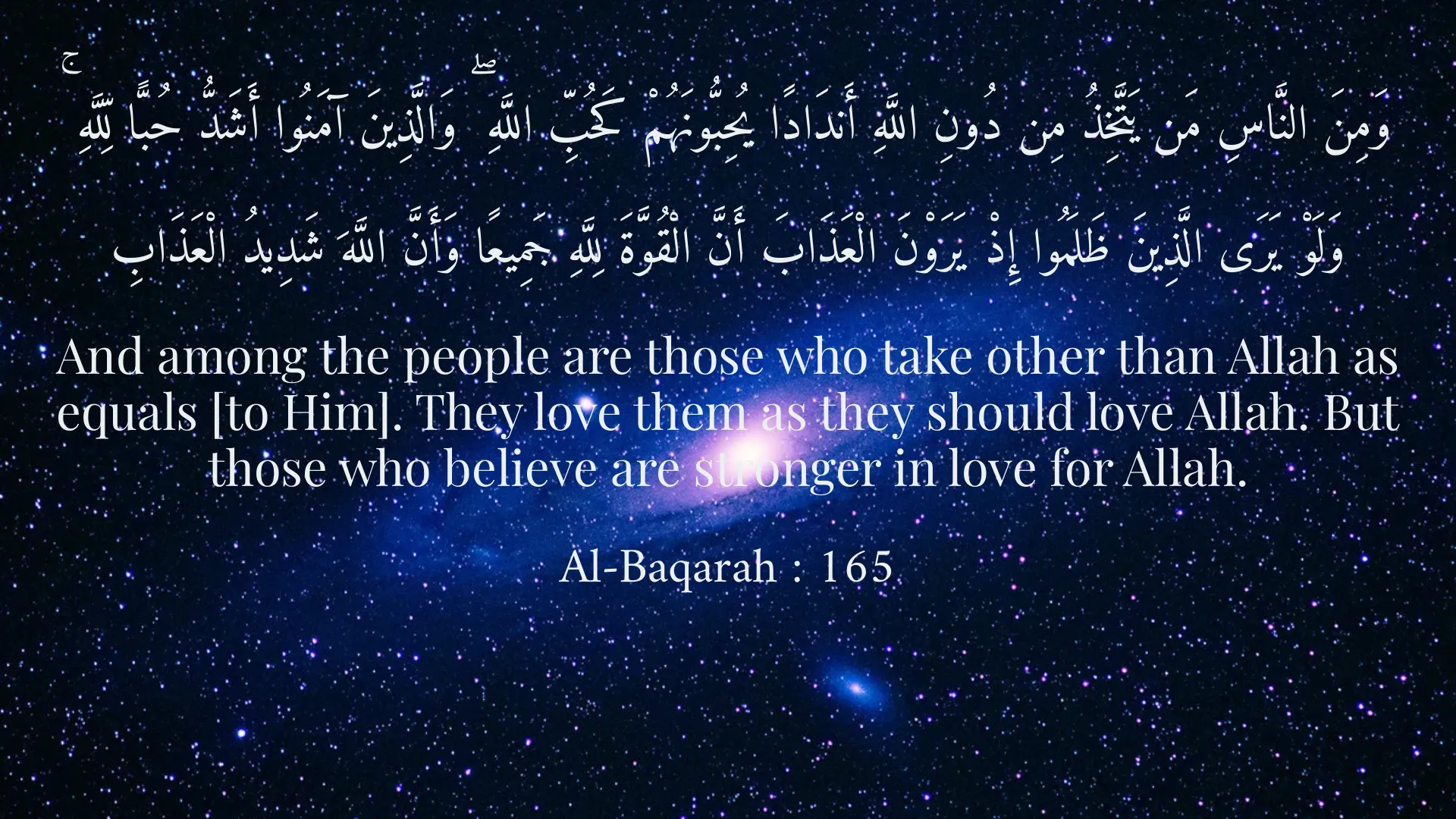
وَمِنَ النَّاسِ مَن يَتَّخِذُ مِن دُونِ اللَّهِ أَندَادًا يُحِبُّونَهُمْ كَحُبِّ اللَّهِ ۖ وَالَّذِينَ آمَنُوا أَشَدُّ حُبًّا لِّلَّهِ ۚ وَلَوْ يَرَى الَّذِينَ ظَلَمُوا إِذْ يَرَوْنَ الْعَذَابَ أَنَّ الْقُوَّةَ لِلَّهِ جَمِيعًا وَأَنَّ اللَّهَ شَدِيدُ الْعَذَابِ
And among the people are those who take other than Allah as equals [to Him]. They love them as they should love Allah. But those who believe are stronger in love for Allah.
Al-Baqarah : 165
وَمَا أَرَادَ اللَّهُ لِيُعَذِّبَكُمْ وَلَكِن يُرِيدُ لِيُطَهِّرَكُمْ وَلِيُتِمَّ نِعْمَتَهُ عَلَيْكُمْ لَعَلَّكُمْ تَشْكُرُونَ
Allah does not want to make things difficult for you; He wants you to be in truth and sincerity.
Al-Ma'idah : 29
Short Story
In ancient times, there was a man named Hassan who dedicated himself to worship. One day, he saw an old man deep in prayer. Hassan noticed that the man was praying with all his heart, and love for God shone on his face. This scene had a profound impact on Hassan, and he decided to approach his worship with more love and enthusiasm. From that day on, he always remembered that worship should be done with feeling and affection. He realized that his life changed remarkably.