Quranic Answer
You have raised a profound and insightful question that delves into the very roots of human belief and action: Is abstaining from sin without love for God sufficient? To answer this question from the perspective of the Holy Quran, we must gain a comprehensive understanding of the concepts of faith (Iman), righteous deeds (Amal Salih), and the pivotal role of the heart and intention (Niyyah) in Islam. The Quran not only emphasizes outward actions but also places immense importance on the depth of intention and the inner state of the heart. Abstaining from sin is, undoubtedly, a fundamental component of religiosity and piety (Taqwa). Allah, in numerous verses, commands His servants to abstain from prohibitions and fulfill obligations. This abstinence is a sign of obedience and submission to divine commands, and without it, any claim of faith can be baseless. A person who openly commits sins is, in essence, transgressing the boundaries set by Allah and disobeying Him. However, is merely refraining from sin, without a heart overflowing with love and affection for the Almighty, sufficient for a person to attain the desired perfection and gain the pleasure of Allah? The Holy Quran goes beyond the apparent form of actions and pays special attention to the inner dimension and intention of individuals. In reality, every action, whether it is abstaining from sin or performing a good deed, gains its true value when it stems from sincerity (Ikhlas) and a deep love for Allah. It is as if abstaining from sin is the body of religious deeds, and love for Allah is their spirit. A soulless body, no matter how perfect it may appear, is ultimately useless. Allah Almighty states in Surah Al-Baqarah, verse 165: “وَالَّذِينَ آمَنُوا أَشَدُّ حُبًّا لِّلَّهِ” (But those who believe are stronger in love for Allah). This verse clearly indicates that true faith is accompanied by a profound and intense love for Allah. This love is not merely a fleeting emotion but a driving force that propels a person towards obedience and away from sin. One who loves God would never wish to do anything that displeases their Beloved. Abstaining from sin in this state is not merely out of fear of punishment but out of reverence, respect, and deep affection for the Beloved. Love for God is the primary and foundational motivation for all good deeds and for abstaining from evils. When an individual abstains from sin solely due to fear of Hell or desire for Paradise, this abstinence can be superficial and unstable. In situations where there is no oversight or temptation is extremely strong, they might not be able to overcome their desires. However, one who abstains from sin out of love for their Creator remains steadfast, even in the most private moments and against the strongest temptations; because their heart is filled with this love, and they constantly keep the presence and pleasure of their Beloved in mind. This is where the concept of “Taqwa” truly manifests itself; Taqwa which means not only abstaining from prohibitions but also a continuous presence of heart with God and a sense of responsibility towards Him, stemming from love. The Quran also emphasizes the importance of a “sound heart” (Qalb Saleem). In Surah Ash-Shu'ara, verses 88 and 89, we read: “يَوْمَ لَا يَنفَعُ مَالٌ وَلَا بَنُونَ إِلَّا مَنْ أَتَى اللَّهَ بِقَلْبٍ سَلِيمٍ” (The Day when neither wealth nor sons will benefit, but only he who comes to Allah with a sound heart). A sound heart is one that is purified from polytheism (Shirk), hypocrisy (Nifaq), arrogance, envy, and all spiritual diseases, and is filled with faith, sincerity, and love for Allah, His Messenger, and the believers. Abstaining from sin without a sound heart filled with divine love is like building a house on sand; it is constantly at risk of collapse. It is this sound heart that leads a person towards performing sincere actions and abstaining from sins, not merely to escape punishment, but to attain Allah's pleasure and closeness. Another verse that complements this concept is from Surah Al-Bayyinah, verse 5: “وَمَا أُمِرُوا إِلَّا لِیَعْبُدُوا اللَّهَ مُخْلِصِینَ لَهُ الدِّینَ” (And they were not commanded except to worship Allah, [being] sincere to Him in religion). Sincerity (Ikhlas) means performing every action solely for the sake of Allah, without any partners or non-divine intentions. This sincerity also originates from a deep love for Allah. If someone abstains from sin but their motivation is hypocrisy, seeking fame, or fear of people, this abstinence holds little spiritual value. But if it is out of love and sincerity for Allah, even a small act can be immensely valuable. Therefore, we can conclude that while abstaining from sin is necessary, it is not sufficient on its own. This abstinence must be nourished by the spring of love and affection for Allah to acquire its true meaning and value. Love for God not only motivates abstaining from sins but transforms it into an act of worship, both in the heart and in action. It is this love that molds a human being into a conscious, responsible individual, eager to earn divine pleasure. Without this love, abstaining from sin can become a series of mechanical and soulless actions that lack deep impact on the human spirit and fail to lead one towards their ultimate perfection. Thus, complete faith encompasses both abstaining from prohibitions and fulfilling obligations, as well as a deep and sincere love for the Divine Being, which motivates and directs all actions. These two are interdependent and inseparable for a human being to attain the station of "proximity" (Qurb) and divine pleasure. Abstaining from sin is, in essence, the outward manifestation of that inner love and belief.
Related Verses
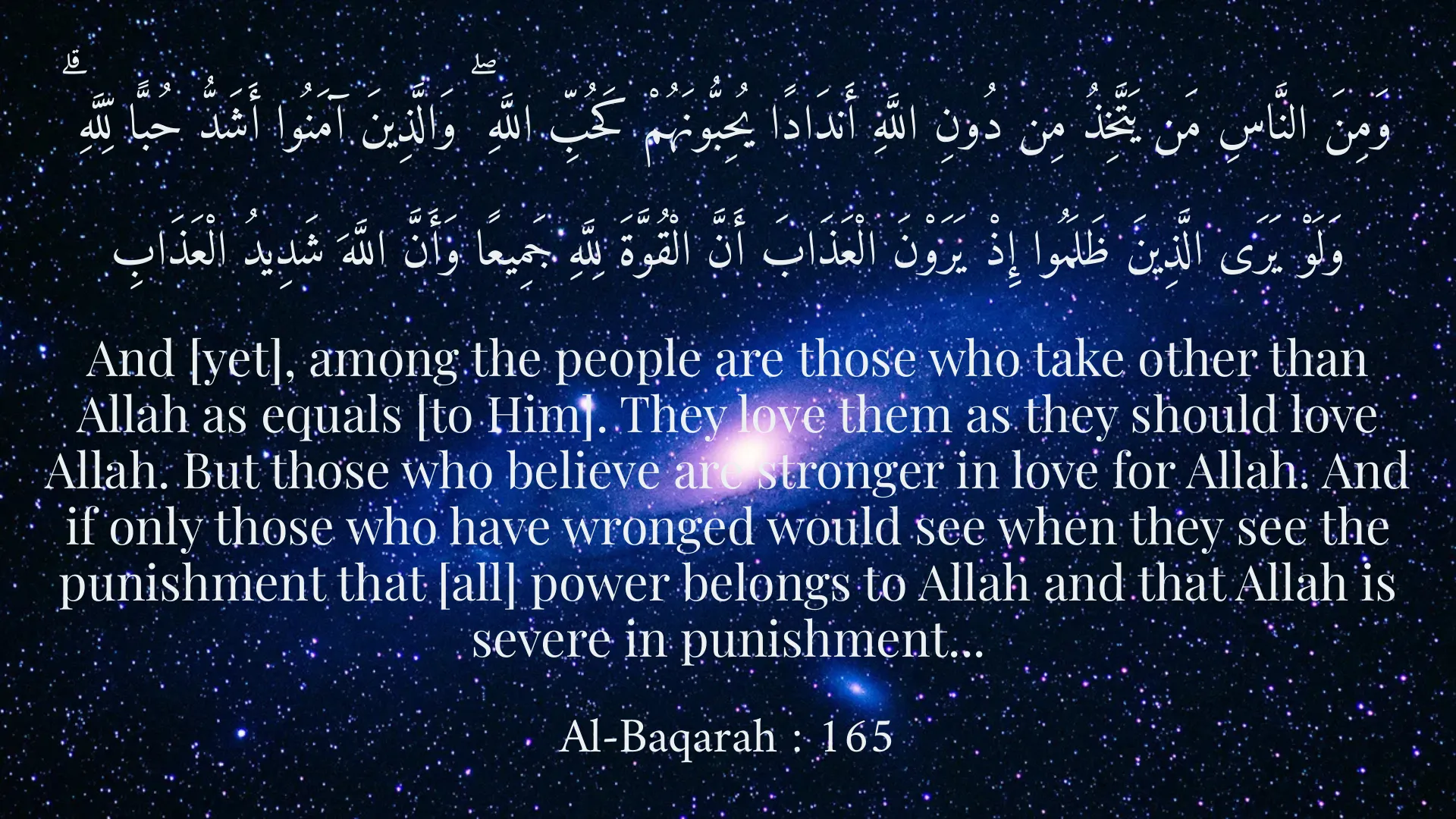
وَمِنَ النَّاسِ مَن يَتَّخِذُ مِن دُونِ اللَّهِ أَندَادًا يُحِبُّونَهُمْ كَحُبِّ اللَّهِ ۖ وَالَّذِينَ آمَنُوا أَشَدُّ حُبًّا لِّلَّهِ ۗ وَلَوْ يَرَى الَّذِينَ ظَلَمُوا إِذْ يَرَوْنَ الْعَذَابَ أَنَّ الْقُوَّةَ لِلَّهِ جَمِيعًا وَأَنَّ اللَّهَ شَدِيدُ الْعَذَابِ
And [yet], among the people are those who take other than Allah as equals [to Him]. They love them as they should love Allah. But those who believe are stronger in love for Allah. And if only those who have wronged would see when they see the punishment that [all] power belongs to Allah and that Allah is severe in punishment...
Al-Baqarah : 165
يَوْمَ لَا يَنفَعُ مَالٌ وَلَا بَنُونَ
The Day when neither wealth nor sons will benefit,
Ash-Shu'ara : 88
إِلَّا مَنْ أَتَى اللَّهَ بِقَلْبٍ سَلِيمٍ
But only he who comes to Allah with a sound heart.
Ash-Shu'ara : 89
وَمَا أُمِرُوا إِلَّا لِیَعْبُدُوا اللَّهَ مُخْلِصِینَ لَهُ الدِّینَ حُنَفَاءَ وَیُقِیمُوا الصَّلَاةَ وَیُؤْتُوا الزَّكَاةَ ۚ وَذَٰلِكَ دِینُ الْقَیِّمَةِ
And they were not commanded except to worship Allah, [being] sincere to Him in religion, inclining to truth, and to establish prayer and to give zakah. And that is the correct religion.
Al-Bayyinah : 5
Short Story
It is narrated that in ancient times, there were two neighbors: one a strict ascetic who was meticulous in abstaining from every sin and intensely feared the slightest misstep, yet his heart felt little warmth of divine love, and his deeds were mostly out of fear and obligation. The other was a merchant who sometimes made an unintentional error in a transaction or stumbled in speech, but each time he erred, he returned with a heart full of remorse and a burning love for his Lord, repenting and shedding tears in private over God's mercy. One night, the king of the city dreamt that a magnificent tree in Paradise, named the 'Tree of Love,' cast its shade upon the merchant, while the ascetic merely watched from afar. A dervish who knew the interpretation of dreams said: 'O King! Allah accepts deeds that sprout from the root of love and sincerity. Abstaining from sin is like a strong wall, but love for God is like a soul breathed into the body of worship. Without the soul, even a tall wall is of no use.' Let us remember Sa'di's wisdom: 'A heart without love is like a hard stone, and what profit has a soulless body but toil?'