Quranic Answer
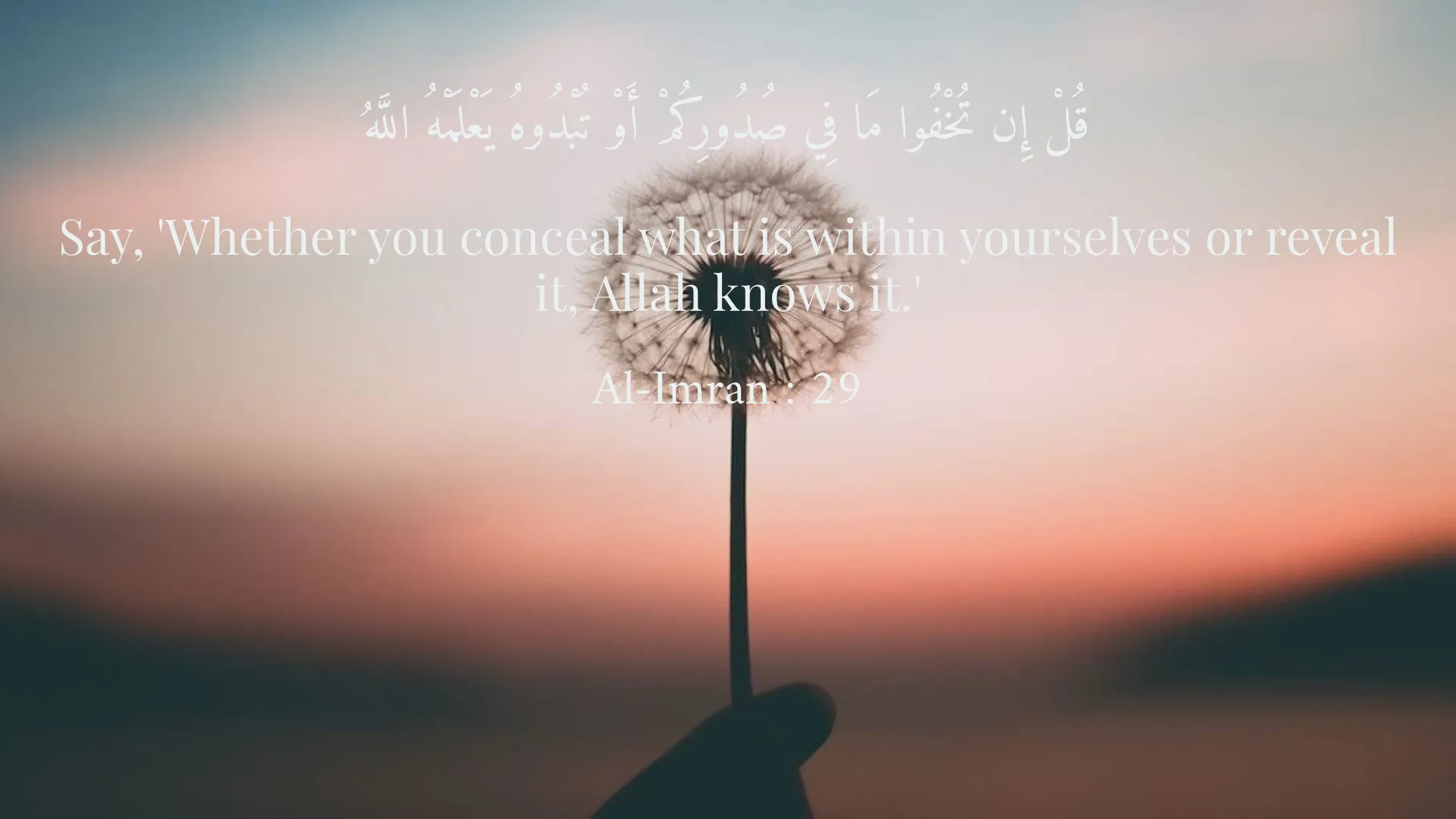
In the exploration of faith and spirituality, the Holy Quran offers profound insights into the nature of human intentions and thoughts. The Quran is not merely a scripture; it serves as a guiding light for the millions who seek a deeper connection with the Creator. Within its verses, Allah emphasizes His complete awareness of the intentions and thoughts of humanity, creating an unbreakable bond between the divine and human consciousness. One of the most illuminating verses underscoring this concept is found in Surah Al-Imran, verse 29, where Allah states: "Say, 'Whether you conceal what is within yourselves or reveal it, Allah knows it.'" This succinct statement encapsulates the essence of divine awareness, clearly indicating that every human action and intention is subject to divine scrutiny. ### The Depth of Divine Awareness The mentioned verse from Surah Al-Imran serves as a profound reminder that the boundaries of human perception are but a shadow compared to the infinite knowledge of Allah. It suggests that while humans may hide their thoughts, feelings, and intentions from each other, they cannot hide from Allah. The Creator of all that exists possesses a unique understanding of the human heart. He knows the hidden thoughts and the overt actions, be they virtuous or otherwise. This notion of divine omniscience is not merely about judgment; it is also about understanding, forgiveness, and compassion. Further elucidating this concept, Surah Al-Baqarah states, "And what is concealed of speech or action." Here, the emphasis on both speech and action indicates that Allah’s knowledge encompasses all forms of human expression. Whether one speaks words of encouragement or harbors thoughts of malice, both fall under the observant gaze of Allah. These verses compel believers to reflect on their inner dispositions and cultivate a heightened sense of awareness about their own thoughts and intentions. ### The Influence of Divine Knowledge on Human Behavior The implications of Allah's awareness serve as a catalyst for righteous living. When individuals understand that their inner thoughts are visible to Allah, they are more likely to align their actions with virtuous intentions. This awareness acts as a moral compass, guiding them towards ethical behavior. The concept of sincere intention is fundamental in Islamic teachings. The Prophet Muhammad (peace be upon him) stated, "Actions are judged by intentions, and every person will get the reward for what they intended." This narration highlights the significance of purifying one's intentions. It implies that even a seemingly insignificant action can hold immense value if performed with a sincere heart. Conversely, a grand act devoid of genuine intention may fail to receive divine acknowledgment. Thus, the quality of an action is directly tied to the inherent intention behind it. ### The Importance of Purification of Intentions In the realm of spirituality, the purification of intentions, known as "Ikhlas," is pivotal. Ikhlas refers to the act of performing deeds sincerely for the sake of Allah, free from the desire for recognition or worldly gains. This principle serves not only to enhance the spiritual essence of an action but also to fortify the connection between the individual and the Creator. The concept is woven into various teachings found in the Quran, encouraging believers to scrutinize their motives before undertaking any task. Moreover, intentions reflect a person's true character. When individuals conduct a self-assessment of their motives—be it in practices of worship, charity, or even daily interactions—they begin to cultivate a life imbued with sincerity and integrity. This awareness fosters a culture of authenticity, where individuals aim for righteous actions in alignment with pure intentions, ultimately contributing to personal growth and societal harmony. ### The Interconnection of Intention and Action The relationship between intention and action is intricate and multifaceted. In many instances, intention serves as the catalyst for action. For instance, the act of giving charity, which is one of the cornerstones of Islamic teachings, is expected to be accompanied by a sincere intention. A believer giving from their wealth for the pleasure of Allah is not merely performing a good deed but is simultaneously engaging in an act of worship. However, the Quran further elucidates that intentions can be complex and sometimes misguided. Humans may start with good intentions but can be led astray by external influences or negative thoughts. This is where the role of self-reflection and spiritual vigilance becomes vital. Engaging in regular introspection allows individuals to recalibrate their intentions, ensuring they remain aligned with divine teachings. ### Conclusion: The Essence of Purity in Intention In conclusion, the awareness of Allah regarding human intentions is a profound reminder of the need for sincerity in every action. The teachings of the Quran implore believers to elevate their intentions in all aspects of life. Every action, from the mundane to the grand, carries weight in the sight of Allah—if, and only if, it is underpinned by pure intentions. As individuals navigate through life's myriad choices and actions, the Quran sets a foundational principle: authenticity and sincerity matter more than the superficiality of appearance. Ultimately, what lies within the hearts of individuals cannot remain hidden; it is essential to remember the purity of intention in any action they undertake. By doing so, not only do they seek the pleasure of Allah but also foster a community built on mutual respect, integrity, and spiritual awareness.
Related Verses
قُلْ إِن تُخْفُوا مَا فِي صُدُورِكُمْ أَوْ تُبْدُوهُ يَعْلَمْهُ اللَّهُ
Say, 'Whether you conceal what is within yourselves or reveal it, Allah knows it.'
Al-Imran : 29
أَلَمْ يَعْلَمْ أَنَّ اللَّهَ يَعْلَمُ مَا تُخْفِي السَّمَاوَاتِ وَمَا تُخْفِي الأَرْضُ ۗ وَمَا يَعْتَزُّ عَنْ ذَٰلِكَ أَحَدٌ
Does he not know that Allah knows what is concealed in the heavens and what is concealed in the earth? And nothing is hidden from Him.
Al-Baqarah : 77
أَلَمْ تَرَ أَنَّ اللَّهَ يَعْلَمُ مَا فِي السَّمَاوَاتِ وَمَا فِي الْأَرْضِ ۚ لَا يَكُونُ مِنْهُمْ مِنْ مُناجَاةٍ ثَلاثَةٍ إِلَّا هُوَ رَابِعُهُمْ وَلَا خَمْسَةٍ إِلَّا هُوَ سَادِسُهُمْ وَلَا أَدْنَى مِنْ ذَٰلِكَ وَلَا أَكْثَرَ إِلَّا هُوَ مَعَهُمْ أَيْنَمَا كَانُوا
Have you not considered that Allah knows what is in the heavens and what is in the earth? Never is there any whispering among three, but He is their fourth; nor among five, but He is their sixth; and no less than that or more, except that He is with them wherever they are.
Al-Mujadila : 7
Short Story
Once upon a time, there was a man named Sajjad who always sought to purify his intentions. One day, while contemplating, he realized that despite his efforts, Allah is always aware of his intentions. From that day on, Sajjad decided to perform every act with sincere intention and for the sake of Allah. This shift in his life not only elevated his spirit but also improved his relationships with others.