Quranic Answer
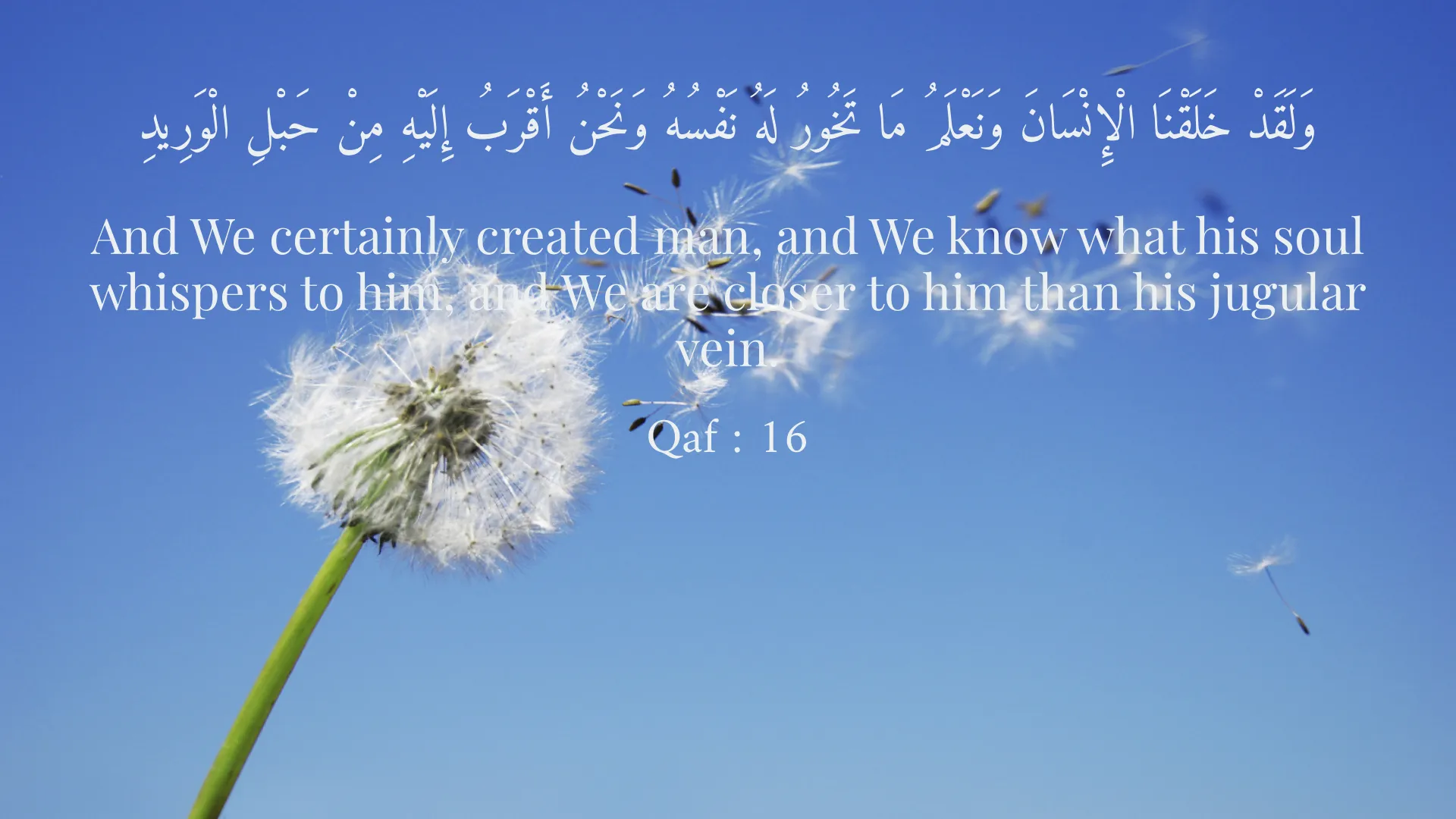
In the Holy Quran, Allah states that He is closer to us than our jugular vein. In Surah Qaf, verse 16, He articulates a profound truth about His relationship with humanity: 'And We certainly created man, and We know what his soul whispers to him, and We are closer to him than his jugular vein.' This statement is rich with meaning and serves to reinforce our understanding of God's omniscience and omnipresence. It illustrates not only the proximity of Allah to His creation but also His deep awareness of our innermost thoughts, feelings, and aspirations. The concept of Allah being closer to us than our jugular vein is a powerful metaphor. The jugular vein, which is located in the neck, is critical to our survival, transporting blood from the head back to the heart. By using this imagery, the Quran conveys that God's presence is fundamental and intrinsic to our very existence. His nearness signifies that we are never truly alone; He is always there, observing and knowing every whisper of our soul. This idea becomes especially comforting in times of distress or hardship, as it assures us that we are never abandoned or overlooked. In our daily lives, we often find ourselves engulfed in challenges, anxieties, and uncertainties. It is during such moments that the understanding of Allah's closeness becomes essential. We can seek solace in the realization that our prayers are not in vain and that they reach Him in such a manner that surpasses our comprehension. The knowledge that Allah is always listening and aware of our circumstances provides a sense of peace that can guide us through turbulent times. Every tear shed, every silent plea, and every aching heart is known to Him, and this connection can serve to strengthen our resolve as we face life's trials. Moreover, Allah's closeness serves as a powerful reminder that we should cultivate our relationship with Him. This relationship requires dedication and sincerity, urging us to engage in acts of worship and servitude. As we recognize Allah's omnipresence, we may feel an increased motivation to act ethically, uphold our spiritual practices, and strive for righteousness. When we truly acknowledge that Allah is intimately aware of our every action, it can instill a deeper sense of responsibility in our decisions. This is not merely about adherence to obligations; it is about nurturing a profound bond with our Creator and living a life that is pleasing in His sight. The impact of understanding Allah’s nearness extends beyond personal comfort and moral responsibility; it also influences our perspective on life itself. Recognizing that the Divine is always present changes how we approach our goals and ambitions. We may find that we aim to seek not just worldly success but also spiritual fulfillment. The desire for contentment becomes intertwined with our understanding of our purpose—serving Allah and fostering good in the lives of others. Realizing that our intentions are seen and understood encourages us to act with integrity and compassion. In addition, the notion of closeness encourages introspection. When we reflect on our inner thoughts and feelings with the awareness that Allah knows them all, we may find ourselves leading a more principled life. This reflection may lead us to a deeper understanding of our motivations, fears, and desires. It allows us to be more mindful in our actions and choices, to confront our shortcomings, and to seek forgiveness with the knowledge that Allah is merciful and compassionate. Furthermore, the concept of divine nearness should motivate us to forge deeper connections within our communities. As we grasp the importance of our relationship with Allah, we can extend that understanding to our interactions with others. If we embody the principles of compassion and understanding that stem from our relationship with the Creator, we may be inclined to build stronger, more meaningful relationships with the people around us. This can lead to a more supportive community that mirrors the divine closeness we cherish. Moreover, the nearness of Allah can serve as a source of strength when facing challenges that seem insurmountable. Life can throw obstacles in our path, and often these challenges can feel isolating. However, knowing that Allah is by our side encourages resilience in the face of adversity. This awareness can inspire us to approach difficulties with faith and determination, trusting that assistance will be provided at the right time. The truth that Allah sees our struggles and hears our calls for help allows us to navigate hardships with greater courage. In conclusion, the declaration by Allah in the Holy Quran that He is closer to us than our jugular vein offers profound insight into our existence and relationship with the Divine. It is a reminder of His omnipresence and omniscience, emphasizing our intrinsic connection to Him. This knowledge comforts us in adversity, motivates us to enhance our spiritual practice, and inspires us to cultivate meaningful relationships with others. We are called to recognize the significance of our actions and thoughts in light of this closeness and to strive for a life that is devoted to worship and service. Ultimately, understanding God's nearness encourages us to seek not only personal peace but also to contribute positively to the world around us, embodying the values that Allah embodies and advocates for mankind.
Related Verses
وَلَقَدْ خَلَقْنَا الْإِنْسَانَ وَنَعْلَمُ مَا تَخُورُ لَهُ نَفْسُهُ وَنَحْنُ أَقْرَبُ إِلَيْهِ مِنْ حَبْلِ الْوَرِيدِ
And We certainly created man, and We know what his soul whispers to him, and We are closer to him than his jugular vein.
Qaf : 16
Short Story
One day, a young man named Sajjad was pondering about his life. He felt hopeless about the challenges he was facing. Suddenly, he remembered the Quranic verse that says Allah is closer to us than our jugular vein. This thought brought peace to his heart, and he decided to overcome his problems and move forward with faith in God. From that day on, he viewed his life with greater confidence, always remembering the closeness of Allah during his challenges.