Quranic Answer
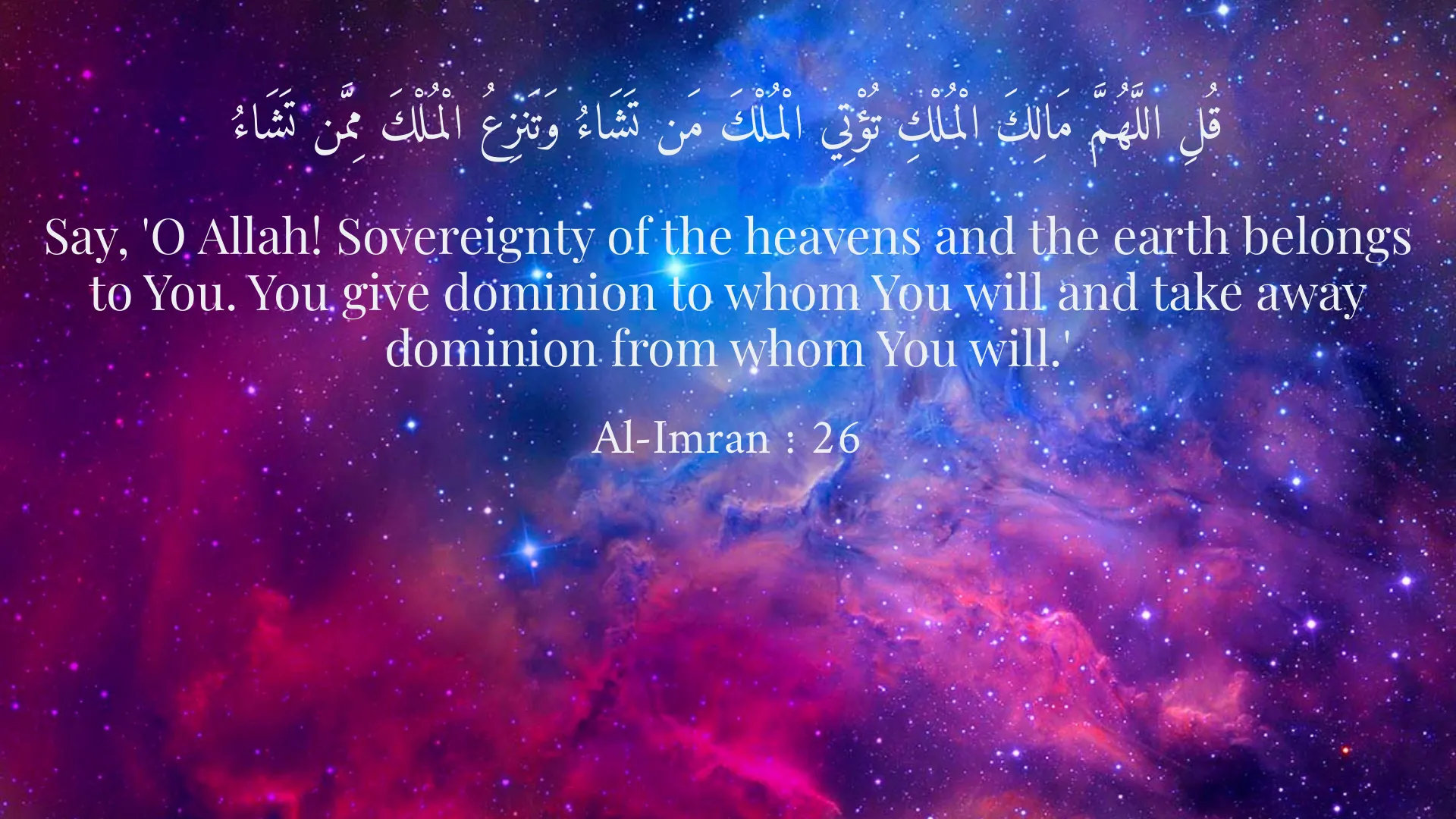
The Holy Quran serves as a comprehensive guide for Muslims, encompassing a multitude of aspects of life, including faith, morality, and success. It clearly indicates that everything operates under the will and sovereignty of God, highlighting the profound relationship between divine authority and human actions. Success, as understood in the Quranic context, is not merely a product of individual effort or societal factors; rather, it emanates from the grace and mercy of the Almighty. This understanding is pivotal for believers, as it shapes their perception of life's achievements and challenges. One of the most poignant verses that encapsulates this notion is found in Surah Al-Imran, verse 26, where God proclaims: 'Say, O Allah! Sovereignty of the heavens and the earth belongs to You. You give dominion to whom You will and take away dominion from whom You will.' This assertion underscores the omnipotence of God over everything that exists. The sovereignty of the heavens and the earth is a reminder that all power and control ultimately belong to Him. Each time an individual experiences success, whether in personal endeavors, academic pursuits, or professional achievements, it is crucial for them to recognize that this success is not purely the result of their own capabilities but rather a blessing granted through divine will. The relationship between God's will and human effort is further reinforced in Surah Al-Anfal, verse 53, which states: 'This is because Allah would never change a blessing which He had bestowed upon a people until they change what is within themselves.' This verse highlights two critical points: first, it emphasizes the idea of divine blessings being contingent upon the internal state of individuals or communities; and second, it establishes a reciprocal relationship between God's mercy and human actions. In essence, believers are encouraged to work on their character, intentions, and ethical standards to align their lives in accordance with divine guidance. Success in life, therefore, is not simply an external validation of skills or intelligence. Instead, it is a multi-faceted construct influenced by spiritual faith, moral integrity, and conscientious efforts. For instance, a student may work diligently and achieve outstanding grades, yet without acknowledging the role of God’s mercy, such success may lead to arrogance or complacency. The Quran's teachings urge individuals to reflect humbly on their accomplishments and to express gratitude for the blessings received. Furthermore, the Quran emphasizes the importance of sincerity in one's actions. Surah Al-Baqarah, verse 177, illustrates that righteousness and true success come not just from ritualistic worship but stem from genuine faith and ethical conduct. The verse elucidates that it is the intention behind one’s actions that bears significant weight in the eyes of God. Therefore, believers are prompted to engage in actions that are truthful, just, and beneficial to society, enhancing their chances of divine favor. In contemporary society, there is a growing tendency to view success through a narrow lens, often equating it solely with material wealth or fame. However, the Quranic perspective broadens this definition, encompassing various dimensions of success, including spiritual fulfillment, personal development, and social progress. This holistic approach encourages individuals to pursue not only personal gain but also collective welfare, fostering a sense of community and shared responsibility. Moreover, the idea of divine sovereignty brings about a sense of peace and reassurance for believers. Understanding that all occurrences, including failures and setbacks, have a purpose within God’s grand design helps individuals cope with challenges and difficulties. In Surah Al-Baqarah, verse 286, it is stated: 'Allah does not burden a soul beyond that it can bear.' This verse instills hope and resilience, assuring believers that every hardship carries the seed of potential and growth. Therefore, even in the face of adversity, believers are encouraged to maintain their faith and trust in God’s wisdom, knowing that their efforts, when aligned with divine intentions, will eventually lead to success, even if it is not immediately apparent. In conclusion, the teachings of the Holy Quran provide profound insights into the nature of success, urging believers to acknowledge the role of divine grace while simultaneously emphasizing the importance of personal effort and integrity. Success, in its truest form, is a harmonious interplay between seeking God’s blessings and striving towards moral excellence. As Muslims navigate through the complexities of life, they must remain anchored in their faith, continually expressing gratitude for God’s generosity and guidance. By doing so, they will not only cultivate a successful life as understood through the Quranic lens but also contribute positively to the world around them, embodying the principles of compassion, justice, and humility championed by Islam.
Related Verses
قُلِ اللَّهُمَّ مَالِكَ الْمُلْكِ تُؤْتِي الْمُلْكَ مَن تَشَاءُ وَتَنزِعُ الْمُلْكَ مِمَّن تَشَاءُ
Say, 'O Allah! Sovereignty of the heavens and the earth belongs to You. You give dominion to whom You will and take away dominion from whom You will.'
Al-Imran : 26
ذَٰلِكَ بِأَنَّ اللَّهَ لَمْ يَكُ مُغَيِّرًا نِعْمَةً أَنْعَمَهَا عَلَى قَوْمٍ حَتَّى يُغَيِّرُوا مَا بِأَنفُسِهِمْ
This is because Allah would never change a blessing which He had bestowed upon a people until they change what is within themselves.
Al-Anfal : 53
Short Story
One day, a young man named Hasan decided to be more successful in his life. He turned to the Quran and read verses about success and God's blessings. Hasan realized that to achieve success, he must not only have faith in God but also work hard and purify his intentions. Every day, he prayed for God's assistance and tried to be honest in his endeavors. Over time, Hasan achieved great successes and remained grateful for God's blessings.