Quranic Answer
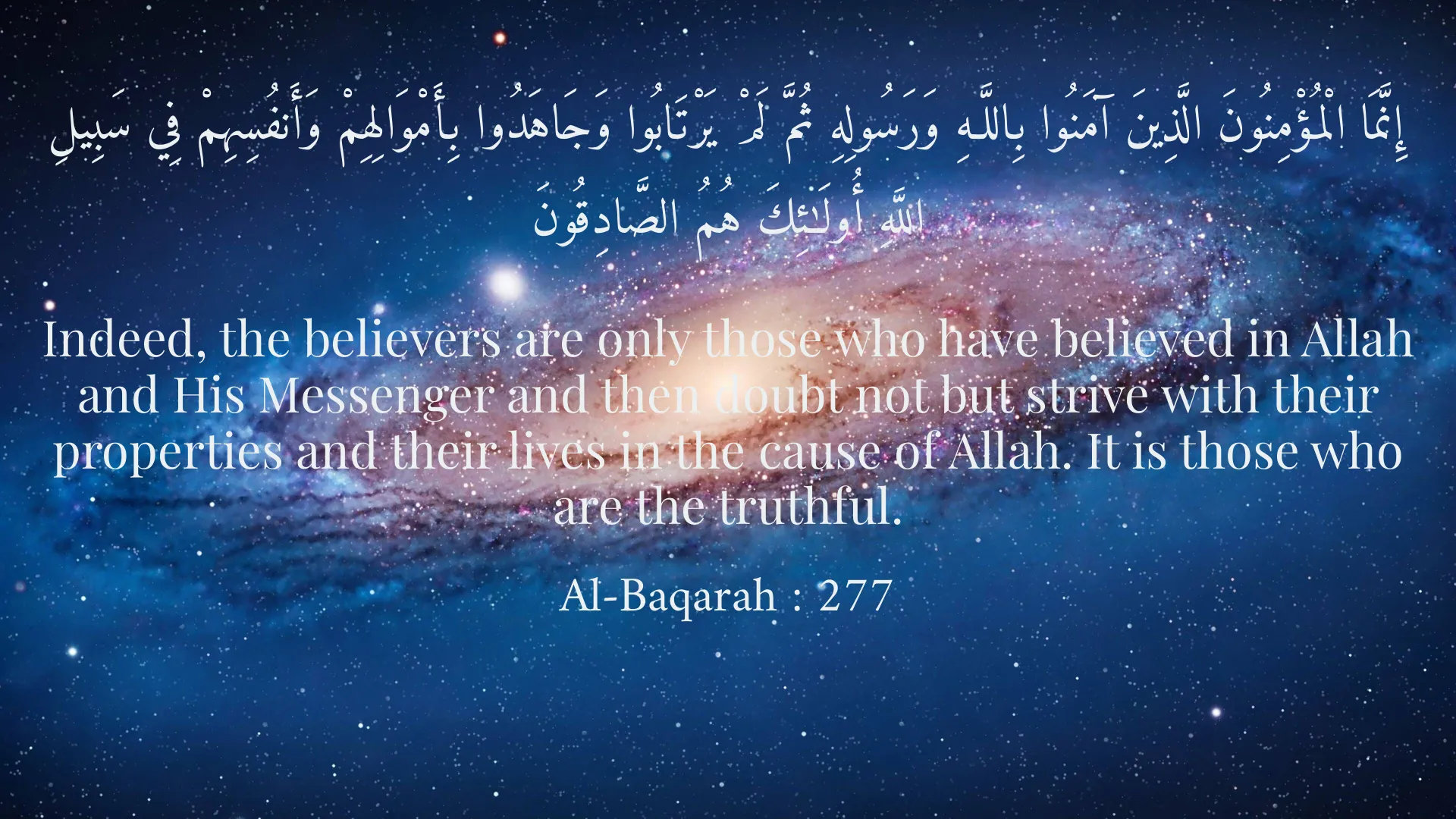
In the Holy Quran, the intertwining of faith and action is a fundamental theme that resonates throughout its verses. This spiritual text lays a robust framework for believers, emphasizing that faith without corresponding action lacks authenticity. The relationship between faith and action is underscored not only as an ideal but as a necessary condition for the attainment of true righteousness and closeness to Allah. This quality of combining belief with action manifests itself through various principles and teachings within the Quran, illustrating the profound responsibility that believers hold toward themselves, others, and, ultimately, their Creator. The Quran calls attention to the necessity of pairing faith with deeds in various places. One of the most notable mentions is in Surah Al-Baqarah, verse 277: "Indeed, the believers are only those who have believed in Allah and His Messenger and then doubt not but strive with their properties and their lives in the cause of Allah. It is those who are the truthful." This verse serves as a salient delineation between merely professing faith and embodying it in one’s conduct. True believers are characterized not only by their belief in Allah and His Prophet but also by their unwavering commitment to act in ways that further the cause of Islam. This striving often necessitates sacrifices—be it financial, emotional, or physical—indicating that a sincere believer is one who is willing to invest personal resources for the sake of their faith. Moreover, Surah Al-Imran, verse 92, further elaborates on the essence of action in faith, stating: "Never will you attain good [reward] until you spend [in the cause of Allah] from that which you love." This verse highlights the importance of giving from one’s cherished possessions, emphasizing that true generosity comes from a place of personal sacrifice. It suggests that righteous actions, especially those that involve selflessness and charity, are essential for one to truly experience the blessings that come with faith. Thus, the act of giving is not merely a benevolent gesture but a crucial aspect of demonstrating one's belief and achieving spiritual fulfillment. Additionally, the Quran emphasizes on several occasions that righteous conduct and social responsibility are intrinsic to a believer's life. Islam encourages individuals to engage in social activities that benefit the broader community, helping others, and performing acts of charity. These actions not only serve to uplift the community but also solidify one’s own faith. For instance, helping those in need, volunteering time, and contributing to a supportive society are all manifestations of one’s belief. The Quranic narrative thus successfully conveys that faith without action remains incomplete and unactualized. To further illustrate this notion, one can analyze the life of the Prophet Muhammad (peace be upon him), who epitomized the amalgamation of faith and action. His life was dedicated to not only preaching the message of Islam but also practicing it through his actions. He demonstrated compassion, honesty, and generosity to all, regardless of their backgrounds. The Prophet’s example underscores that an authentic follower of Islam must seek to embody the principles of faith within their daily actions. As seen through his conduct, the teachings of Islam come alive and are illustrated through his interactions with others. His efforts to establish justice, promote welfare, and care for the needy exemplify how faith is powerfully articulated through actions. In contrast, a mere profession of faith devoid of action may lead to spiritual stagnation and can undermine the essence of one’s beliefs. The Quran cautions against hypocrites, who claim faith yet act contrary to its teachings. These verses serve as a reminder that the sincerity of one’s faith is reflected in deeds and actions. As such, Muslims are steered toward a path of continuous self-improvement and a commitment to uphold the teachings of Islam through their behaviors. The Quran implores believers to engage in acts of righteousness, to be active participants in their communities, and to work toward the betterment of society. In conclusion, the Quran’s strong emphasis on the necessity of pairing faith with action forms an essential pillar of Islamic teachings. It articulates the belief that faith is not merely a passive state but an active engagement that requires conscious efforts and dedication. The call to action resonates through verses that encourage believers to demonstrate their faith through good deeds, charity, and social responsibility. As such, the teachings of Islam invite individuals to cultivate an environment where faith manifests itself in tangible ways, fostering a strong sense of community and a collective endeavor towards divine goals. Ultimately, a life characterized by sincere faith and impactful action not only leads to personal fulfillment but also contributes to the welfare of the greater society, thus aligning with the overarching principles of Islam.
Related Verses
إِنَّمَا الْمُؤْمِنُونَ الَّذِينَ آمَنُوا بِاللَّـهِ وَرَسُولِهِ ثُمَّ لَمْ يَرْتَابُوا وَجَاهَدُوا بِأَمْوَالِهِمْ وَأَنفُسِهِمْ فِي سَبِيلِ اللَّهِ أُولَـٰئِكَ هُمُ الصَّادِقُونَ
Indeed, the believers are only those who have believed in Allah and His Messenger and then doubt not but strive with their properties and their lives in the cause of Allah. It is those who are the truthful.
Al-Baqarah : 277
لَن تَنَالُوا الْبِرَّ حَتَّى تُنفِقُوا مِمَّا تُحِبُّونَ
Never will you attain good [reward] until you spend [in the cause of Allah] from that which you love.
Al-Imran : 92
Short Story
Once upon a time, there was a man named Rahim. He always thought about making the most out of his life and knew that faith alone wasn't enough. He decided to do at least one good deed every day. One day, he helped a needy family, and felt that his faith had strengthened. From that day on, Rahim continued to do good deeds and help others, experiencing greater peace and satisfaction in his life.