Quranic Answer
The answer to this question, from the perspective of the Holy Quran, is an unequivocal yes: God is absolutely and always with us, at every moment, without any conditions, even when we do not clearly feel His presence and closeness amidst life's struggles, hardships, or moments of heedlessness. This is a fundamental truth in Islamic faith, that Allah, the Most High, transcends time and space and our sensory perceptions, encompassing and being aware of all things, and being close to everything. This divine presence is not merely a physical presence, but a presence of knowledge, guardianship, power, and mercy. Allah explicitly states in the Holy Quran: "And He is with you wherever you are. And Allah is Seeing of what you do" (Surah Al-Hadid, 57:4). This verse indicates that God's presence is pervasive and permanent, that wherever we are, He is with us and aware of our actions. This absolute awareness includes our thoughts, intentions, and even our innermost feelings. Even in the depths of loneliness and isolation, we are never truly alone, because Allah is closer to us than our jugular vein, as He states in Surah Qaf, verse 16: "And We are nearer to him than [his] jugular vein." This proximity is one of encompassing knowledge, power, and divine management, from which He is never oblivious for a single moment. The reason we sometimes do not feel this presence stems from our own weaknesses, not from God's absence or distance. Factors such as heedlessness of God's remembrance, excessive focus on worldly affairs, entanglement in sins, and lack of reflection on God's signs in the horizons and within ourselves, can cast a veil over our hearts and souls, preventing us from properly perceiving this constant presence. The feeling of distance is a human sensation that can arise from despair, hopelessness, or a lack of sufficient spiritual connection, but this feeling never translates into God's actual absence. In fact, even in the most difficult moments and crises, God's helping hand extends to us through various means and factors, saving us from peril, even if we may not realize His grace at that moment due to our distress. The Quran encourages us to always remember God and establish a connection with Him so that this sense of presence becomes more vivid. In Surah Al-Baqarah, verse 186, He says: "And when My servants ask you, [O Muhammad], concerning Me - indeed I am near. I respond to the invocation of the supplicant when he calls upon Me. So let them respond to Me [by obedience] and believe in Me that they may be [rightly] guided." This verse indicates that Allah is very close to His servants and responds to the prayer of every supplicant when they call upon Him. Therefore, the feeling of distance is merely a misconception that can be overcome by strengthening faith, repentance, prayer, and good deeds, allowing us to taste the sweetness of the Lord's perpetual presence in life. The purpose of these reminders is to strengthen the spirit of hope, reliance (Tawakkul), and assurance in the hearts of believers. Knowing that God is always with us empowers us to face challenges, resist temptations, and remain steadfast on the path of truth. This divine presence is a source of endless peace, for we know that even when no one sees us, or we feel lonely, He is our witness, observer, and supporter. So, even when one's heart is heavy with sorrows or feels weary from the clamor of the world, or when for any reason they perceive the Creator's presence in their life as diminished, they must return to this truth of faith: that He always was, is, and will be. We only need to remove the veils of heedlessness and, with a heart filled with His remembrance and name, welcome His presence. This presence is a light that illuminates every darkness and soothes every sorrow. With every breath, every heartbeat, and every thought that crosses the mind, God is with us and watching. This belief is not only comforting but also entails responsibility, for we know that nothing is hidden from His sight, and our deeds and intentions are always being weighed by Him. Therefore, with full certainty, one must accept that God is not only always with us but also knows and responds to our deepest spiritual needs, even before we can articulate them. This is the utmost divine grace, generosity, and love that never leaves us alone and is always our refuge and support, whether in ease or hardship, whether awake or asleep, whether our five senses perceive this great truth or not.
Related Verses
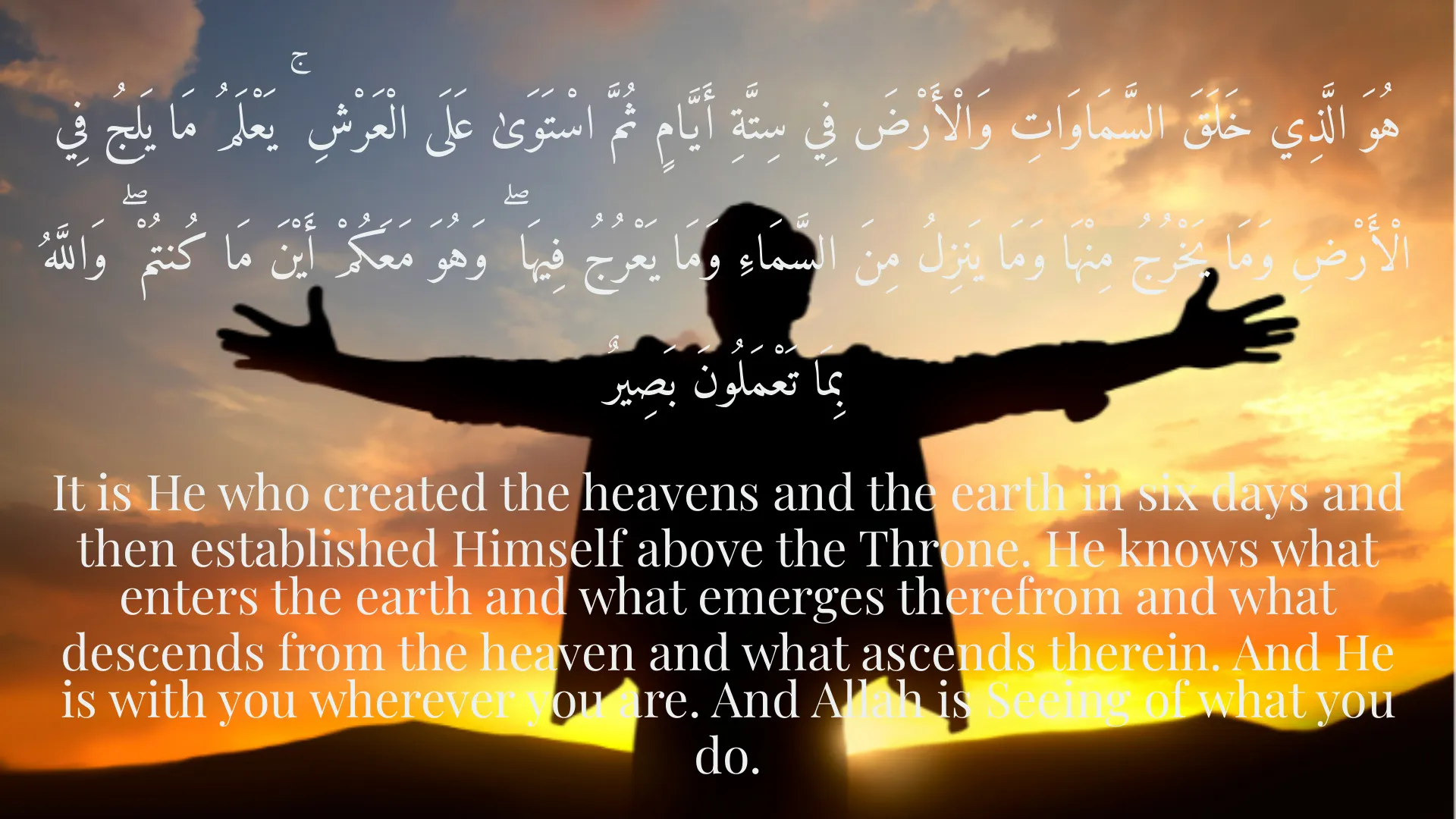
هُوَ الَّذِي خَلَقَ السَّمَاوَاتِ وَالْأَرْضَ فِي سِتَّةِ أَيَّامٍ ثُمَّ اسْتَوَىٰ عَلَى الْعَرْشِ ۚ يَعْلَمُ مَا يَلِجُ فِي الْأَرْضِ وَمَا يَخْرُجُ مِنْهَا وَمَا يَنزِلُ مِنَ السَّمَاءِ وَمَا يَعْرُجُ فِيهَا ۖ وَهُوَ مَعَكُمْ أَيْنَ مَا كُنتُمْ ۖ وَاللَّهُ بِمَا تَعْمَلُونَ بَصِيرٌ
It is He who created the heavens and the earth in six days and then established Himself above the Throne. He knows what enters the earth and what emerges therefrom and what descends from the heaven and what ascends therein. And He is with you wherever you are. And Allah is Seeing of what you do.
Al-Hadid : 4
وَلَقَدْ خَلَقْنَا الْإِنسَانَ وَنَعْلَمُ مَا تُوَسْوِسُ بِهِ نَفْسُهُ ۖ وَنَحْنُ أَقْرَبُ إِلَيْهِ مِنْ حَبْلِ الْوَرِيدِ
And We have already created man and know what his soul whispers to him, and We are nearer to him than [his] jugular vein.
Qaf : 16
وَإِذَا سَأَلَكَ عِبَادِي عَنِّي فَإِنِّي قَرِيبٌ ۖ أُجِيبُ دَعْوَةَ الدَّاعِ إِذَا دَعَانِ ۖ فَلْيَسْتَجِيبُوا لِي وَلْيُؤْمِنُوا بِي لَعَلَّهُمْ يَرْشُدُونَ
And when My servants ask you, [O Muhammad], concerning Me - indeed I am near. I respond to the invocation of the supplicant when he calls upon Me. So let them respond to Me [by obedience] and believe in Me that they may be [rightly] guided.
Al-Baqarah : 186
Short Story
It is narrated that one day, a distressed and sorrowful dervish was crossing the desert. He felt weary from the arduous journey and his loneliness, imagining that he had no helper in this world. Just then, he reached a spring. He drank some water and looked up, when suddenly he saw a small bird with a broken beak and a wounded wing, drinking water from the spring with great difficulty. The dervish pondered, "How can this helpless bird survive in this desolate and lonely desert? Who helps it?" Suddenly, another bird came to it with a fruit in its beak and placed the fruit beside it. The wounded bird ate from the fruit and gained strength. When the dervish saw this scene, out of utter amazement and wonder, he prostrated himself. He realized that God, even in the remotest and most solitary places, is not heedless of any creature and provides for its sustenance and aid, even if that creature itself is unaware of this presence. This incident enlightened the dervish's heart, and he understood that the presence and grace of the Truth (God) always encompasses him, even in moments when, due to sorrow and heedlessness, he does not feel His presence. So, with a joyful and hopeful heart, he continued his journey, knowing that God was always with him.