Quranic Answer
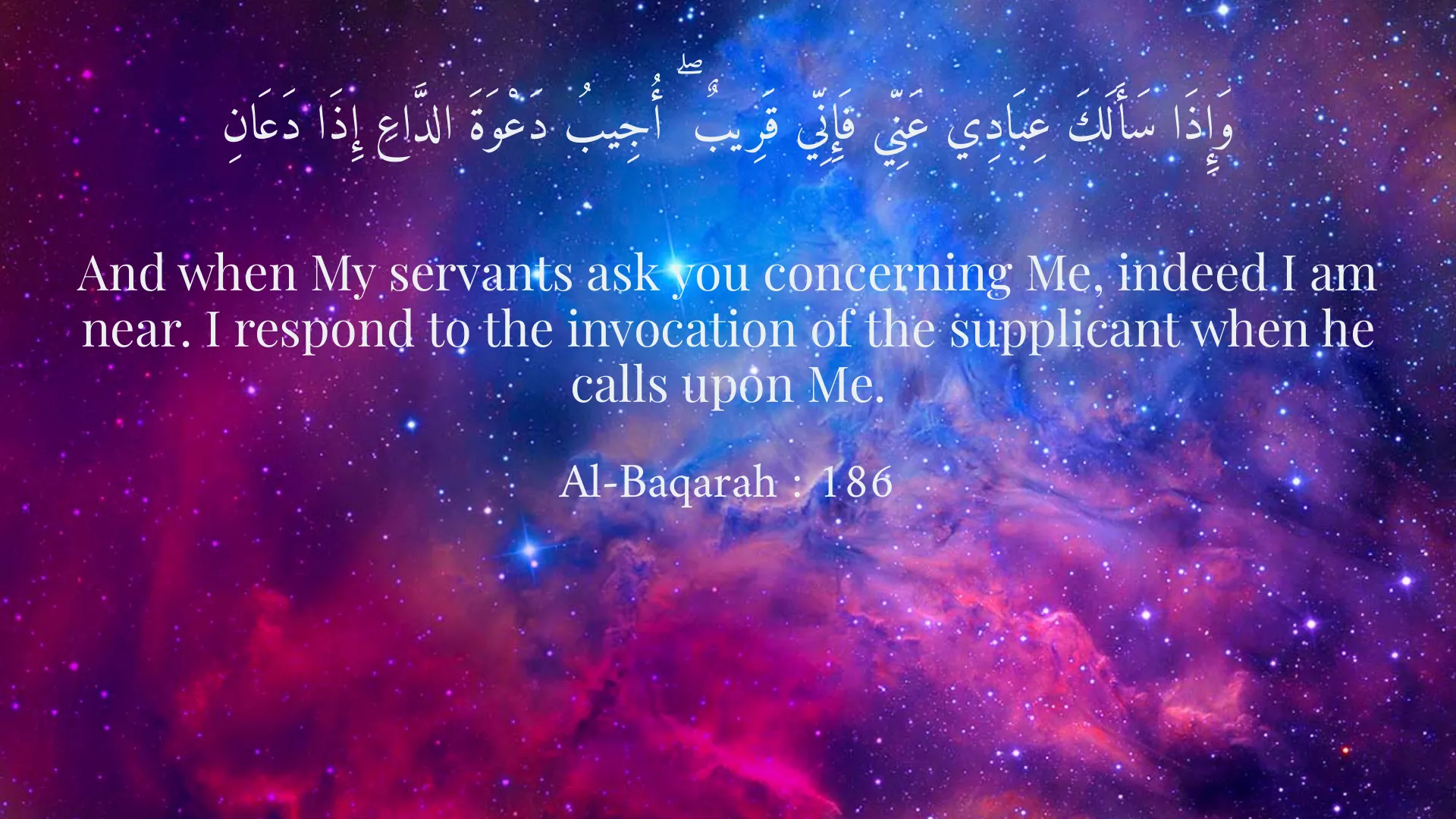
In the Holy Quran, God's awareness of the sufferings and difficulties faced by humanity is not only asserted but is a central theme that resonates throughout the text. This divine attention reassures believers that they are not alone in their struggles and that their pleas do not go unheard. The Quran consistently emphasizes the closeness of God to His creation, especially during times of distress, and this understanding is vital for anyone navigating the complexities of life. One of the most poignant expressions of this divine awareness appears in Surah Al-Baqarah, verse 186, where it states: 'And when My servants ask you concerning Me, indeed I am near. I respond to the invocation of the supplicant when he calls upon Me.' This verse not only highlights God's proximity but also emphasizes that He is actively listening to the cries of His servants. The term used for 'near' conveys a celestial intimacy, suggesting that God is not a distant observer but a caring presence who is available to those in need. The act of calling upon God, according to this verse, is a powerful affirmation of faith, indicating that in moments of desperation, turning to God is not merely an act of hope; it is met with a response. Furthermore, this theme is reiterated in Surah Al-Inshirah, where Allah declares: 'For indeed, with hardship [will be] ease. Indeed, with hardship [will be] ease.' (Surah Al-Inshirah, verses 5 and 6). Through the repetition of this assertion, the Quran comforts believers by reminding them that Allah does not place challenges before His creation without providing relief. It reinforces the understanding that life is a composite of difficulties interspersed with ease, suggesting an inherent balance in the divine scheme of things. This duality can be a source of hope for those who are suffering, encouraging them to perceive challenges as transient phases of existence. In the narrative of Surah Yusuf, we encounter the story of Prophet Joseph, who underwent severe trials, including betrayal and wrongful imprisonment. In verse 18, it is noted: 'And they brought upon his shirt false blood.' This incident underscores the theme of injustice and challenges faced by even the most noble individuals. However, it further illustrates God's attentive watch over His creation, for despite Joseph's trials, divine wisdom is at play. The hardships faced by Joseph were part of a greater plan, leading to eventual triumph and reconciliation. This story illustrates that while we may not immediately comprehend the trials we face, they are part of a divine narrative that ultimately serves a higher purpose. Moreover, in Surah Adh-Dhariyat, verse 56, it states: 'And I did not create the jinn and mankind except to worship Me.' This foundational principle in Islamic theology serves as a reminder that the essence of human existence is to maintain a relationship with God. When we acknowledge our trials and tribulations to Him, we actively engage in the act of worship. Thus, suffering can serve as a means of drawing closer to God. The philosophical implication here is profound: our struggles allow us to cultivate patience, resilience, and ultimately, a deeper connection with the divine. The Quran does not shy away from addressing human suffering; instead, it contextualizes it within the journey of faith. The trials of life serve as opportunities for spiritual growth, character building, and the cultivation of empathy. God’s awareness of our sufferings and His promise of assistance invites believers to trust in His plan and to remain steadfast in their faith. This trust is emphasized repeatedly throughout the Quran, reinforcing that even in the darkest of times, there is hope and light. Scholars have pointed out that the recurrent theme of divine assistance in the face of hardship is not merely a consolation for believers but also a call to action. When we recognize that our struggles are part of a larger framework, we are also reminded of our responsibility to support one another. Compassion towards fellow beings becomes a pathway through which divine mercy can be distributed, demonstrating that God's awareness translates into tangible actions among humanity. Furthermore, the Quran presents numerous narratives of previous prophets and their communities who faced significant challenges. By recounting these stories, believers learn that adversity is not an isolated experience. Instead, it is a collective characteristic of the human condition. This interconnectedness fosters a community of support, urging believers to reach out to those enduring difficulties and encouraging each other to remain steadfast in faith. In conclusion, the Quran eloquently articulates God's awareness of humanity’s sufferings, offering both reassurance and profound wisdom. Through verses that emphasize divine closeness and the promise of relief, believers are reminded that they are never alone in their struggles. Each hardship faced is imbued with divine purpose, allowing individuals to cultivate resilience and deeper faith. As we navigate the trials of life, let us hold fast to the knowledge that our cries are heard, our struggles understood, and that with difficulty, ease will surely follow. Thus, we can confidently affirm that God is observant of all the conditions of His servants, comprehending their pains and tribulations, and is always ready to assist them in their journey towards spiritual fulfillment.
Related Verses
وَإِذَا سَأَلَكَ عِبَادِي عَنِّي فَإِنِّي قَرِيبٌ ۖ أُجِيبُ دَعْوَةَ الدَّاعِ إِذَا دَعَانِ
And when My servants ask you concerning Me, indeed I am near. I respond to the invocation of the supplicant when he calls upon Me.
Al-Baqarah : 186
فَإِنَّ مَعَ الْعُسْرِ يُسْرًا
For indeed, with hardship [will be] ease.
Al-Inshirah : 5
وَجَاءُوا عَلَى قَمِيصِهِ بِدَمٍ كَاذِبٍ.
And they brought upon his shirt false blood.
Yusuf : 18
Short Story
One day, a young man named Ali was pondering over his life and felt sad about the sufferings he had faced. He decided to turn to the Quran and study its verses. After reflecting on various verses, he realized that God was aware of his troubles and would not leave him alone in his struggles. Ali immediately prayed and found renewed confidence, knowing that God was always by his side.