Quranic Answer
The concept of divine knowledge and awareness in the Holy Quran is a profound topic that evokes deep reflection regarding human intentions and behaviors. The Quran, as the holy scripture of Islam, emphasizes the omnipotence and omniscience of God, offering guidance on how individuals should approach their internal and external actions. One of the most notable verses addressing this theme is found in Surah Al-Baqarah, verse 77: 'Does he not know that Allah knows what is in the heavens and what is on the earth? Nothing is concealed from Allah, even in private conversations of three.' This verse serves as a reminder that all thoughts, intentions, and actions are under God's scrutiny, implying that there is an eternal and all-knowing witness to human behavior. The Quran, through various verses, emphasizes that nothing in existence escapes God's knowledge. The acknowledgment of God's awareness is a crucial aspect of faith in Islam. It guides believers towards sincerity, honesty, and integrity in their dealings with others, as well as in their thoughts and desires. The verse specifically mentions conversations, highlighting that even the most private of discussions are not hidden from God. This awareness calls for a heightened sense of accountability among individuals, urging them to reflect on their intentions and to ensure that their motives remain pure. Further corroborating this idea, Surah Al-Mu'minun, verse 13 states: 'Indeed, He is Knowing of that which is in the breasts.' This verse underlines the internal psychological landscape of humans, indicating that God is aware of what lies within their hearts. The term 'breasts' refers to the innermost thoughts and feelings, symbolizing the hidden desires and intentions that often escape the judgment of human society. It signifies that one's true intentions, whether pure or tainted, are fully known to God, thereby compelling believers to strive for sincerity in their faith and actions. The implications of divine knowledge extend beyond mere acknowledgment; they serve as an ethical compass for Muslims. In a world that often values external appearances and societal perceptions, the Quran redirects the attention back to the internal realm of intentions. Indeed, one of the core messages emerging from these verses is the importance of scrutinizing one's intentions before proceeding with any action. This introspection cultivates a deeper connection with God, ensuring that every endeavor undertaken is aimed at earning His pleasure. Furthermore, the emphasis on pure intentions in the Quran is linked intricately to the concept of spiritual elevation. It is narrated that individuals can attain higher ranks in their spiritual journey based on the sincerity of their intentions. This notion is corroborated by various hadiths that echo similar sentiments. For instance, the Prophet Muhammad (peace be upon him) is reported to have said, 'Actions are but by intentions, and every person will have [the reward for] that which he has intended.' This underscores that the essence of one's actions is significantly rooted in the motivations driving them, reaffirming the Quranic principles. Therefore, meticulous attention to one's intentions is paramount in the Islamic faith. Practicing self-awareness and sincerity in all actions reinforces a believer's relationship with God. Various religious scholars have expounded on the significance of having good intentions in every aspect of life, be it in acts of worship, dealings, or personal growth. It is also crucial to understand that the pursuit of purely good intentions goes hand in hand with humility; recognition of one's flaws can lead to truer intentions, ultimately fostering growth in one's character and spirituality. Moreover, these teachings have practical implications in everyday life. In a transactional world where success might often encourage unethical behavior, the Quran serves as a beacon, reminding followers that divine knowledge penetrates the veils of deceit and insincerity. Being aware that God watches over one’s intentions can discourage wrongful actions and promote ethical conduct, thus contributing to a more just society. In conclusion, the verses from the Holy Quran regarding God's awareness of human intentions compel believers to adopt a reflective and conscientious approach to their lives. The recognition that God is fully aware of what transpires within and around us provides a framework for personal integrity and moral consistency. As global citizens striving for progress and harmony, Muslims are encouraged to manifest sincerity in their intentions, ensuring their pursuits are aligned with a higher purpose — the pleasure of Allah. Ultimately, these teachings in the Quran serve to cultivate not only the individual's relationship with God but also promote societal ethics rooted in authenticity, compassion, and accountability, making the world a better place for all.
Related Verses
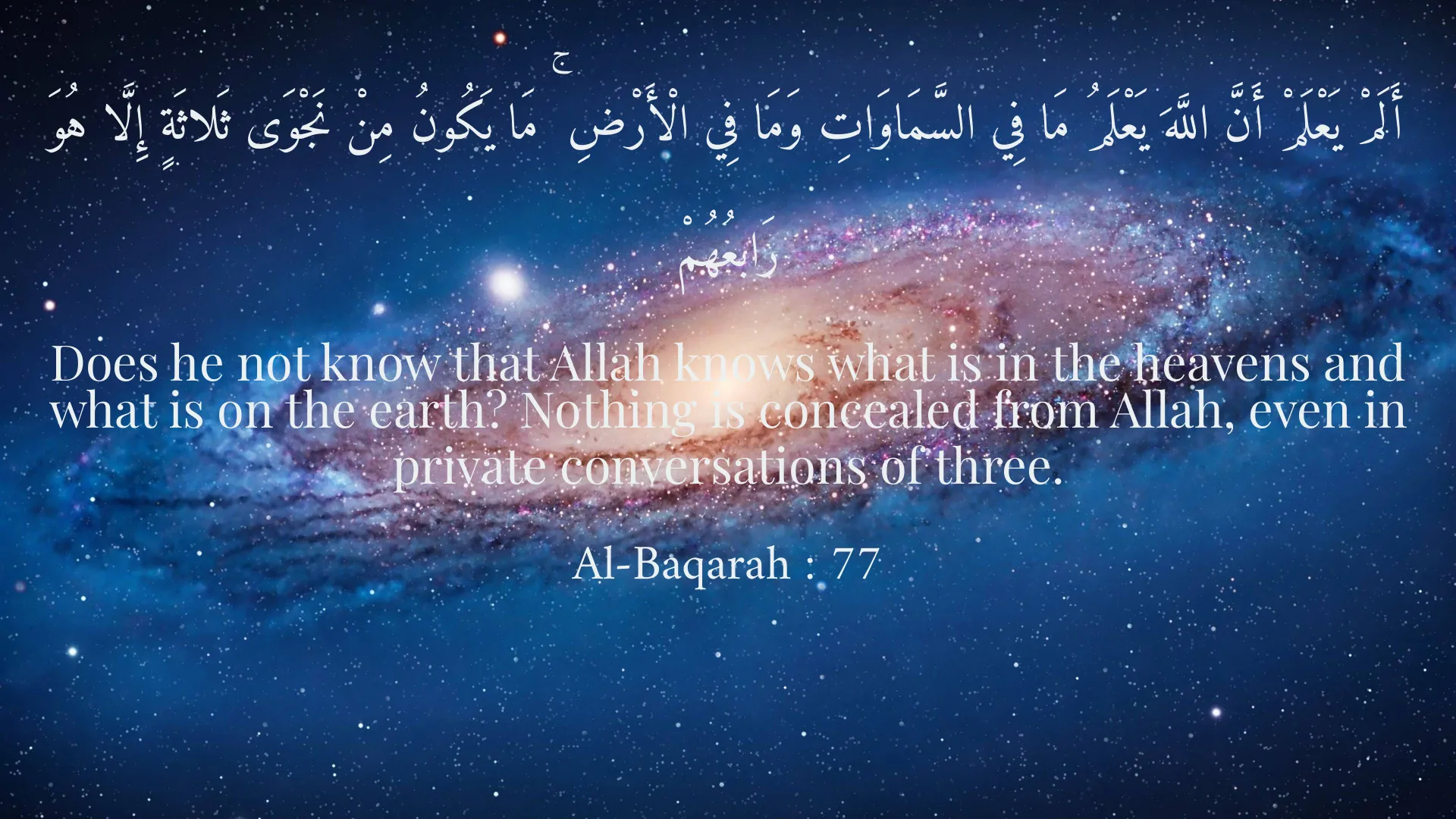
أَلَمْ يَعْلَمْ أَنَّ اللَّهَ يَعْلَمُ مَا فِي السَّمَاوَاتِ وَمَا فِي الْأَرْضِ ۚ مَا يَكُونُ مِنْ نَجْوَى ثَلاثَةٍ إِلَّا هُوَ رَابعُهُمْ
Does he not know that Allah knows what is in the heavens and what is on the earth? Nothing is concealed from Allah, even in private conversations of three.
Al-Baqarah : 77
إِنَّهُ عَلِيمٌ بِذَاتِ الصُّدُورِ
Indeed, He is Knowing of that which is in the breasts.
Al-Mu'minun : 13
Short Story
One day, Adel was reflecting on his state and wondered if his intentions were always pure. He thought about the verses of the Quran and realized that God was aware of his intentions. He decided to ensure that every action he took had a pure intention and was done for the sake of Allah. Over time, Adel felt a greater sense of peace and saw a transformation in his life.