Quranic Answer
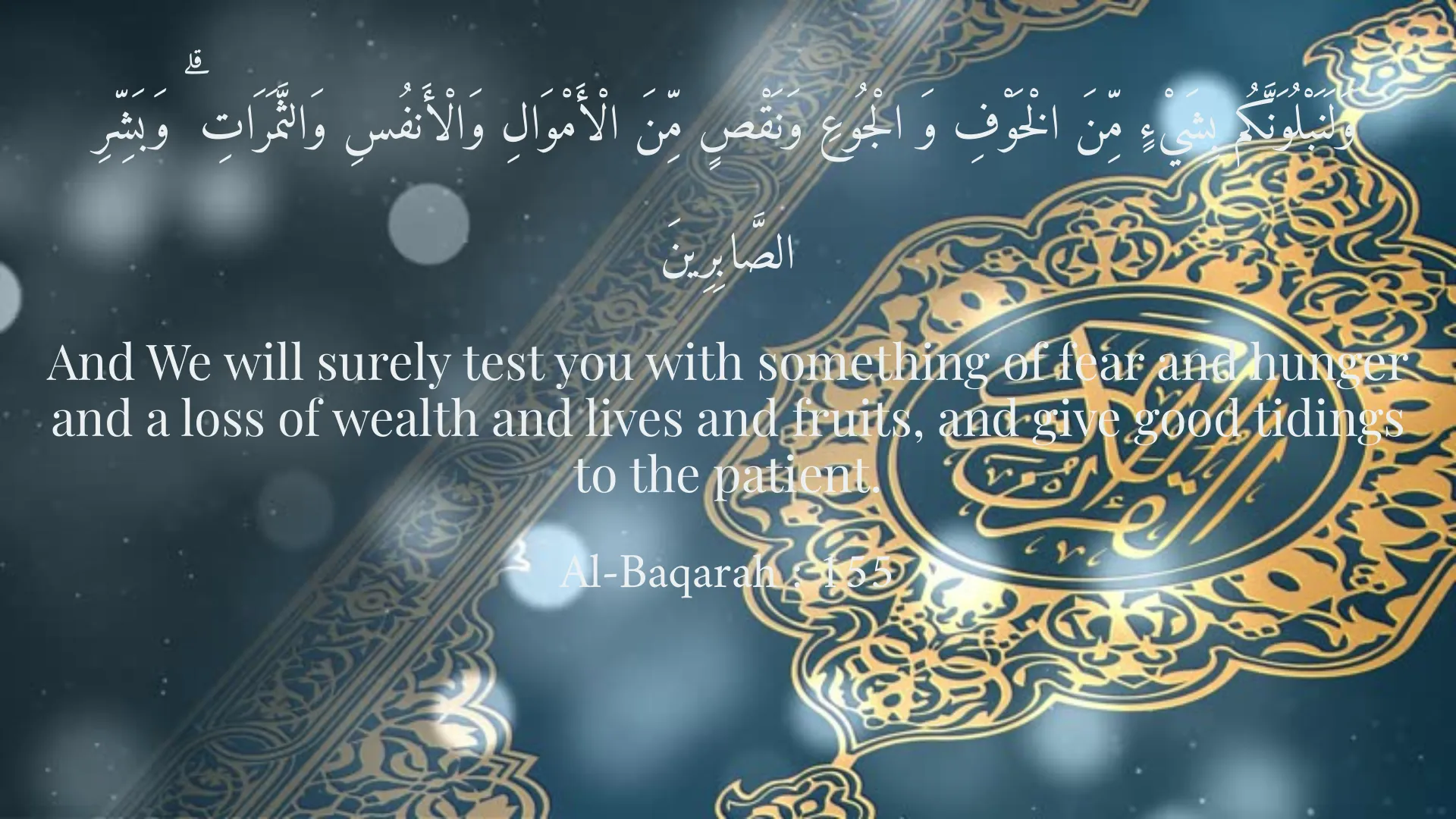
In the Holy Quran, the concept of trials and tribulations is presented as a means to recognize and evaluate the faith of individuals. Allah, in His infinite wisdom, has crafted a world where challenges and tests serve as essential components for spiritual and moral development. One notable verse that exemplifies this concept is found in Surah Al-Baqarah, verse 155: "And We will surely test you with something of fear and hunger and a loss of wealth and lives and fruits, and give good tidings to the patient." This profound statement serves as a reminder that life is not simply a series of events, but rather an intricate design where every challenge is a stepping stone toward greater understanding and resilience. The trials highlighted in this verse resonate with every individual, transcending cultural and geographical boundaries. Fear, hunger, losses, and disappointments are universal experiences that every human being encounters at some point in their existence. Whether one confronts the looming threat of uncertainty or the stark realization of material loss, these experiences shape our character and inclinations The mention of tests in relation to fear and hunger is particularly poignant. In a world where security and sustenance are not guaranteed, the act of turning to Allah in moments of crisis is a demonstration of faith. Such tests serve a dual purpose; they challenge our resolve while simultaneously fostering a deep-seated connection with the Divine. In times of fear, when the future appears daunting, our reliance on Allah becomes an anchor that offers solace and strength. The Quran reassures us that these hardships are not in vain; they are means through which Allah evaluates our faith. Furthermore, the losses referred to in the verse—whether of wealth, lives, or fruits—speak to the transient nature of worldly possessions and relationships. In the grand scheme of existence, these losses compel individuals to reflect deeper on what is truly valuable. As the Quran states, everything in this world is temporary; it is our faith and actions that endure beyond this earthly realm. Hence, every challenge we face provides a critical opportunity to assess what we prioritize in our lives. Do we succumb to despair, or do we find ways to persevere while seeking the pleasure of Allah? Hence, the Quran answers that question by affirming the virtue of patience and offering good tidings to those who endure. Moreover, injustice and oppression loom large in the landscape of human experience. Each societal system has its issues, and confronting injustices can be one of the most difficult trials faced by individuals and communities alike. In fact, these injustices present themselves as avenues to showcase our patience and endurance. In Surah Al-Imran, verse 186, Allah articulates this sentiment beautifully: "You will surely hear from those who were given the Scripture before you and from those who associate others with Allah much abuse. But if you are patient and fear Allah - it is indeed that, that is of the matter." This verse acts as both a warning and encouragement. It acknowledges the reality that individuals may face animosity and abuse for their beliefs or principles, reflective of the human experience throughout history. By recognizing that adversity is an inevitable part of life, Allah teaches us to cultivate patience (Sabr) and reverence (Taqwa) towards Him. Patience is a significant virtue in Islam, valued not only as a response to tribulations but as a proactive quality that shapes our character. Those who embody patience are often able to navigate life's challenges with grace, inspiring others around them as well. The Quran consistently emphasizes the importance of patience through various verses, reinforcing the notion that those who endure trials with steadfastness will be rewarded. In addition, fear of Allah (Taqwa) acts as a guiding principle, encouraging individuals to act with integrity and morality, even when faced with adversity. When injustice befalls us, the natural inclination may be to retaliate or succumb to despair. However, by practicing fear of Allah, we are reminded that our ultimate accountability lies with Him. Engaging in righteous conduct in the face of adversity not only reinforces our faith but also serves as a powerful testament to our character. When we choose to respond to challenges with patience and fear of Allah, we exemplify the teachings of the Quran and embody the essence of Islam. The notion of injustice as a test from Allah is profound. It shifts the framework of perspective from one of despair to accountability; we understand that every moment of difficulty is an opportunity for growth. In a world rife with challenges, individuals are reminded to maintain their faith steadfastly. The trials and tribulations we encounter provide a unique platform for us to reflect upon our spiritual standing and the strength of our faith. Each test is an invitation from Allah to elevate our consciousness, reassess our priorities, and bolster our trust in His wisdom. In conclusion, the Quran teaches us that trials and tribulations are intrinsic to human existence. They come in various forms—fear, hunger, loss, and injustice—but the lessons they impart possess unmatched significance. As individuals navigating through life's complexities, it is essential to embrace these challenges with patience and a mindful heart. The assurance of rewards for the patient serves as a beacon of hope for believers. By adopting a perspective grounded in faith and virtue, we not only endure hardship; we emerge stronger and more aligned with the purpose laid out for us by Allah. In moments of despair, let us read the Quran not just for guidance, but as a source of solace and motivation, trusting that our steadfastness will lead us to salvation.
Related Verses
وَلَنَبْلُوَنَّكُم بِشَيْءٍ مِّنَ الْخَوْفِ وَ الْجُوعِ وَنَقْصٍ مِّنَ الْأَمْوَالِ وَالْأَنفُسِ وَالثَّمَرَاتِ ۗ وَبَشِّرِ الصَّابِرِينَ
And We will surely test you with something of fear and hunger and a loss of wealth and lives and fruits, and give good tidings to the patient.
Al-Baqarah : 155
إِنَّكُمْ سَتُبْتَلَوْنَ فِي أَمْوَالِكُمْ وَ أَنفُسِكُمْ وَ لَتَسْمَعُنَّ مِنَ الَّذِينَ أُوتُوا الْكِتَابَ مِن قَبْلِكُمْ وَ مِنَ الَّذِينَ أَشْرَكُوا أَذًى كَثِيرًا ۖ وَ إِن تَصْبِرُوا وَ تَتَّقُوا فَإِنَّ ذَٰلِكَ مِنْ عَزْمِ الْأُمُورِ
You will surely hear from those who were given the Scripture before you and from those who associate others with Allah much abuse. But if you are patient and fear Allah, it is indeed that, that is of the matter.
Al-Imran : 186
Short Story
One day, a man was heading to the market, pondering over the injustices and oppression in life. He wondered, "Why is there so much injustice?" Just then, he saw a man helping others, despite facing oppression himself. He asked this man, "Why do you continue to help others despite all this injustice?" The man replied, "Because I know that this world might be a test from Allah, and I must prove my patience and endurance." This response changed the man's perspective, and he decided to showcase his own patience by helping others.