Quranic Answer
In the Holy Quran, the intricate relationship between human will and divine destiny is explored in great depth, illustrating one of the most profound philosophical discussions in Islamic thought. The tension between predestination and free will has been a topic of debate among scholars and practitioners alike for centuries, posing questions that touch upon the essence of human existence, morality, and accountability. Through various verses, the Quran emphasizes that while Allah's will and decree govern the lives of human beings, mankind possesses a level of agency that allows them to make choices and be accountable for those choices. To begin with, Surah Al-An'am, verse 17, sets the tone for these discussions by stating, 'And if Allah touches you with harm, there is no remover of it except Him.' This powerful verse encapsulates the core concept that ultimately, all affairs are under the dominion of Allah's might and authority. It highlights the idea that humans do not exist in a vacuum free of divine influence. In times of hardship, believers are reminded that only Allah can alleviate their suffering, reinforcing the understanding of His supreme power. Furthermore, this verse subtly indicates that human existence and its accompanying challenges are intricately woven into the fabric of Allah's will. Additionally, the Quran acknowledges the trials that individuals face in their lives. Surah Al-Qalam, verse 33, offers insight into this dynamic by stating, 'And indeed, they were about to tempt you away from that which We revealed to you...' This verse reveals a fundamental truth: life is filled with temptations and challenges which are, in essence, part of the divine decree that serves as a test for humanity. From an Islamic perspective, these trials provide humans with an opportunity to assert their will in the face of adversity. Herein lies the essence of free will; individuals are confronted with choices that require moral judgment and a commitment to righteousness. The Quran posits that while Allah decrees certain circumstances, humans are tested on how they respond to these circumstances, thereby solidifying their accountability. In Surah Al-Zumar, verse 7, there is a further elaboration on personal responsibility as Allah declares, 'If you disbelieve, indeed Allah is free from need of you; and He does not approve for His servants disbelief.' Through this proclamation, the Quran stresses that while Allah does not have any need for His creation, it is the individuals who bear the consequences of their own choices. The implications of this verse emphasize the importance of belief and moral conduct, urging readers to reflect upon their actions and the choices they make in life. It posits that although Allah's will prevails, human beings have the power to choose their path—be it one of belief and righteousness, or disbelief and moral failings. This correlation between Allah’s will and human freedom is further articulated through the notion of mercy and forgiveness in the Quran. Allah's attributes, including His mercy, provide a platform for hope and redemption. Individuals, irrespective of their past, have the agency to seek forgiveness and make amends for their actions. The Quran repeatedly conveys that divine mercy is vast and can encompass all who sincerely repent. This acts as a testament to the fact that while human destiny may be influenced by divine predestination, the possibility for change and transformation exists within the realm of free will. The philosophical implications of free will and destiny are central to understanding human responsibility in Islamic theology. Scholars have long debated the extent of human agency versus divine predestination. While some theological schools emphasize the preordained aspect of human life, others advocate for a more balanced approach that recognizes the significance of human choice intertwined with divine guidance. This dialectical relationship affirms that both divine will and human action play pivotal roles in shaping destiny. Moreover, the Quranic perspective on free will is not merely an academic discussion but serves a practical purpose. It addresses existential questions and provides guidance for ethical living. The profound belief in accountability for one's actions cultivates a conscious approach among believers, promoting diligence and integrity in both private and public spheres of life. This ethical framework encourages individuals to act righteously and bear the consequences of their choices, fostering a stronger moral fabric in society. Furthermore, the Quranic discussion on free will and destiny has contemporary implications, sparking dialogue within modern society about individual autonomy and ethical responsibility. In an age where personal choice is increasingly revered, balancing individual rights with collective accountability and moral considerations becomes critical. The Quran offers a paradigm in which individuals recognize their power to shape their destiny while remaining cognizant of the greater divine order that encompasses their existence. In conclusion, the Quran articulates a nuanced understanding of human will and destiny, intertwining divine authority with human agency. From the verses of Surah Al-An'am to Surah Al-Zumar, the sacred text presents a cohesive narrative that insists on the importance of moral agency while simultaneously affirming Allah's sovereignty. This intricate balance prompts believers to engage with life's challenges proactively, as they navigate their responsibilities and seek to align their will with divine intentions. Ultimately, the interplay between human choice and divine decree enriches the theological discourse, offering a pathway to understanding the complexities of human existence within the frame of faith.
Related Verses
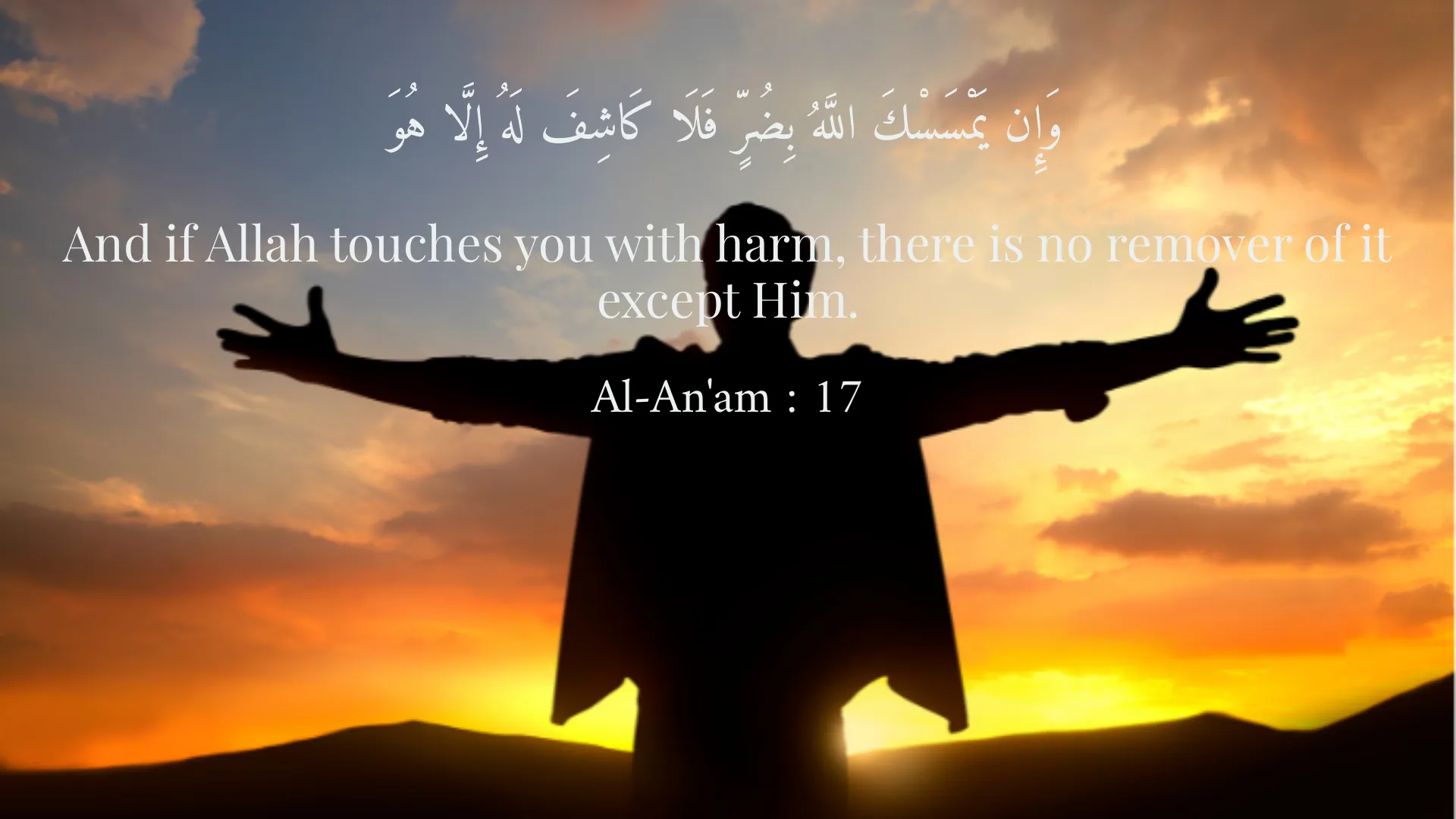
وَإِن يَمْسَسْكَ اللَّهُ بِضُرٍّ فَلَا كَاشِفَ لَهُ إِلَّا هُوَ
And if Allah touches you with harm, there is no remover of it except Him.
Al-An'am : 17
وَإِن كَادُوا لَيَفْتِنُونَكَ عَنِ الَّذِي أَوْحَيْنَا إِلَيْكَ
And indeed, they were about to tempt you away from that which We revealed to you.
Al-Qalam : 33
إِن تَكْفُرُوا فَإِنَّ اللَّهَ غَنِيٌّ عَنكُمْ
If you disbelieve, indeed Allah is free from need of you.
Al-Zumar : 7
Short Story
Once, there was a man named Hossein, a dervish, who sat by a river contemplating his life. He was in search of a truth that would illuminate the right path for him. Days and nights passed by, yet he remained in pursuit of answers. One day, a learned and wise man visited him and said, 'O Hossein, life is like a river that you can determine its path with your right choices, but ultimately, Allah manages the main course.' Hossein was astonished by this and realized that while he was responsible for his choices, he must also respect Allah's will.