Quranic Answer
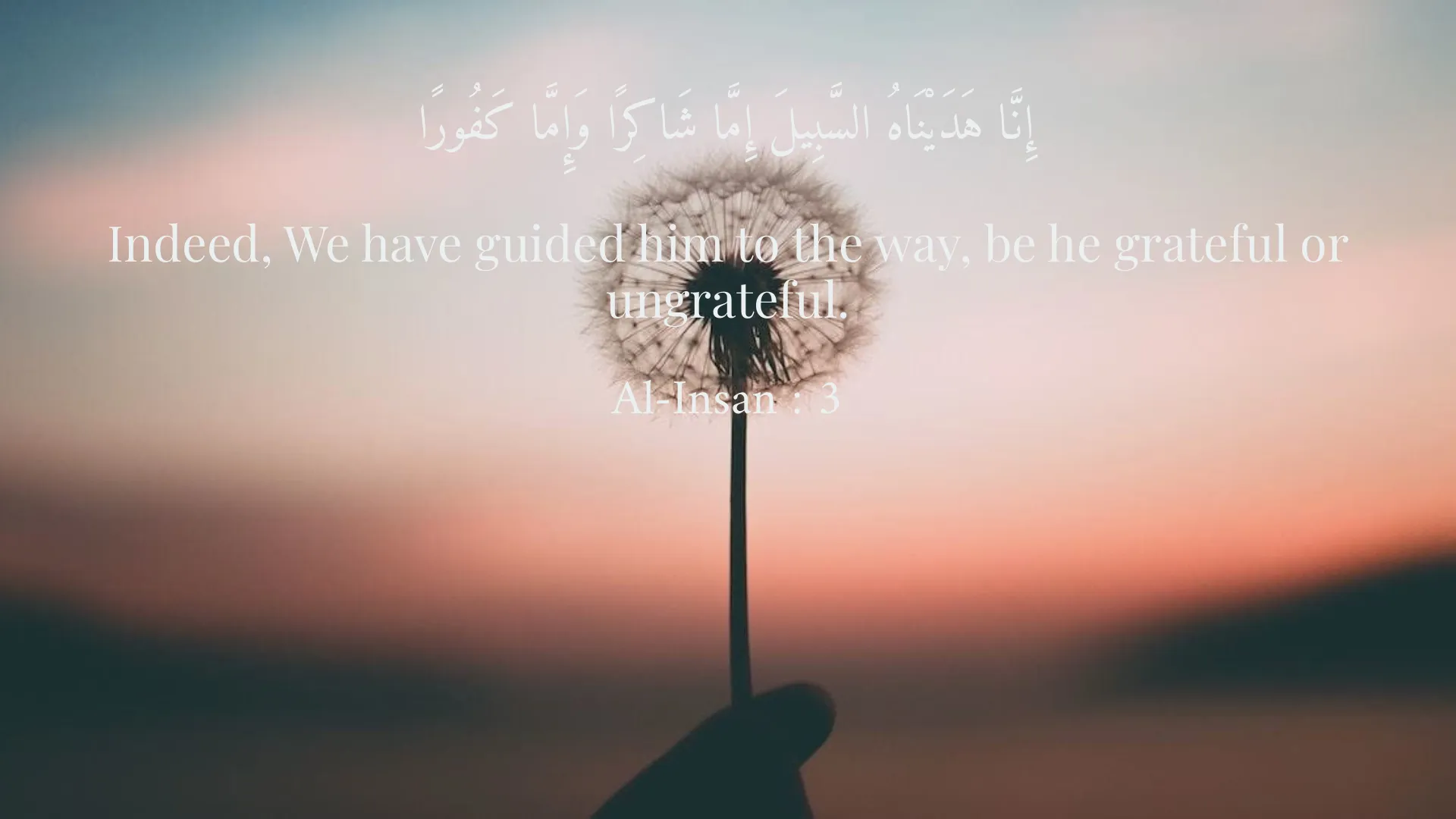
Human volition is a profound subject that has been extensively explored in religious texts, particularly in the Holy Quran. The concept of free will is not only a fundamental aspect of human existence but also a pivotal principle in Islamic theology. The Quran emphasizes the significance of human free will in various verses, making it clear that individuals have the autonomy to make choices that shape their lives and ultimately, their destinies. This article aims to delve deeply into the discussions surrounding human volition as presented in the Quran, elucidating the implications of free will, the responsibility it entails, and the consequences of one's choices. One of the most compelling verses that underscore the Quranic perspective on free will is found in Surah Al-Insan, verse 3, which states: "Indeed, We have guided him to the way, be he grateful or ungrateful." This verse indicates that every human being is endowed with the capability to choose between right and wrong, belief and disbelief. The use of the terms "grateful" and "ungrateful" implies that individuals are not merely passive recipients of guidance but active participants in the decision-making process. They have the capacity to respond to divine guidance in ways that reflect their personal convictions. Moreover, the Quran asserts the importance of free will in matters of faith. In Surah Al-Baqarah, verse 256, Allah states: "There shall be no compulsion in religion." This proclamation emphasizes that genuine faith cannot be imposed upon someone; rather, it must emerge from a sincere and voluntary engagement with belief. This assertion reinforces the idea that autonomy is inherent in the act of believing. It is through the exercise of free will that individuals can develop a deep, personal relationship with their faith, making choices that resonate with their hearts and minds. The concept of free will in the Quran is intertwined with the idea of accountability. Each person is inherently responsible for their choices and actions in this world. The Quran makes it abundantly clear that life is a test, and individuals will be judged based on the decisions they make. This relationship between choice and consequence is articulated beautifully in Surah Al-Kahf, verse 29, which reads: "And say, 'The truth is from your Lord. So whoever wills - let him believe; and whoever wills - let him disbelieve.'" In this verse, the Quran outlines a fundamental principle of human existence: individuals have the power to either embrace the truth or reject it, with the understanding that their choices carry weight in an eternal context. The notion of living without worldly ties is also essential in the discourse on free will in the Quran. By surrendering one's will to Allah and prioritizing spiritual over worldly concerns, individuals are liberated to make choices based on true understanding rather than external pressures or social conditioning. This state of surrender does not negate one’s autonomy; instead, it enhances the ability to make informed and conscientious decisions aligned with divine guidance. Furthermore, the Quran encourages believers to reflect on their lives and the implications of their choices. Free will is not merely a license to act; it is a responsibility that calls for introspection and mindfulness. Surah Al-Mulk, verse 2, states: "He who created death and life to test you as to which of you is best in deed." This testing underscores the idea that life is a series of choices that define one's character and ultimate fate. The awareness of this test cultivates a sense of accountability, urging individuals to make choices that are not only beneficial to themselves but also to others and the greater community. The implications of human volition in the Quran extend beyond the individual. The choices made by one person can influence the lives of others and contribute to shaping societal values and norms. Islam emphasizes the importance of community and collective responsibility, and free will is a crucial aspect of this dynamic. When individuals exercise their autonomy in positive ways, they contribute to the well-being of society and promote a harmonious existence. In a broader philosophical context, the discussions surrounding human volition in the Quran also intersect with debates in modern philosophy regarding determinism and free will. The Quran's assertion that humans possess free will challenges deterministic views that suggest every action is preordained. Instead, it posits that while all events occur under Allah’s knowledge and decree, individuals are still empowered to make choices that reflect their intentions and desires. As we explore the intricate relationship between human volition and the teachings of the Quran, it becomes evident that free will is a vital aspect of the human experience. It is not merely a theological concept but a principle that guides individuals throughout their lives. This intrinsic freedom allows individuals to engage deeply with their faith, make informed choices, and take responsibility for their actions. In conclusion, the issue of human volition in the Holy Quran highlights the significance of free will as an intrinsic part of human creation. The Quran consistently emphasizes that individuals are free to choose their paths, whether to embrace faith or to turn away from it. With this freedom comes the weight of responsibility; each person's choices will determine their standing in the hereafter. The messages conveyed in the Quran serve as a reminder that exercising free will should be accompanied by thoughtful consideration, accountability, and a commitment to the greater good. Ultimately, human volition is a sacred gift that enables each individual to carve their destiny while remaining aligned with the divine will.
Related Verses
إِنَّا هَدَيْنَاهُ السَّبِيلَ إِمَّا شَاكِرًا وَإِمَّا كَفُورًا
Indeed, We have guided him to the way, be he grateful or ungrateful.
Al-Insan : 3
لَا إكْرَاهَ فِي الدِّينِ ۖ قَد تَّبَيَّنَ الرُّشْدُ مِنَ الغَيِّ
There shall be no compulsion in religion. The right course has become distinct from the wrong.
Al-Baqarah : 256
Short Story
One day, a man named Ali approached a great master and asked him: Are we free in our lives or compelled? The master smiled and said: Good, good, your choices create your destiny. You are free to choose your path. Ali pondered and decided to move towards goodness with his own choice, and from that point on, his life changed.