Quranic Answer
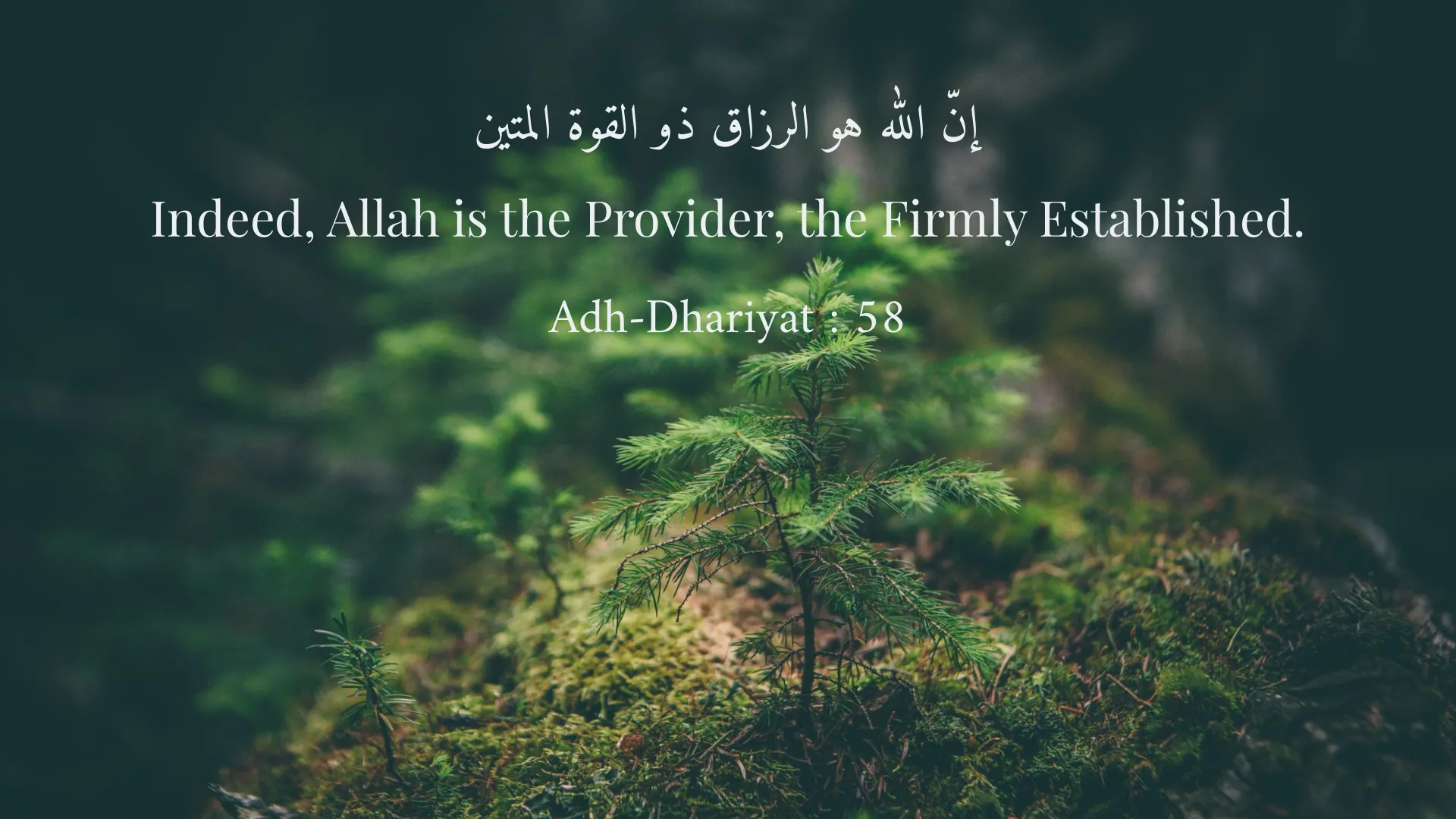
In the Holy Quran, the concept of sustenance and provision is clearly articulated. Allah mentions in numerous verses that He is the ultimate provider. Understanding the significance of sustenance in the context of spiritual and physical well-being is essential for every believer. The Quran acts as a guide and source of assurance that fosters a deep sense of trust in Allah’s wisdom and generosity. This article delves into various Quranic verses and insights about sustenance, exploring their implications and encouraging reflections on the relationship between divine providence and human effort. The concept of sustenance, or provision, is fundamental in the lives of individuals and communities alike. The verse in Surah Adh-Dhariyat, verse 58, states: 'Indeed, Allah is the Provider, the Firmly Established.' This phrase emphasizes that God is not only the creator of all things but is also the sustainer who holds the power to maintain and provide for His creation. This underscores the fact that every blessing, whether material or spiritual, emanates from the divine. Such acknowledgment creates a strong foundation for believers, allowing them to frame their understanding of hardships or shortages as tests or lessons rather than purely as deficits. Moreover, this concept intertwines with the realization that the earthly life is temporary and the material possessions are transient. Surah Al-Imran, verse 27, asserts: 'You give sovereignty to whom You will and take sovereignty away from whom You will.' This verse speaks not just to the distribution of sustenance but also to the larger picture of fate and divine control over every aspect of life. It challenges individuals to differentiate between desperation and trust: desperation often leads to unwise decisions while trust encourages wise action, often leading to better outcomes. Believers are reminded that nothing occurs outside of Allah’s knowledge and will, which reinforces their reliance on Him. The abundant provision from Allah manifests in various ways. It is expressed through the resources available in nature, the opportunities presented to individuals, and the support from family and community. The verse in Surah Hud, verse 6, supports this understanding: 'And there is no creature on earth but that upon Allah is its provision.' Here, the Quran instills a holistic view of sustenance that transcends human definitions of wealth and success. It insists that every being is cared for by the Creator, instilling a sense of serenity among believers while navigating the complexities of worldly life. The implications of these verses encourage not only reflection but also practical applications in daily life. Believers are called to cultivate a balanced approach in seeking sustenance. While it is crucial to make efforts in one’s profession and personal development, it is equally important to maintain a heart full of trust in Allah. The Quran does not discourage hard work; rather, it emphasizes the necessity of intention, effort, and reliance on God. This balanced approach allows believers to strive for success while recognizing that ultimate control lies with the Almighty. Furthermore, it is essential to recognize the ethical dimensions of sustenance. The Holy Quran urges individuals to share their provisions with the less fortunate and to act justly regarding the distribution of resources. The act of giving not only benefits the recipient but also purifies the giver’s wealth and promotes social harmony. Encouraging a culture of generosity, the Quran states that those who are grateful for their provisions will often find them multiplied, enhancing both spiritual and material wealth. The reminder of divine sustenance can also alleviate anxiety and fear during challenging times. In moments of uncertainty, recalling the prophetic tradition and Quranic verses serves to strengthen the heart and mind. It fosters resilience by helping believers comprehend that hardships, whether financial struggles or socio-political upheavals, do not stem from a lack of divine support; rather, they may serve as profound lessons in patience and trust. The awareness that Allah is watching over all creatures and their sustenance enhances the believer's ability to navigate life’s tribulations with grace. In contemporary contexts, where dissatisfaction and materialism may overshadow faith, the teachings of the Quran related to sustenance provide a timely reminder. For many, the race for more—more wealth, more possessions, more status—often leads to discontent. The Quran invites believers to reconsider their definitions of success and fulfillment, shifting the focus towards gratitude, purpose, and the deeper meanings behind provision. For a believer, sustenance is perceived not only in terms of economic output but also as blessings in health, relationships, knowledge, and peace. In conclusion, the Holy Quran presents a comprehensive understanding of sustenance that serves spiritual and material needs. Through the verses discussed, believers are reminded of Allah's omnipotence and the reassurance that all provision ultimately comes from Him. It encourages a dual commitment to hard work and reliance on divine wisdom, fostering a spirit of gratitude and compassion in dealing with both personal and communal adversities. The knowledge that only Allah controls sustenance empowers believers to embrace their paths with a sense of purpose, guiding them through the ebb and flow of life’s challenges while fostering a profound connection with their Creator. Thus, believers should strengthen their trust and reliance on Allah regarding sustenance while also striving and making efforts in life, as God certainly provides for every creature and does not leave His servants alone in this regard.
Related Verses
إنّ الله هو الرزاق ذو القوة المتين
Indeed, Allah is the Provider, the Firmly Established.
Adh-Dhariyat : 58
تُؤْتِي الْمُلْكَ مَن تَشَاءُ وَتَنزِعُ الْمُلْكَ مِمَّن تَشَاءُ
You give sovereignty to whom You will and take sovereignty away from whom You will.
Al-Imran : 27
وَما مِن دَابَّةٍ فِي الْأَرْضِ إِلَّا عَلَى اللهِ رِزْقُهَا
And there is no creature on earth but that upon Allah is its provision.
Hud : 6
Short Story
One day, Younes was a hardworking and responsible young man. He always prioritized his work and effort, yet he couldn’t quite manage to provide well for his family. One day, while sitting under a tree and gazing at the sky, the verses of Quran flashed in his mind reminding him that Allah is the ultimate provider. He decided to place his trust in God before anything else, and then continue with his efforts. From that moment, he led his life with peace and greater confidence, gradually seeing blessings manifest in his life.