Quranic Answer
The importance of parents in Islam is a theme that echoes throughout the Holy Quran. The significance of this relationship is not only a central tenet of Islamic teachings but resonates deeply within cultural values across the Muslim world. The Quran serves as the ultimate guide for Muslims, outlining the ethical and moral framework for human behavior, including the treatment of parents. Verses within this holy book strongly advocate for kindness, respect, and care towards one's parents, underscoring the elevated status that parents hold in the hearts and minds of believers. One of the most striking verses touching upon this vital subject is found in verse 23 of Surah Al-Isra, which says: 'And your Lord has decreed that you not worship except Him, and to parents, good treatment. Whether one or both of them reach old age [while] with you, say not to them [so much as], "uff," and do not repel them but speak to them a noble word.' This verse illustrates the tremendous importance that Allah places on the relationship between parents and children, making it clear that good treatment of parents is not just advisable; it is a divine decree. The significance of the relationship between parents and their children can be explored in multiple dimensions ranging from ethical teachings to spiritual beliefs. The opening of verse 23 emphasizes two paramount principles: exclusive worship of Allah and good treatment of parents. This ordainment signifies that honoring one's parents is almost on par with the worship of God, providing us with a profound lesson about familial relationships and responsibilities. The juxtaposition suggests that the love and respect offered to parents is a component of higher moral and spiritual accountability in Islam. Moreover, the directive to avoid even the slightest expression of annoyance, as stated by the phrase 'say not to them [so much as], "uff,"' reflects a deep layer of respect that should be afforded to parents, particularly as they age. This sentiment can be extrapolated to indicate that with advancing age, the wisdom, needs, and vulnerabilities of parents grow. Islam instructs that children should express their care and compassion most especially during these phases, which can serve to strengthen familial bonds. Engaging with one's parents in a gentle and kind manner, as the verse suggests, is a vital way to show respect and create a nurturing environment within the family unit. The role of parents in a child's life extends well beyond mere guidance and care in formative years; it involves prayers and supplications that are believed to carry immense spiritual weight. According to Islamic belief, a parent's prayers for their children are among the most cherished supplications accepted by Allah. This vital connection lends itself to the idea that parents, as spiritual guardians, can be instrumental in shaping the futures of their children through their devotion and prayer. Among Muslims, there exists a strong conviction that the heartfelt prayers of parents not only have transformative effects on their children's lives but also shield them from harm. Prophet Muhammad (PBUH) has emphasized this exceptional relationship, stating that the prayers of parents ascend to the heavens and draw close to Allah, often accentuating the critical role a parent plays in the spiritual journey of their child. The love and sacrifice involved in raising children prepare the grounds for an exchange of blessings between parents and offspring. With parents' intercession, the acceptance of prayers is believed to be more likely, thus nurturing a cycle of faith that connects both generations in devotion. Given this foundational understanding provided by the Quran and the Hadith, it becomes increasingly evident that children must approach their relationship with their parents with love, respect, and humility. This belief is not merely an expectation; rather, it constitutes a divine obligation. Showing respect and seeking to make parents happy should transcend cultural, social, or personal challenges; it is a matter of spiritual significance. Additionally, in Islamic society, children are bound by cultural customs that elevate the status of parents. Children are expected to serve their parents in their later years, reflecting gratitude for the sacrifices made during their upbringing. This societal value is rooted in the Quranic perspective and collective cultural practices, reinforcing the idea that parental care is both a family duty and a religious obligation. The implications of honoring one's parents as prescribed in Islam are profound and far-reaching. When children treat their parents kindly, they pave the way for a harmonious, loving family environment, which in turn fosters community cohesion and continuity of values. This cyclical nurturing propels not just a family but society as a whole towards an ethical and moral elevation. Reflecting on the narratives of exemplary Muslims who revered their parents highlights the virtues the Quran teaches. Stories of remarkable individuals who have excelled in their personal and professional lives, while simultaneously caring for and honoring their parents, serve as guiding beacons for future generations. The legacy of piety passed down through acts of kindness and respect reverberates through time, making it imperative for individuals to internalize these values. In conclusion, the significance of treating parents well, as articulated in the Quran, is more than a societal guideline; it is a central facet of Islamic belief. Children bear the profound responsibility to honor, respect, and care for their parents, particularly as they advance in age. The reciprocal relationship, wherein parents' prayers serve as a source of blessings for their children, reinforces the essence of familial bonds. A robust understanding of these values instills deep-rooted respect for parents, shaping not only the future of individuals but the fabric of society itself. Ultimately, recognizing and acting upon the significance of this vital relationship in every facet of life encourages a greater sense of spirituality, morality, and community among all believers.
Related Verses
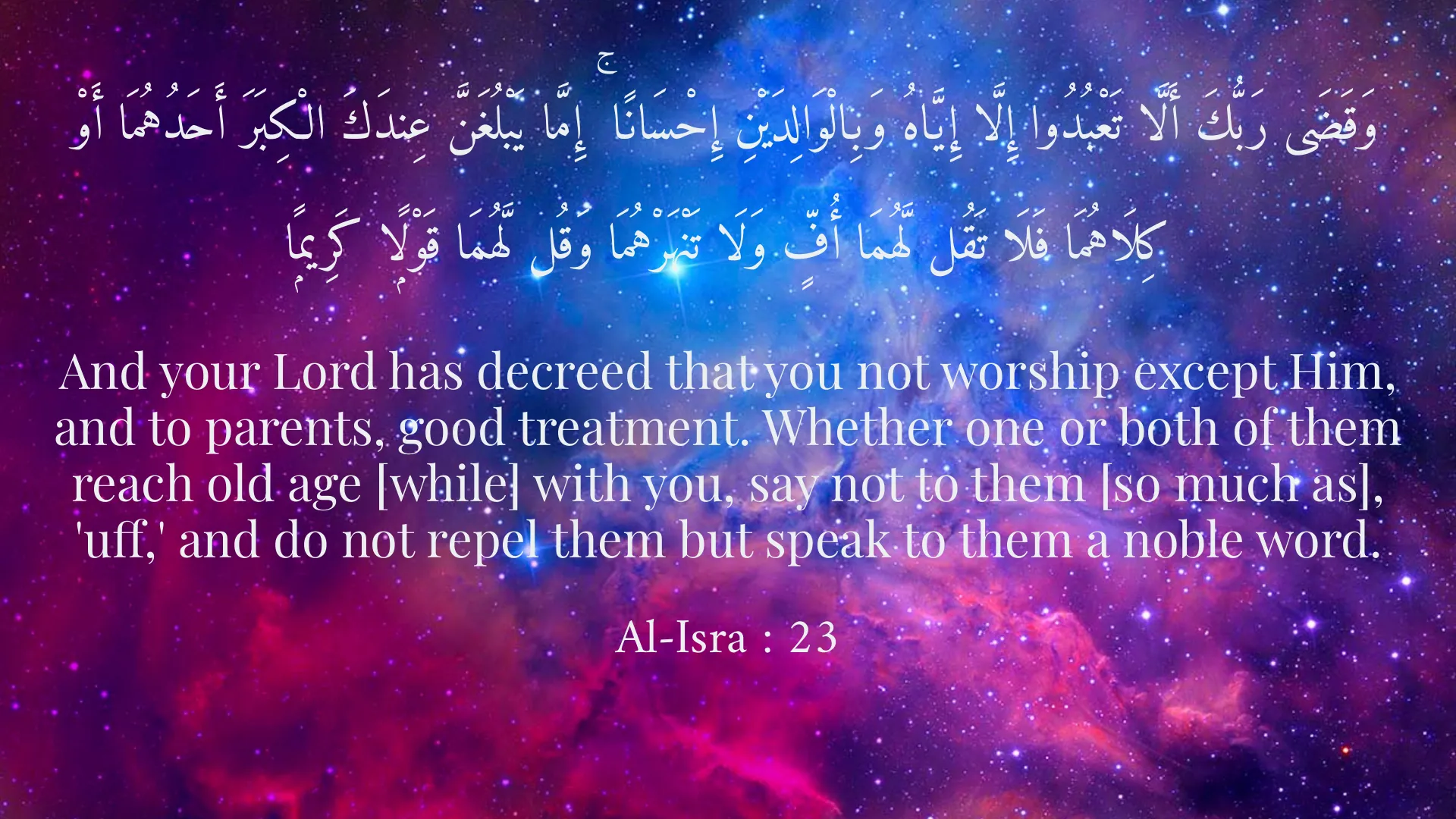
وَقَضَى رَبُّكَ أَلَّا تَعْبُدُوا إِلَّا إِيَّاهُ وَبِالْوَالِدَيْنِ إِحْسَانًا ۚ إِمَّا يَبْلُغَنَّ عِندَكَ الْكِبَرَ أَحَدُهُمَا أَوْ كِلَاهُمَا فَلَا تَقُل لَّهُمَا أُفٍّ وَلَا تَنْهَرْهُمَا وَقُل لَّهُمَا قَوْلًۭا كَرِيمًۭا
And your Lord has decreed that you not worship except Him, and to parents, good treatment. Whether one or both of them reach old age [while] with you, say not to them [so much as], 'uff,' and do not repel them but speak to them a noble word.
Al-Isra : 23
وَإِذْ أَخَذْنَا مِيثَاقَ بَنِي إِسْرَائِيلَ لَا تَعْبُدُونَ إِلَّا اللَّهَ وَبِالْوَالِدَيْنِ إِحْسَانًا وَذَا الْقُرْبَى وَالْيَتَامَى وَالْمَسَاكِينِ وَقُولُوا لِلنَّاسِ حُسْنًا ۖ وَأَقِيمُوا الصَّلَاةَ وَآتُوا الزَّكَاةَ ۚ ثُمَّ تَوَلَّيْتُمْ إِلَّا قَلِيلًا مِّنكُمْ وَأَنتُمْ مُعْرِضُونَ
And [mention] when We took the covenant from the Children of Israel, [enjoining upon them], 'Do not worship except Allah; and to parents, good treatment. And to relatives, orphans, the needy. And speak to people good [words] and establish prayer and give zakah.' Then you turned away, except for a few of you, and you were refusing.
Al-Baqarah : 83
Short Story
Once upon a time, there was a boy named Ehsan who believed in the love and prayer of his mother. He lived with his mother's prayers daily and noticed that her prayers had a significant influence on his life. Ehsan decided to dedicate his heart further to his mother's love and always seek help from her prayers in guiding his life. Over time, he realized that his mother's prayers had always been effective in his life and led to many successes.