Quranic Answer
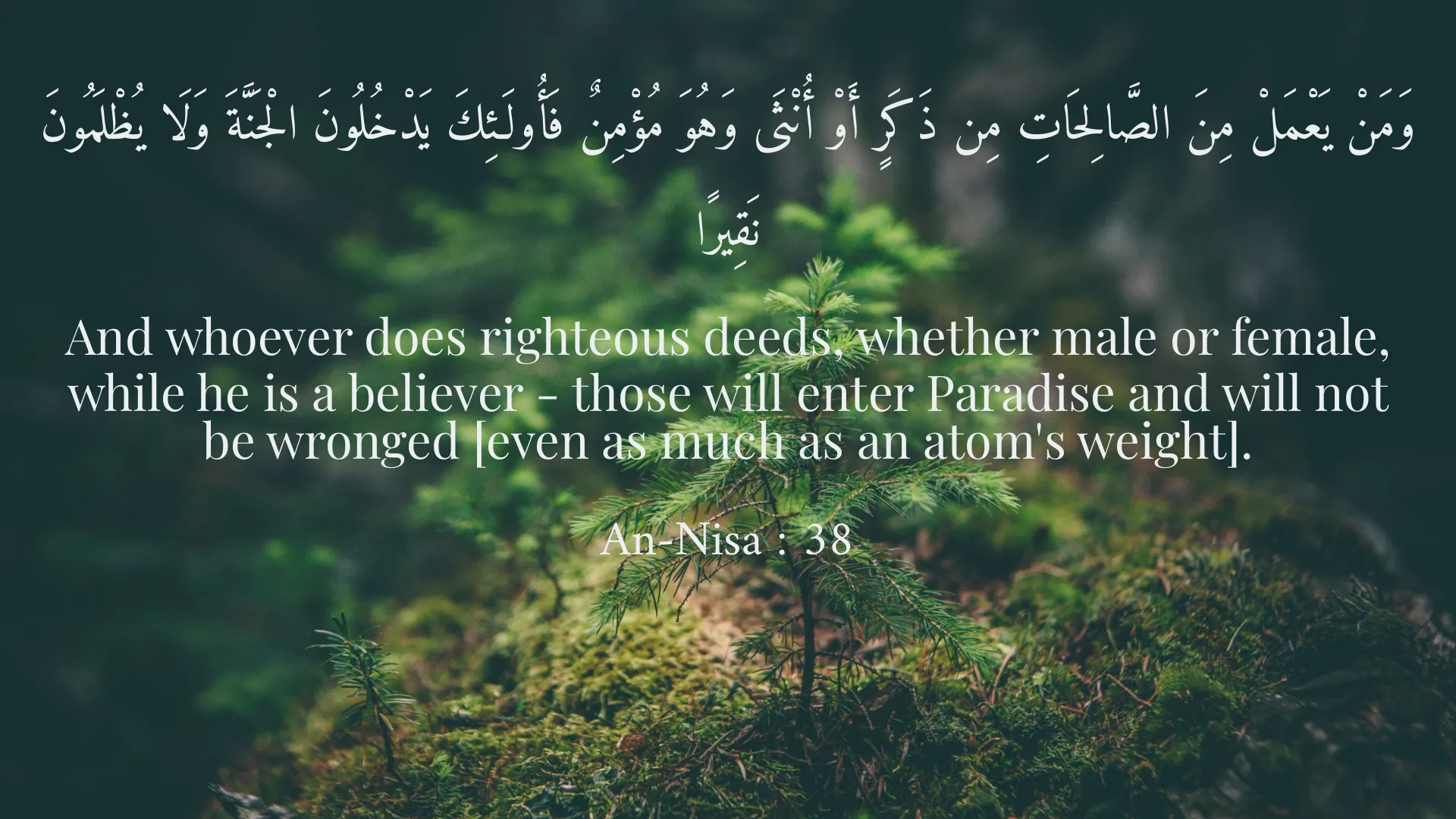
The Holy Quran, revered as the sacred scripture of Islam, is not only a guide for spiritual development but also provides profound insights into the nature of good deeds and the subsequent rewards one can expect from such actions. The verse from Surah An-Nisa (4:38) is a significant testament to this concept: 'And whoever does righteous deeds, whether male or female, while he is a believer - those will enter Paradise and will not be wronged [even as much as an atom's weight].' This remarkable declaration from Allah emphasizes a crucial point: the inherent value of good deeds is universal and transcends gender, making the divine promise accessible to all believers. This notion establishes a foundational understanding that the pursuit of goodness is not a task limited by one’s gender, but rather, it is a commitment required of every individual who professes belief in Allah. Delving deeper into the verses of the Holy Quran, we see a recurrent theme that reaffirms Allah’s promise of blessings and rewards for those who engage in righteous actions. In Surah Hud (11:6-7), it is mentioned that: 'And there is no creature on earth but that upon Allah is its provision, and He knows its dwelling and its repository; all is in a clear register.' Here, the verse accentuates Allah's omnipotence and all-encompassing knowledge regarding the sustenance of all creatures. This reinforces the belief that engaging in good deeds aligns oneself with divine providence and the blessings that stem from it. From these insights, we can derive that the rewards for good deeds are not limited to an afterlife manifestation; rather, they begin to take shape in this world as well. The blessings associated with performing good deeds can enhance various aspects of life, promoting inner peace, fostering a sense of satisfaction, and attracting worldly rewards. #### Inner Peace: The Immediate Reward of Good Deeds One of the most immediate manifestations of good deeds is the sense of inner peace that often follows. When individuals engage in acts that benefit others, help those in need, or embody kindness and compassion, they experience a psychological shift that leads to tranquility. The Quran teaches that maintaining a righteous path results in a fulfilling spiritual journey. This is echoed in numerous Hadiths where the Prophet Muhammad (PBUH) mentions that the heart finds solace in worship and the performance of good deeds. For instance, acts of charity, even in a small measure, have profound effects on one’s mental state. When people contribute to their communities or support those less fortunate, they not only uplift those around them but also enhance their own emotional and spiritual well-being. This reciprocal nature of good deeds illustrates a divine cycle of positivity that benefits both the giver and the receiver. #### Divine Satisfaction: The Spiritual Reward In the Islamic faith, the ultimate goal of a believer is to attain Allah's pleasure. Engaging in righteous deeds is a pathway to achieving divine satisfaction. The emphasis here is on the intention behind actions; as demonstrated in the Quran, an action devoid of the right intention does not carry the same weight. Allah’s promise of rewards extends beyond mere actions to the inner piety that drives them. Believers are taught that good intentions and acts of goodness are acknowledged by Allah and lead to spiritual elevation. Surah Al-Baqarah (2:262) highlights this principle: 'The example of those who spend their wealth in the way of Allah is like a seed of grain that sprouts into seven ears; in every ear there are a hundred grains.' This metaphor illustrates the exponential nature of good deeds and the vastness of divine rewards. #### Worldly Blessings: The Tangible Rewards Perhaps one of the most compelling aspects of engaging in good deeds is the tangible blessings that individuals may experience in their everyday lives. The Quran assures believers that those who practice righteousness will see the fruits of their labor not only in the Hereafter but in their current existence as well. This could manifest as increased prosperity, good health, harmonious relationships, and a more profound sense of purpose. In fact, numerous stories throughout history testify to individuals who, despite facing hardships, experienced upliftment due to their charitable actions and good-deeded lives. The ripple effect of goodness reverberates through communities, creating an environment where mutual respect, supportiveness, and well-being flourish. #### Conclusion: An Everlasting Cycle of Goodness To summarize, the teachings of the Holy Quran clearly articulate that the rewards for good deeds manifest in diverse and varying forms, both in the physical world and the spiritual realm. The message is unequivocal: every believer who engages in righteous actions is guaranteed divine acknowledgment and will reap benefits in numerous forms. They include personal gratification, spiritual enlightenment, and material blessings. Good deeds become a source of comprehensive wellness, opening doors to peace, satisfaction, and prosperity. Thus, seeking to do good not only prepares a believer for a favorable position in the Hereafter, but also enriches their earthly existence. Embracing the essence of this divine promise encourages individuals to maintain a consistent pursuit of goodness, ensuring a fulfilling and blessed life in both realms. In conclusion, Muslims can look forward to the rewards of their actions, knowing that they are supported by the clear guidance of the Holy Quran and the promises of Allah, which ensure that righteousness is both a virtue and its own reward.
Related Verses
وَمَنْ يَعْمَلْ مِنَ الصَّالِحَاتِ مِن ذَكَرٍ أَوْ أُنْثَى وَهُوَ مُؤْمِنٌ فَأُولَـئِكَ يَدْخُلُونَ الْجَنَّةَ وَلَا يُظْلَمُونَ نَقِيرًا
And whoever does righteous deeds, whether male or female, while he is a believer - those will enter Paradise and will not be wronged [even as much as an atom's weight].
An-Nisa : 38
وما من دابة في الأرض إلا على الله رزقها ويعلم مستقرها ومستودعها كل في كتاب مبين
And there is no creature on earth but that upon Allah is its provision, and He knows its dwelling and its repository; all is in a clear register.
Hud : 6
Short Story
One day, a man named Mehdi felt a calling within him that encouraged him to undertake good deeds. He began helping the needy and participating in charitable acts. After a while, Mehdi noticed that his life had changed; he felt happier and more fulfilled. He realized that the reward for good deeds was not limited to this world, and that Allah had guided him on the paths of righteousness.