Quranic Answer
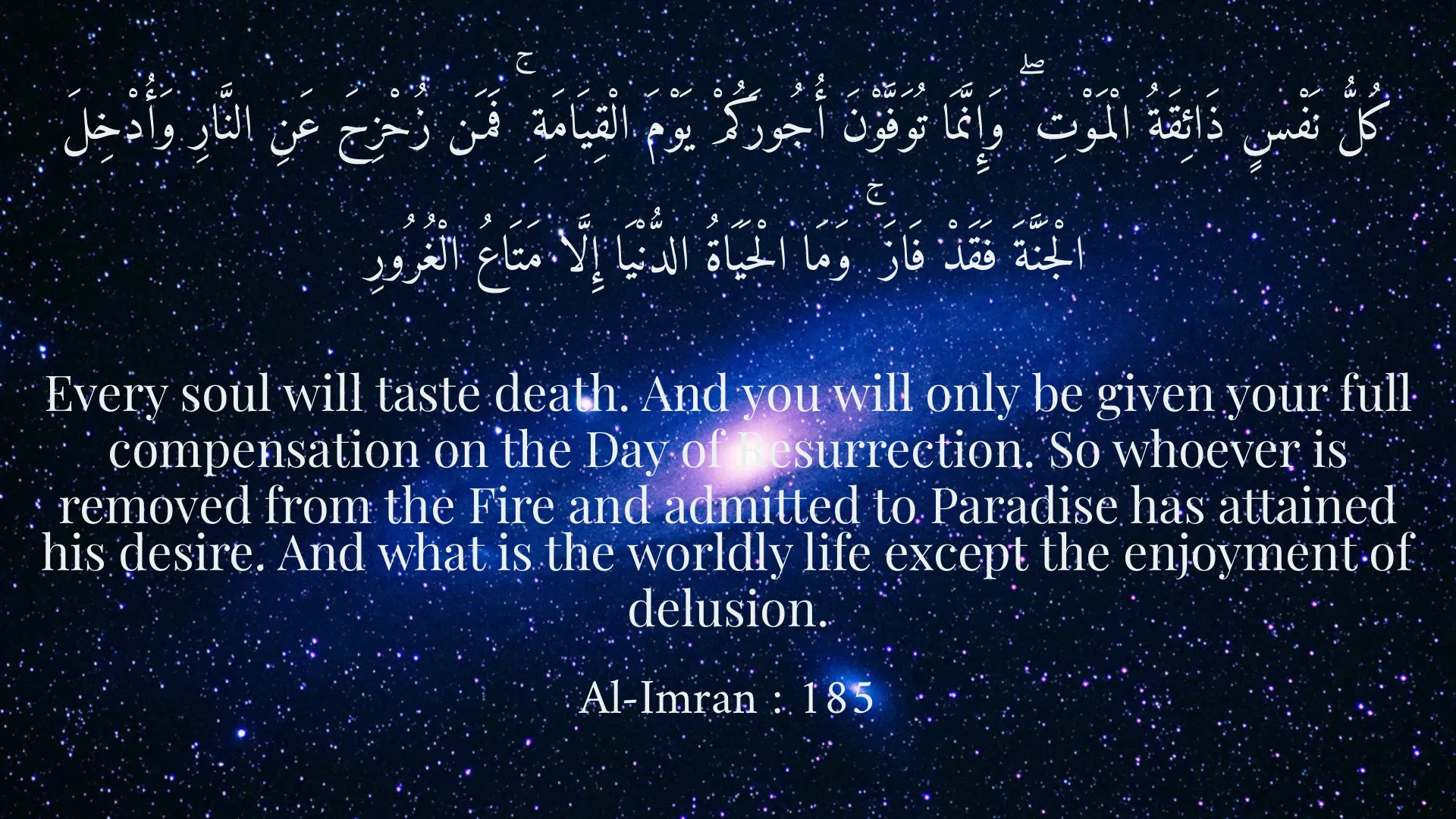
The Holy Quran is revered by Muslims as the ultimate source of guidance, providing insight into the nature of existence, the purpose of life, and the significance of the Hereafter. One of the essential themes that run throughout its verses is the contrast between the worldly life and the Hereafter. According to Islamic teachings, the journey of human life in this world serves not only as a transitory phase but also as a crucial arena for spiritual growth, decision-making, and preparation for the afterlife. This essay explores the significance of the worldly life and the Hereafter as articulated in the Holy Quran, illustrating their interconnectedness and the moral responsibilities of human beings in navigating each realm. The Quran emphasizes that life on earth is ephemeral and that every living being ultimately faces death. In Surah Al-Imran, verse 185, it explicitly states: "Every soul will taste death. And you will only be given your full compensation on the Day of Resurrection. So whoever is removed from the Fire and admitted to Paradise has attained his desire. And what is the worldly life except the enjoyment of delusion." This verse serves as a powerful reminder that earthly pleasures and pursuits are temporary and illusory, quickly fading away in the grand scheme of existence. The value placed upon the Hereafter is reinforced here, where achieving a place in Paradise is presented as the ultimate aspiration of human life. Underlying this message is the belief that individuals should seek fulfillment not through transient pleasures but by adhering to divine guidelines. The Quran urges believers to scrutinize how they approach their worldly life, reminding them that earthly indulgences will not yield eternal satisfaction. Instead, one should cultivate a relationship with Allah through righteous deeds, honesty, compassion, and integrity. In the comparison between the world and the Hereafter, the Quran maintains that the material world is replete with distractions. Human beings can easily lose their way when seduced by the desire for wealth, power, status, and recognition. Surah Al-Baqarah, verse 200 says: "And remember Allah during the numbered days. And whoever hastens [to leave] in two days, there is no sin upon him; and whoever delays, there is no sin upon him, for one who fears [Allah]. And fear Allah, and know that unto Him you will be gathered." This verse highlights two significant aspects of a believer's life: mindfulness of Allah and the importance of fearing Him. The directive to 'remember Allah' serves as a cornerstone for maintaining spirituality amidst worldly distractions. It acts as a reminder to frame one's worldly pursuits within a larger spiritual context. By fostering a relationship with Allah through prayer, remembrance, and righteous action, believers carve a path that prepares them for the eternal life that follows death. The encouragement of fear for Allah is equally vital, as it invokes a sense of accountability. Realizing that one will be gathered before Allah for judgment cultivates a conscientious approach to both personal conduct and societal responsibilities. It is important to recognize that Islam does not advocate for abandonment of the world or asceticism. Rather, it urges believers to lead balanced lives—engaging in productive work and pursuing beneficial knowledge, all while keeping the Hereafter in focus. By approaching life with a mindful attitude towards Allah and the ultimate consequences of one's actions, believers can transform their worldly endeavors into acts of worship and merit. The Quran provides anecdotes and teachings from the life of the Prophet Muhammad (peace be upon him) that exemplify the ideal way of living—a blend of spiritual commitment and practical engagement. The many temptations present within the material world are acknowledged in Islamic teachings; however, they serve as tests for believers. The Quran asserts that those who remain steadfast in their faith amidst challenges will reap divine rewards in the Hereafter. Surah Al-Anfal, verse 28, states: "And know that your possessions and your children are but a trial and that Allah has with Him a great reward." In this verse, the transient nature of possessions and the potential distractions they present are clearly articulated. Each believer is reminded that what is perceived as gain in this world may often conceal a trial that could divert one from the path to righteousness. A key feature of human existence is the capacity for choice, which can lead to different outcomes in the Hereafter. The choices made in life are directly linked to the state of the soul at the time of death. Believing in the Hereafter fuels a mindset centered on accountability and responsibility, encouraging individuals to choose wisely in their actions. Furthermore, the Quran's depiction of Heaven and Hell serves to underscore the significance of the Hereafter. Descriptions of Paradise are filled with imagery of beauty, companionship, and joy, contrasting sharply with the descriptions of punishment and suffering in Hell. This binary nature of existence serves to instill a sense of urgency in believers, encouraging them to consider their ultimate destination. As individuals engage in their daily lives, they are continually faced with decisions that may lead them toward either reward or punishment. Ultimately, the choices made in this world impact the eternal fate of the soul in the Hereafter. By engaging in acts of goodness, such as charity, compassion, forgiveness, and truthfulness, believers can enhance their standing in the eyes of Allah and secure a favorable outcome in the Hereafter. In conclusion, the teachings of the Holy Quran on the world and the Hereafter present a comprehensive framework for ethical living. Life in this world is portrayed not as an end but as a means to a higher purpose. While the temptations of the material realm are numerous and enticing, the Quran consistently directs believers to prioritize their success in the Hereafter. It is through righteous actions, faith in Allah, and a deep commitment to spiritual growth that true success can be garnered. In this way, the importance of balancing life in the world with the ultimate goal of attaining Paradise is underscored, framing the choices made in the present with the consequences faced in the eternal. Thus, what may appear as a worldly life saturated with temporary pleasures ultimately leads to the broader narrative of pursuing success in the Hereafter.
Related Verses
كُلُّ نَفْسٍ ذَائِقَةُ الْمَوْتِ ۖ وَإِنَّمَا تُوَفَّوْنَ أُجُورَكُمْ يَوْمَ الْقِيَامَةِ ۚ فَمَن زُحْزِحَ عَنِ النَّارِ وَأُدْخِلَ الْجَنَّةَ فَقَدْ فَازَ ۚ وَمَا الْحَيَاةُ الدُّنْيَا إِلَّا مَتَاعُ الْغُرُورِ
Every soul will taste death. And you will only be given your full compensation on the Day of Resurrection. So whoever is removed from the Fire and admitted to Paradise has attained his desire. And what is the worldly life except the enjoyment of delusion.
Al-Imran : 185
وَاذْكُرُوا اللَّهَ فِي أَيَّامٍ مَّعْدُودَاتٍ ۖ فَمَن تَعَجَّلَ فِي يَوْمَيْنِ فَلَا إِثْمَ عَلَيْه وَمَن تَأَخَّرَ فَلَا إِثْمَ عَلَيْه لِمَنِ اتَّقَى وَاتَّقُوا اللَّهَ وَاعْلَمُوا أَنَّكُم إِلَيْهِ تُحْشَرُونَ
And remember Allah during the numbered days. And whoever hastens [to leave] in two days, there is no sin upon him; and whoever delays, there is no sin upon him, for one who fears [Allah]. And fear Allah, and know that unto Him you will be gathered.
Al-Baqarah : 200
Short Story
One day, a man was leaning against a tree by the roadside, reflecting on his life. He remembered how he had been pursuing status and had neglected the Hereafter. Suddenly, he realized that life is fleeting and he must return to God, not neglecting righteous deeds. By changing his ways, he found peace in his heart and enjoyed life in this world more.