Quranic Answer
In the Holy Quran, the importance of working hard and earning a lawful livelihood is an essential principle that is emphasized throughout its verses. The Quran guides its followers to seek sustenance not only as a means of survival but as a means of fulfilling one's duties to oneself, to one’s family, and to society as a whole. The act of seeking a lawful livelihood is recognized as a positive and valuable endeavor, reinforcing the belief that effort and diligence are integral to a believer's character and practice. One of the most striking endorsements of work in the Quran can be found in Surah Al-Jumu'ah, verse 10, which states: 'But when the prayer has been concluded, disperse within the land and seek the bounty of Allah and remember Allah much that you may be successful.' This verse conveys a powerful message about the balance between spirituality and worldly responsibilities. After performing the congregational Friday prayer, believers are encouraged to engage in the pursuit of Allah's provisions by spreading out in the land. This indicates that after fulfilling one's spiritual obligations, engaging in work and striving for one’s livelihood is not just acceptable but is a recommended practice. The call to disperse and seek the bounty of Allah can be interpreted on multiple levels. It signifies the need for believers to take initiative and actively seek opportunities that have been bestowed by God. The phrase 'seek the bounty of Allah' can be interpreted as a reminder that all sustenance originates from God, and thus one should remain grateful and mindful of his Creator while pursuing their goals. It also reflects an understanding that sustenance is multifaceted— encompassing both physical needs and spiritual fulfillment. By balancing prayer and productive work, believers can ensure that their lives are aligned with the principles of Islam, thereby attaining both worldly success and spiritual growth. Furthermore, Surah Al-An’am, verse 152 reads: 'And do not approach the property of the orphans except in a way that is best until they reach maturity. And fulfill [every] contract. Indeed, the contract is ever [that about which one will be] questioned.' This verse underscores the significance of justice and ethical behavior in endeavors related to livelihood. In the pursuit of wealth and sustenance, Islam emphasizes not just the act of earning, but doing so with fairness, integrity, and respect for others' rights. The mention of orphans serves as a reminder of the vulnerable and marginalized in society, urging believers to refrain from exploitative practices and to prioritize the welfare of others. In doing so, the Quran establishes a social responsibility that aligns with the individual pursuit of lawful earnings; justice is a fundamental value that should guide one’s actions. In Surah Al-Baqarah, verse 194, Allah reminds believers: 'And remember Allah during the appointed days. And whoever intends to perform a good deed, let him do so.' This verse emphasizes that while working hard to earn a livelihood is necessary, it is equally important to maintain a conscious connection with God. The duality of spiritual and worldly life is reflected here, showcasing that the hustle for sustenance should never lead to neglecting one’s faith. Engaging in good deeds alongside one’s effort allows a believer to remain mindful of their intentions and actions, creating harmony between aspirations and accountability to God. The Quran’s profound respect for work extends beyond mere survival; it highlights the importance of earning in a manner which is lawful (halal) and ethical. This is a critical aspect of Islamic teachings, as Muslims are encouraged to consider not only where their sustenance comes from, but how it is obtained. Honesty, diligence, and integrity in one’s work are virtues that are rewarded by Allah, and the notion of work becomes a form of worship when the intention is pure. The significance of intention in Islam cannot be underestimated. When one strives to earn a living not just for themselves, but to support their family, help others, and contribute to their community, they are engaging in an act that is deeply recognized and rewarded by Allah. Thus, working hard for the purpose of earning a lawful livelihood is not a sin; in fact, it is viewed as a praiseworthy act that reflects the core values of Islam. As such, every believer is encouraged to dedicate themselves wholeheartedly to their work while ensuring that their intentions remain pure, striving not only to meet their needs but also to serve society in a meaningful way. In conclusion, the Holy Quran positions working hard for a lawful livelihood as a fundamental and positive act, intertwining the importance of spirituality with worldly responsibilities. Verses such as those in Surah Al-Jumu'ah, Surah Al-An'am, and Surah Al-Baqarah emphasize the balance between faith and work, urging believers to pursue their livelihoods with integrity, fairness, and conscientiousness. By combining sincere effort with good intentions, one can navigate the complexities of life while fulfilling their divine obligations. Therefore, the effort to earn a lawful livelihood is not simply a necessity but a commendable and spiritually enriching endeavor in the Islamic faith.
Related Verses
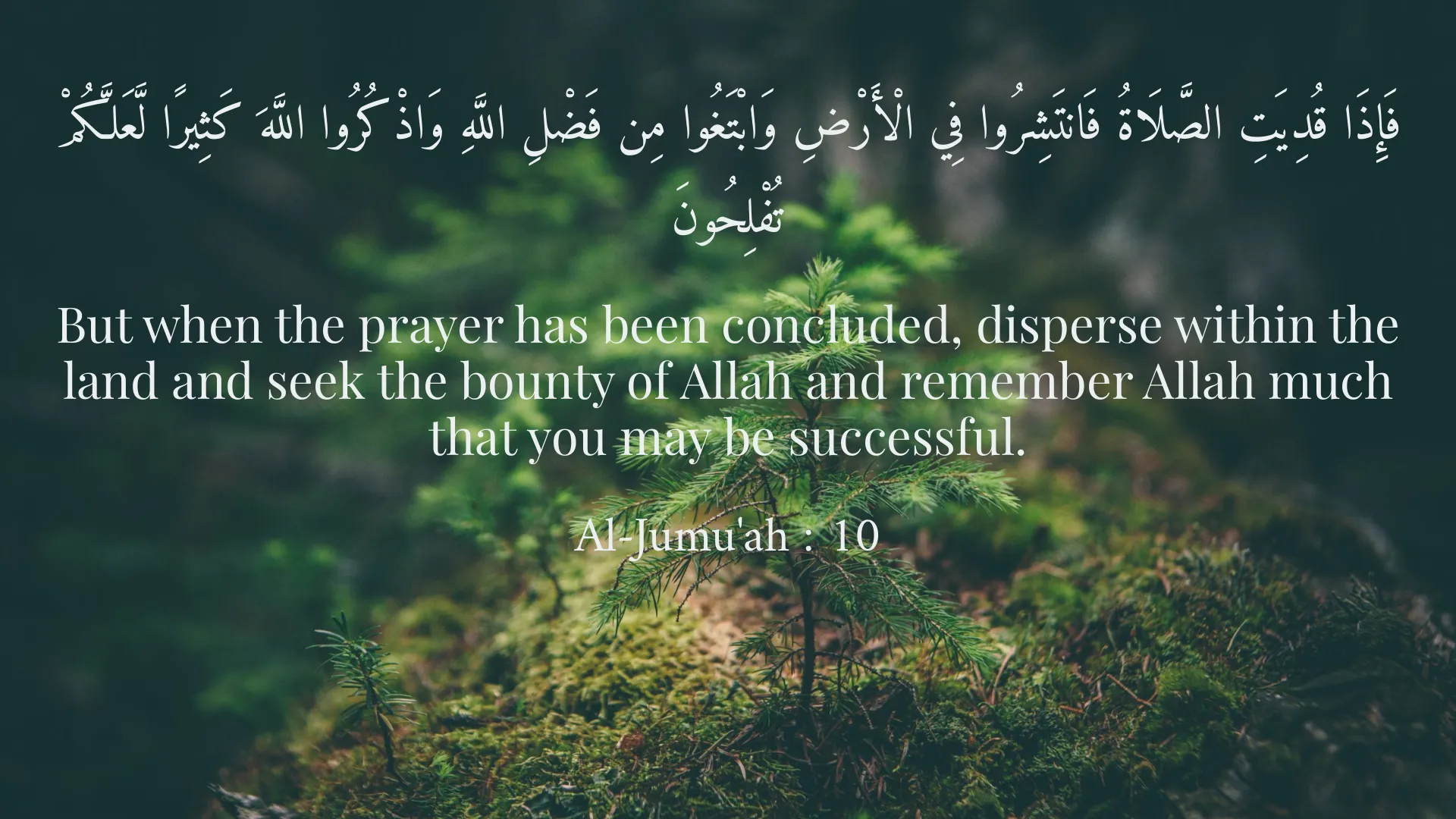
فَإِذَا قُدِيَتِ الصَّلَاةُ فَانتَشِرُوا فِي الْأَرْضِ وَابْتَغُوا مِن فَضْلِ اللَّهِ وَاذْكُرُوا اللَّهَ كَثِيرًا لَّعَلَّكُمْ تُفْلِحُونَ
But when the prayer has been concluded, disperse within the land and seek the bounty of Allah and remember Allah much that you may be successful.
Al-Jumu'ah : 10
وَلاَ تَقْرَبُوا أَمْوَالَ الْيَتَامَى إِلَّا بِالَّتِي هِيَ أَحْسَنُ حَتَّى يَبْلُغُوا أَشُدَّهُمْ ۖ وَأَوْفُوا الْكَيْلَ وَالْمِيزَانَ بِالْقِسْطِ ۚ لَا نُكَلِّفُ نَفْسًا إِلَّا وُسْعَهَا
And do not approach the property of the orphans except in a way that is best until they reach maturity. And fulfill [every] contract. Indeed, the contract is ever [that about which one will be] questioned.
Al-An'am : 152
وَاَذْكُرُوا اللَّهَ فِي أَيَّامِكُمْ وَلَا تَبْغُوا فِي أَرْضِ الْخِرَابِ
And remember Allah during the appointed days. And whoever intends to perform a good deed, let him do so.
Al-Baqarah : 194
Short Story
One day, a man worked hard to earn a lawful livelihood for his family. Every day, he would wake up early in the morning and, with a heart full of hope and faith in his success, he would head to work. One day, while working, he recalled the verses of the Quran that encourage individuals to work and strive to meet their life's needs. From that moment on, he never felt that he was in sin, but rather he regarded this work as a worship that secured his and his family's future.