Quranic Answer
Worship occupies a central position in Islamic faith, being one of its fundamental pillars explicitly mentioned in the Holy Quran. It represents an essential means of communion between humanity and the divine, providing a structured approach to expressing love, gratitude, and submission to Allah. However, as with most practices, the depth and sincerity with which worship is performed can significantly affect its value. This raises an important question: is worship devoid of love and affection for God truly valuable? Can one affirm devotion to God without the emotional and spiritual connection that love provides? Worship, in its essence, does not revolve around mere outward acts or rituals. While performing prayers, fasting, or giving charity are all vital components of Islamic worship, the underlying essence lies deeply rooted in love for God and faith in Him. In Surah Al-Baqarah, verse 165, Allah states, "And among the people are those who take other than Allah as equals [to Him]. They love them as they should love Allah." This verse encapsulates a profound truth: love is an indispensable facet of worship. It suggests that when individuals tether their affection to entities or matters other than Allah, their love becomes misdirected. Thus, it leaves the worship lacking in authenticity, emphasizing that love and devotion to God must reside in the hearts of believers for worship to be truly meaningful. Furthermore, in Surah Al-Ma'idah, verse 54, Allah emphasizes the importance of love in faith, declaring, "O you who have believed, whoever of you should revert from his religion, Allah will bring forth [for] a people He will love and who will love Him." This verse underscores that the love of Allah and His Messenger is an obligation for those who seek to cultivate their faith and engage in righteous actions. The spiritual connection fostered through love infuses worship with sincerity, attention, and mindfulness. Worship without love risks being a mere mechanical exercise; devoid of emotion, it may lack the transformative power that true devotion brings. The love for God should be characterized by its unwavering nature. Each believer is mandated to engage in extra acts of devotion, hoping to attain closeness to Allah. This engagement, guided by love, consists of daily prayers, remembering Him throughout the day, and performing good deeds. This heartfelt connection fosters a deep sense of fulfillment, guiding believers toward a path of righteousness and continual self-improvement, where actions become a reflection of inner faith. Ultimately, it is essential to recognize that love for God beautifies worship, enhancing the experience of submission and devotion. When believers approach worship with love and affection, their actions become infused with sincerity, transforming rituals into acts of profound significance. Thus, worship in Islam is not merely about observance—it is about cultivating a heartfelt relationship with the Creator. Such love propels individuals to submit wholeheartedly to their Creator and act upon His path, compelling them to incorporate various aspects of faith in their daily lives. This idea permeates Islamic teachings; scholars and spiritual leaders emphasize the necessity of merging love with worship to achieve spiritual fulfillment. Engaging in reflection, prayer, and meditation nurtures a sense of love for Allah, inviting believers to contemplate their blessings and acknowledge the intricate details of divine mercy. Moreover, the reverberations of this love manifest through compassion towards others, charity, and righteous living. When believers embody the love for God, it naturally extends to their treatment of fellow human beings, as they recognize that every person is a creation of Allah and deserving of respect and dignity. Consequently, love for God not only enriches one's worship but also elevates one's character and standing within the community, establishing a network of mutual support and positivity. Furthermore, the consequences of neglecting love in worship can be detrimental. When believers engage in ritualistic acts devoid of love, they may inadvertently develop a sense of detachment from their faith. Such disconnection can sow seeds of doubt and struggle, leading individuals to question their beliefs and practices. A lack of emotional engagement may turn worship into a set of obligations rather than an intimate interaction with the divine, resulting in a space that seems devoid of joy and fulfillment. In conclusion, the intricate relationship between worship and love in the Islamic faith warrants deeper exploration and understanding. The acknowledgement that worship without love is insufficient, if not flawed, prompts believers to reassess their connection with Allah and strive for a harmonious balance between rituals and heartfelt devotion. As articulated in various verses of the Quran and through the teachings of Prophets, true worship is animated by an unwavering love for God that beautifully intertwines with every act of devotion. As believers embrace the importance of love in their worship, they embark on a spiritual journey rich in compassion, mutual respect, and understanding—solidifying their commitment to both their Creator and their fellow human beings. Therefore, to elevate the act of worship, one must cultivate love for God, as it is love that transcends mere acts and transforms faith into a profound, life-altering experience.
Related Verses
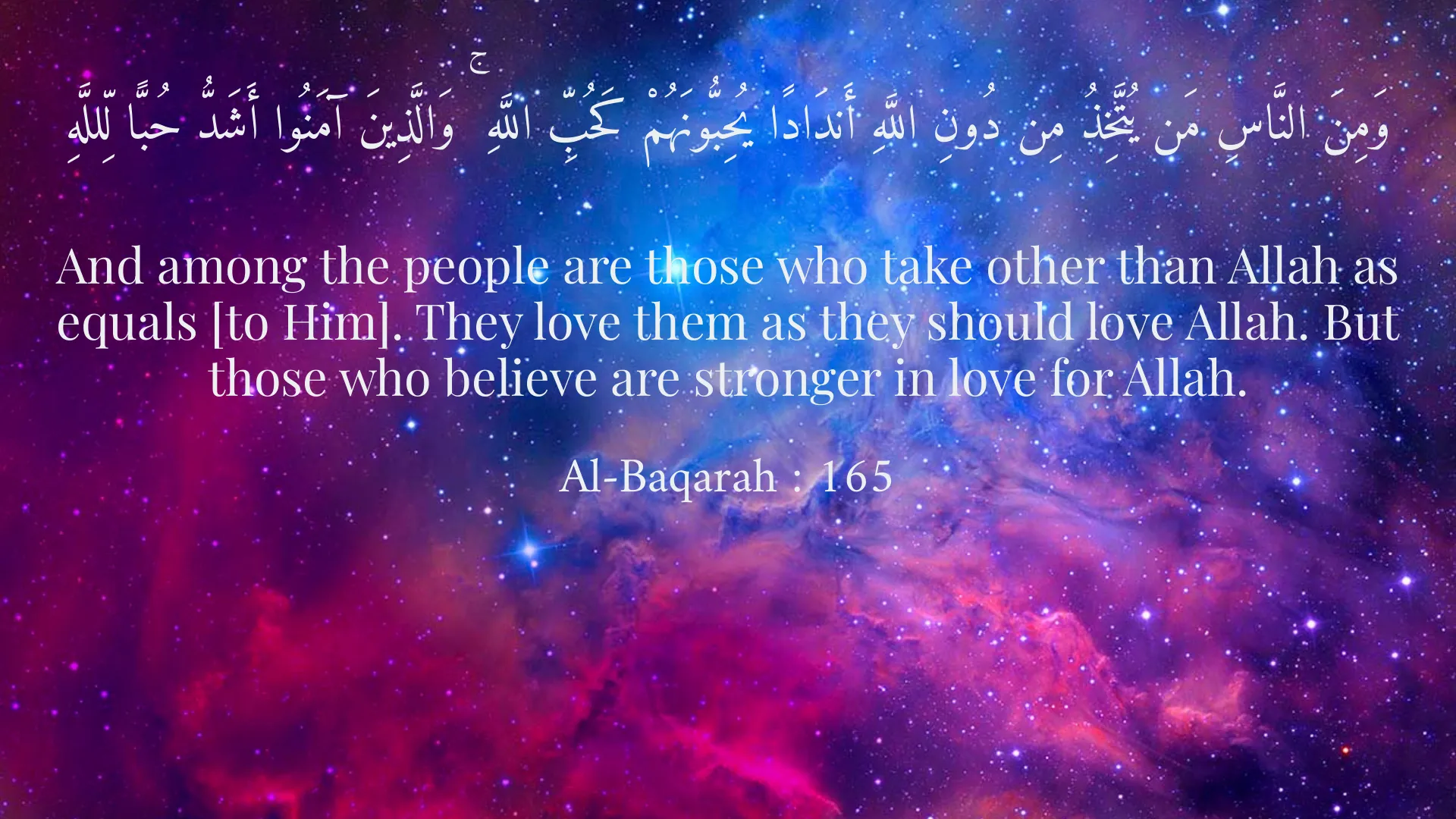
وَمِنَ النَّاسِ مَن يُتَّخِذُ مِن دُونِ اللَّهِ أَندَادًا يُحِبُّونَهُمْ كَحُبِّ اللَّهِ ۚ وَالَّذِينَ آمَنُوا أَشَدُّ حُبًّا لِّللَّهِ
And among the people are those who take other than Allah as equals [to Him]. They love them as they should love Allah. But those who believe are stronger in love for Allah.
Al-Baqarah : 165
يَا أَيُّهَا الَّذِينَ آمَنُوا مَن يَرْتَدَّ مِنكُمْ عَنْ دِينِهِ فَسَوْفَ يَأْتِي اللَّهُ بِقَوْمٍ يُحِبُّهُمْ وَيُحِبُّونَهُ
O you who have believed, whoever of you should revert from his religion - Allah will bring forth [for] the people He will love and who will love Him.
Al-Ma'idah : 54
Short Story
One day, a man was worshipping in the mosque but felt a lack of love in his heart for his Creator. He encountered a woman who was making a vow for God. He asked her why she had such love and devotion. The woman replied, 'Worship without love is a burden, but when love for God awakens in the heart, worship becomes easy.' The man pondered deeply and decided to cultivate love for God in his heart.