Quranic Answer
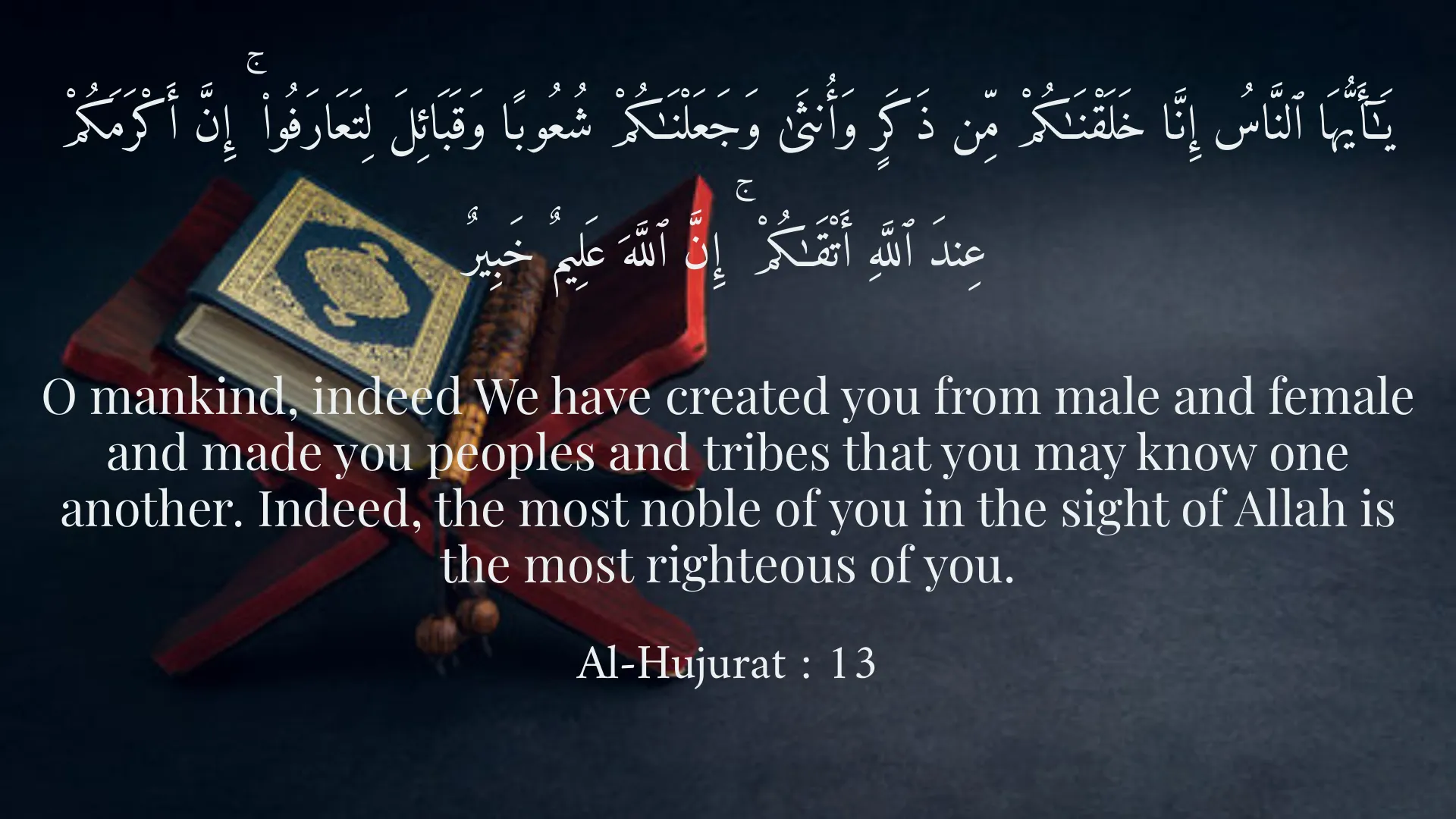
In the intricate tapestry of human society, the quest for superiority plays a prominent role. People continually strive to assert their dominance over others, often measuring their worth based on tangible criteria such as wealth, status, and social connections. However, within the framework of divine teaching in the Holy Quran, particularly in the verses of Surat Al-Hujurat, a different understanding of superiority emerges—one that challenges the conventional narratives influenced by materialism. According to the Quran, the hallmark of nobility and superiority among human beings is rooted in piety (taqwa), a concept that embodies a deep-seated consciousness of Allah and an ethical commitment to righteousness. The verse in Surah Al-Hujurat, verse 13, states: 'O mankind, indeed We have created you from male and female and made you peoples and tribes that you may know one another. Indeed, the most noble of you in the sight of Allah is the most righteous of you.' This proclamation unequivocally establishes that human worth is not predicated on outward appearances or the accumulation of wealth, but rather on the internal qualities of piety and righteousness. It posits a radical departure from the worldly metrics of success, inviting humanity to reflect deeply on the intrinsic values that govern life and relationships. Piety is a multi-faceted concept that entails not only a commitment to abstaining from sinful behaviors but also actively engaging in good deeds that align with moral principles. Such principles are not just ethical guidelines, but they are deeply intertwined with one's relationship with Allah and fellow beings. By fostering an attitude of piety, individuals cultivate a consciousness that elevates their actions and intentions. This brings about a transformative change in society where compassion, equity, and mutual respect prevail, laying down the foundation for a harmonious coexistence. The essence of piety is further reinforced in Surah Al-Mu’minun, verse 51, where Allah commands believers with: 'O you who have believed, fear Allah and strive in His cause.' This call to action signifies that the practice of faith requires more than beliefs; it demands active engagement through striving, indicating a commitment to understanding and implementing the divine teachings in daily life. The term 'strIVE' connotes relentless effort, wherein believers are urged to transcend the superficial markers of status and to contribute positively to the welfare of others and the collective progress of their communities. Piety invites individuals to prioritize their relationship with Allah, urging them to remain vigilant and accountable for their actions. The true measure of superiority in the eyes of Allah hinges on the purity of one's heart, the integrity of one's intentions, and the dedication to uphold justice and compassion in the face of adversity. In this light, social status and material wealth become trivial in the grander narrative where the soul's purity and moral fabric take precedence. This radical redefinition of value prompts a substantial shift in priorities for individuals within society. To live piously is to be aware of Allah in all aspects of life. It beckons people to develop a sense of mindfulness, which extends beyond mere ritualistic adherence to religious practices. Instead, this degree of consciousness permeates one's daily interactions with others, informing decisions that align with ethical standards and contribute to the greater good. As individuals cultivate piety, they discover that this path leads to genuine fulfillment and profound connections with both humanity and divinity. As we examine the realities of contemporary life, it is evident that the pressures of modernity often entice individuals into a relentless pursuit of material gains. However, the teachings of the Quran serve as poignant reminders of the transient nature of worldly possessions and accolades. Piety interrupts this cycle by redirecting aspirations toward a higher purpose—an eternal legacy defined by one's character, actions, and contributions to society. In many cultures and paradigms throughout history, the struggle for power and recognition has provoked conflicts and division. Yet, the Quran's exhortation towards piety serves as a universal antidote to such discord. Underpinned by respect for diversity, it promotes understanding and cooperation among different peoples and tribes, emphasizing the interconnectedness of humanity. The journey towards righteousness encourages individuals to transcend biases related to ethnicity, race, and socioeconomic status, fostering a more inclusive and compassionate global community. Moreover, the importance of piety is not limited to individual purity but extends to collective responsibility. As believers cultivate a sense of taqwa, the ramifications extend to societal dynamics, influencing cultural attitudes and policies. When communities prioritize piety, they become incubators of ethical governance, social justice, and environmental stewardship. Acts of kindness and social responsibility proliferate when the principles of taqwa are upheld. It is worthwhile to contemplate how one might cultivate piety in everyday life. Engaging in self-reflection, establishing regular channels of worship, and involving oneself in community service can be powerful methods to reinforce this connection with Allah. Embracing humility and seeking knowledge further enriches the journey of righteous living. The endeavor to practice piety is a continuous one—requiring dedication and sincere intention as individuals navigate the complexities of existence. In conclusion, the Holy Quran positions piety as the cornerstone of human superiority, offering a transformational lens through which to measure one's worth. Surah Al-Hujurat’s teachings beckon us towards introspection and ethical living, inviting believers to establish a profound relationship with Allah while contributing to the well-being of humanity. As we strive to embody the principles of righteousness in our daily lives, we must remain ever aware that our true superiority lies not in material possessions or superficial status, but in our ability to embody piety with sincerity and excellence. Through this commitment, we not only elevate ourselves but become beacons of light for others, inspiring a collective journey towards a righteous and equitable world.
Related Verses
يَٰٓأَيُّهَا ٱلنَّاسُ إِنَّا خَلَقْنَـٰكُمْ مِّن ذَكَرٍ وَأُنثَىٰ وَجَعَلْنَـٰكُمْ شُعُوبًا وَقَبَائِلَ لِتَعَارَفُوا۟ ۚ إِنَّ أَكْرَمَكُمْ عِندَ ٱللَّهِ أَتْقَـٰكُمْ ۚ إِنَّ ٱللَّهَ عَلِيمٌ خَبِيرٌ
O mankind, indeed We have created you from male and female and made you peoples and tribes that you may know one another. Indeed, the most noble of you in the sight of Allah is the most righteous of you.
Al-Hujurat : 13
يَـٰٓأَيُّهَا ٱلَّذِينَ ءَامَنُوا۟ ٱتَّقُوا۟ ٱللَّهَ وَٱجَـٰهِدُوا۟ فِى سَبِيلِهِۦ لَعَلَّكُمْ تُفْلِحُونَ
O you who have believed, fear Allah and strive in His cause.
Al-Mu'minun : 51
Short Story
One day, a man in a village paused to reflect after hearing Quranic verses. He thought that if he focused on appearances, wealth, or status, he would never grasp the true realities. He decided to seek superiority among humans solely in piety and righteousness. From that day on, he treated others with kindness and strived to remember Allah in every action. He realized that in life, the quality of being human is far more important than any outward appearances.