Quranic Answer
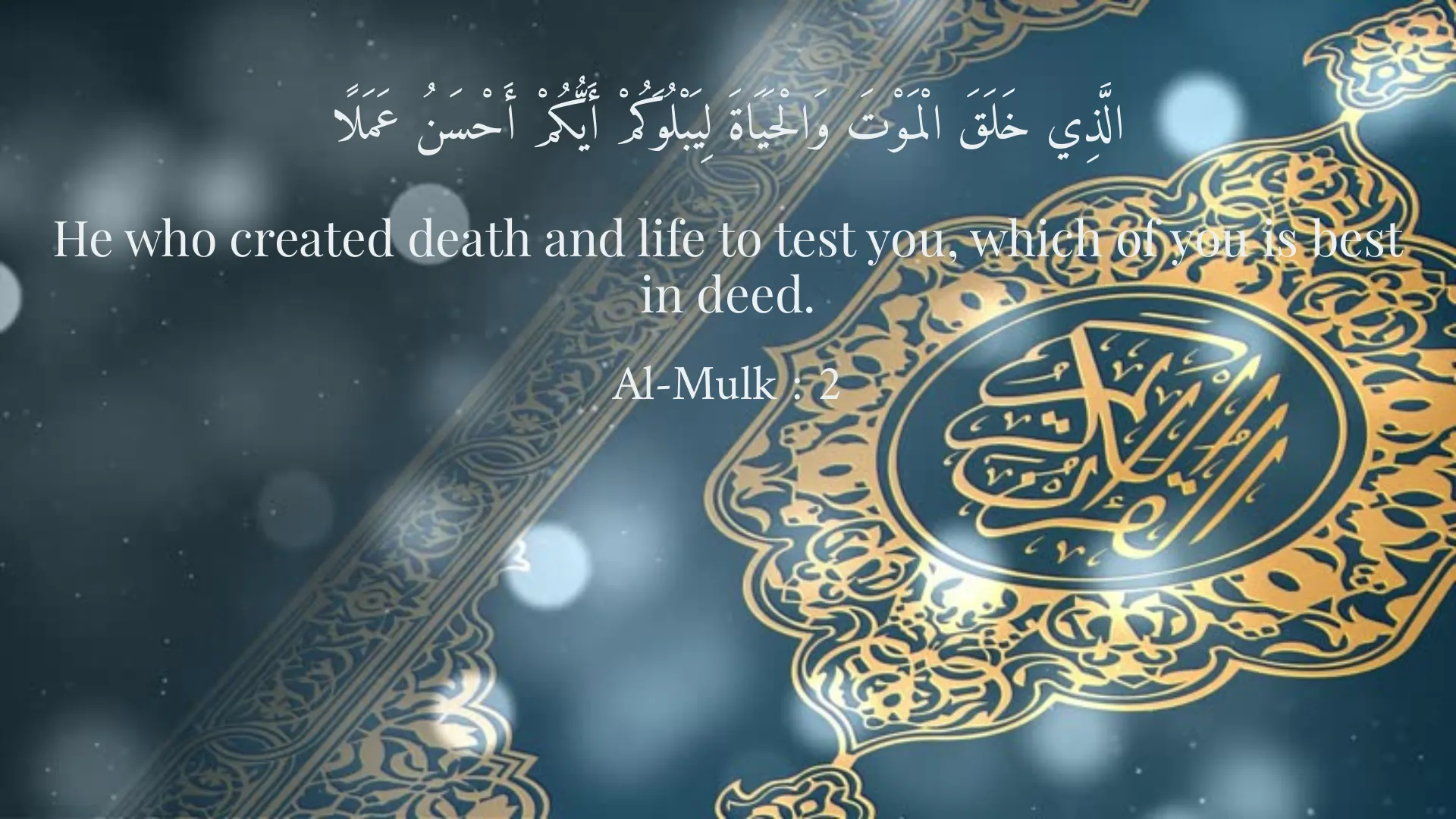
The Holy Quran, the final scripture in Islam, provides its followers with a comprehensive understanding of life, death, and what lies beyond. This sacred text establishes a profound connection between the temporal world we inhabit and the eternal hereafter that awaits us. The Quran elucidates the purpose of human existence, portraying this world as a transient phase where individuals are subjected to trials and tribulations. Our conduct during this earthly journey is pivotal; it ultimately dictates our fate in the afterlife. In this essay, we will explore the significance of worldly life as a test through the teachings of the Quran, particularly examining relevant verses, and we will emphasize the importance of aligning our lives with our faith to achieve salvation and happiness in the hereafter. To understand the essence of life according to the Quran, we turn to Surah Al-Mulk, verse 2, where Allah states: 'He who created death and life to test you, which of you is best in deed.' This verse is profound in its implications. It posits that life is not merely a series of experiences or a quest for pleasure; rather, it is a stage of testing that evaluates the quality of our actions. The concept of life as a test serves as a clarion call for believers to engage with the world meaningfully. Each individual is faced with myriad situations that challenge their morals, integrity, and faith. The decisions made in these moments define a person’s character and their standing in the eyes of God. Moreover, the Quran emphasizes that this testing is accompanied by the manifestation of free will. Humans are granted the faculty to choose their paths, whether to embrace righteousness or to indulge in wrongdoing. Throughout history, individuals have faced choices that will either lead them toward the light of faith or the darkness of despair. Believers are thus encouraged to cultivate virtues, engage in good deeds, and seek Allah’s pleasure, knowing that these actions are foundational to their ultimate success in the hereafter. In addition to testing, the Quran illustrates the temporal nature of this world. Material possessions, societal status, and worldly achievements are transient; they do not follow individuals into the afterlife. Surah Al-Imran, verse 185, boldly states: 'And you will be given your compensation in full on the Day of Resurrection.' This verse serves as a reminder that the rewards or consequences awaiting us after death are directly influenced by our actions in this life. It underscores how the relationship between worldly deeds and the afterlife is intricate and essential. The essence of this teaching resonates throughout the Quran. Believers are encouraged to reflect on their actions and their alignment with divine guidance. The notion that our ultimate rewards are tied to our conduct in life instills a sense of purpose, accountability, and urgency. The pursuit of knowledge and morality takes on a deeper significance—the choices we make today echo through eternity. Moreover, the Quran does not merely focus on individual responsibility but also emphasizes the communal aspect of faith. It urges believers to support one another in their faith journeys, reminding them of their collective accountability before God. By working together to uphold righteousness and engage in acts of kindness, communities can foster environments that elevate collective spiritual well-being. This shared responsibility reflects the interconnectedness highlighted in Islamic teachings and serves to enhance the moral fabric of society as a whole. As we delve deeper into the implications of living a life cognizant of the hereafter, it becomes evident that understanding the transient nature of worldly existence equips believers to navigate the challenges of life. With a profound comprehension of the divine purpose behind their creation, individuals can cultivate patience during trials and remain steadfast in their faith. The Quran encourages believers to face life's tests with resilience and hope, reminding them that every hardship serves as an opportunity for growth, repentance, and strengthening one’s bond with God. A crucial aspect of this journey is the cultivation of a deep understanding of one’s faith. The Quran emphasizes that mere belief is insufficient; it must be accompanied by understanding and action. Engaging with the scriptures, seeking knowledge through study, and practicing the teachings of the Prophet Muhammad, peace be upon him, serve to fortify one’s belief and guide individuals through the complexities of the human experience. In addition to guiding ethical behavior, the Quran offers spiritual sustenance. Regular prayer (Salah), study of the Quran, and acts of charity deepen one’s relationship with Allah and serve as constant reminders of the ultimate goal: attaining His pleasure and securing a favorable position in the hereafter. The rituals and practices in Islam are not mere obligations; they function as pathways that lead believers to salvation. In conclusion, the Quran accentuates the importance of the hereafter as the ultimate destination of life. It invites readers to reflect on their fate and actions, propelling them towards righteous living. The sacred text provides invaluable insights into the purpose of worldly life—a large-scale test of character where our actions shape our destinies in the eternal realm. Understanding this connection encourages believers to strive for excellence in deeds while remaining mindful of the transient nature of worldly possessions. By harmonizing worldly existence with a deep-rooted faith and understanding of religious beliefs, individuals can effectively navigate life’s tests, achieving true happiness and salvation in the eternal hereafter. The journey through life, as illustrated by the Quran, is a profound pilgrimage towards finding one’s place in the grand cosmic order, ultimately leading each soul to the gates of eternity.
Related Verses
الَّذِي خَلَقَ الْمَوْتَ وَالْحَيَاةَ لِيَبْلُوَكُمْ أَيُّكُمْ أَحْسَنُ عَمَلًا
He who created death and life to test you, which of you is best in deed.
Al-Mulk : 2
وَإِنَّمَا تُوَفَّوْنَ أُجُورَكُمْ يَوْمَ الْقِيَامَةِ
And you will be given your compensation in full on the Day of Resurrection.
Al-Imran : 185
Short Story
Once upon a time, there was a man named Hassan living in a village. Hassan was always focused on his success and wealth. One day, while passing by a tree, he heard a cry of distress. He looked closer and found a bird suffering in its cage. Remembering the verses of the Quran, he realized that life isn't just about enjoyment; it also provides us with opportunities for tests. Hassan decided to make changes in his life and focus more on good deeds. From that day forward, he helped the needy and tried to balance his wealth with the significance of the hereafter.