Quranic Answer
The purpose of human creation is one of the most profound and significant concepts within Islamic teachings, as articulated in the Holy Quran. The Quran offers insights into the reasons for our existence, emphasizing our roles and responsibilities as servants of God. In this context, the Quran presents a clear framework for understanding the divine intention behind the creation of humankind. This article aims to delve into this theme by examining key Quranic verses that underscore human purpose and responsibilities, exploring the overall implications for our daily lives and community structures. The Quran clearly states the fundamental purpose of human life in Surah Adh-Dhariyat, verse 56: 'And I did not create the jinn and mankind except to worship Me.' This profound declaration by Allah establishes worship as the primary motive behind human existence. The term 'worship' encompasses not just ritualistic practices such as prayer and fasting, but it signifies the complete surrender to God's will, which permeates every aspect of life. In this light, worship becomes a holistic endeavor, where every act performed in accordance with divine guidelines transforms into a means of approaching God. Moreover, the Quran elaborates on the role of humanity beyond mere worship. In Surah Al-Baqarah, verse 30, Allah states: 'And when your Lord said to the angels, 'Indeed, I will make upon the earth a successive authority.’ This verse highlights that humans are not merely designed for worship but are also appointed as God’s vicegerents on earth. The term 'vicegerent' or 'khalifah' suggests a significant responsibility - one that entails stewardship and guardianship over creation. This dual role of worship and caretaking underscores a balanced existence, where spiritual endeavors are complemented by ethical and moral conduct in the world. The responsibilities associated with being a vicegerent are manifold. Humans are entrusted with the care for the environment, societies, and one another. This commitment extends to promoting justice, compassion, and righteousness in interpersonal relationships. The teachings of Islam encourage a community where individuals support one another and strive for collective well-being. In essence, this aspect of our creation propels us toward an ethical framework that fosters kindness and equity, reflecting divine values in our daily interactions. The Quran also stresses the significance of familial relationships in the pursuit of a righteous and pious generation. In Surah Al-Furqan, verse 74, Allah says: 'And those who say, 'Our Lord, grant us from among our wives and offspring comfort to our eyes…' This verse encapsulates the importance of family as a fundamental component of a believer’s life. Families serve as the primary unit for transmitting values, ethics, and spirituality to future generations. Hence, nurturing a righteous family is integral not only in fulfilling personal aspirations but also in contributing to the broader community’s moral fabric. Furthermore, the emphasis on raising righteous offspring underscores a long-term vision within Islamic teachings – one that recognizes the responsibility of each individual in forging a pathway for future generations to follow. It is not merely about individual faith but collective growth anchored in spirituality, moral responsibility, and community engagement. In light of these principles, it becomes essential to mold an individual's life according to divine values and the pursuit of closeness to God. This endeavor is not limited to personal enrichment but is deeply intertwined with the communal obligations that arise from our roles as vicegerents and family members. The journey toward spiritual growth and ethical living invites continuous reflection, adaptation, and commitment. Humans must strive to embody virtues like honesty, humility, patience, and gratitude – qualities that exemplify a life lived in worship and service. Additionally, establishing a relationship with God is underscored as a continuous journey. Through acts of worship, prayer, and seeking knowledge, individuals can gradually enhance their connection with the Divine. This aspect is crucial; the nurturing of that relationship provides the believer with solace and purpose, especially during challenging times. It reinforces the concept that every hardship can be transformed into an opportunity for growth and reflection. Moreover, the Quran serves as a guide for understanding the multifaceted roles that humans play in the universe. It does not only define our purpose but also provides a comprehensive ethical framework to navigate life's complexities. The teachings encourage believers to engage in acts that draw them closer to God and their fellow beings, thereby creating a harmonious society that transcends individual desires in favor of communal welfare. Thus, the call to worship, the assignment of responsibility, and the importance of family are interwoven themes that articulate a profound understanding of human creation in Islam. Through fostering spirituality and ethics, we not only fulfill the divine purpose inscribed within us but also contribute to the betterment of our families and communities. Ultimately, an individual’s journey is not solitary but is part of a larger tapestry of divine intention aimed at enhancing collective moral standards, nurturing righteous generations, and ensuring a sustainable, ethical existence. In conclusion, the Quran elucidates that the creation of humankind within Islam is multidimensional. The interplay between worship, responsibility, and familial connections forms a framework that shapes the believer's life. Each human is called to live in accordance with divine guidelines, elevate their purpose through worship, and contribute positively to the world, thereby fulfilling the high expectations placed upon them by the Creator. Understanding and embodying these principles is crucial in navigating both personal and communal challenges, ultimately leading to a life rich in divine purpose.
Related Verses
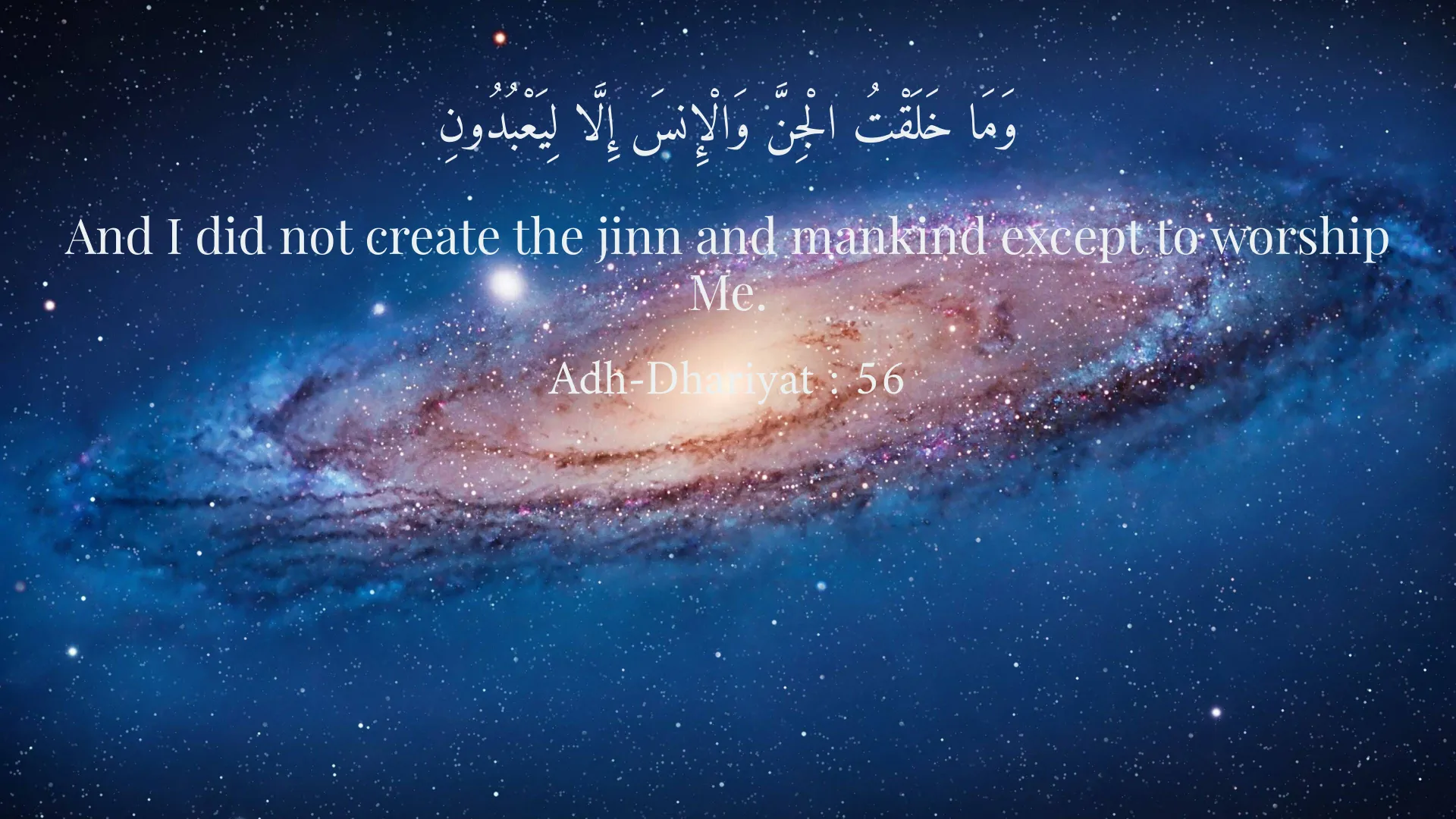
وَمَا خَلَقْتُ الْجِنَّ وَالْإِنسَ إِلَّا لِيَعْبُدُونِ
And I did not create the jinn and mankind except to worship Me.
Adh-Dhariyat : 56
وَإِذْ قَالَ رَبُّكَ لِلْمَلَائِكَةِ إِنِّي جَاعِلٌ فِي الْأَرْضِ خَلِيفَةً
And when your Lord said to the angels, 'Indeed, I will make upon the earth a successive authority.'
Al-Baqarah : 30
وَالَّذِينَ يَقُولُونَ رَبَّنَا هَبْ لَنَا مِنْ أَزْوَاجِنَا وَذُرِّيَّاتِنَا قُرَّةَ أَعْيُنٍ
And those who say, 'Our Lord, grant us from among our wives and offspring comfort to our eyes'
Al-Furqan : 74
Short Story
One day, a person named Arif was sitting in a corner, reflecting on his life. He wanted to understand what his true purpose in life was. He recalled the verses of the Quran and concluded that God created him for worship and for striving to improve the earth. Arif decided to draw closer to God and show genuine love to his family in his life. Over time, he found greater peace and satisfaction.