Quranic Answer
In the Holy Quran, a sacred scripture revered by millions worldwide, it is expressed that individuals are often motivated by the expectation of rewards in response to their efforts and good deeds, not only in the earthly realm but also in the hereafter. This principle is solidly rooted in the belief that every act of kindness and every sincere effort deserves recognition and recompense from Allah, the All-Knowing and Just. However, there are moments in life where these expectations seem unmet, leading to feelings of disappointment, frustration, and at times, a deep-rooted sense of hopelessness. One reason contributing to this disillusionment stems from the understanding that life's circumstances sometimes involve tests from Allah. In Surah Al-Baqarah, verse 155, it is detailed in a simple yet profound manner: 'And We will surely test you with something of fear and hunger and a loss of wealth and lives and fruits, but give good tidings to the patient.' This statement encapsulates a critical concept— that of divine testing. Life is full of challenges which can manifest as fears, shortages, or losses. These challenges are instruments of testing our patience and endurance. They are not merely obstacles, but pivotal opportunities for growth, refinement of character, and ultimately, spiritual awakening. Testing, as portrayed in the Quran, serves as a confirmation of one's faith. Every human being, irrespective of their level of belief, faces trials that can either strengthen their resolve or lead them to question their purpose. The feeling of being tested can lead to a reevaluation of one's actions and intentions. Patience is regarded not merely as enduring hardship, but as actively trusting in Allah's plan, knowing that every difficulty carries with it the seeds of development and eventual reward. Moreover, in verse 180 of Surah Al-Imran, it is mentioned: 'And let not those who withhold [the bounty of Allah's favor] think that it is better for them; rather, it is worse for them.' This verse invites reflection on the sincerity behind our actions. It implies that individuals might mistakenly believe that they can gain better standing by hoarding their wealth or by choosing to overlook their obligations toward societal good. Ultimately, the message conveyed is that divine wisdom operates on a level beyond human comprehension. What may appear to be an immediate setback or deprivation may, in fact, be a prelude to a greater benefit. Thus, we can understand that one of the reasons we sometimes find our good deeds seemingly unanswered is the intricate nature of divine testing and wisdom. While human beings often seek immediate validation or acknowledgment for their efforts, Allah’s timing and understanding of what is best for each individual might differ significantly from our own. Reflecting upon these verses encourages believers to embrace a mindset anchored in trust and patience. It reminds us that while we are urged to act righteously and perform good deeds, we must also resign ourselves to the understanding that rewards are not always instantaneous. Instead, they may come in unexpected forms, or perhaps in the Hereafter, when they are most needed or deserved. This perspective can shift our approach towards life's challenges. When faced with adversity, rather than being consumed by despair, one should seek to view it through a lens of opportunity—a chance to grow deeper in faith and resilience. This reframing is crucial for transforming our mindset from one of negativity to one of hope. It nourishes our spiritual journey, guiding us to see the bigger picture instead of fixating solely on our immediate circumstances. Furthermore, the teachings of the Quran urge us to maintain our integrity in our actions. Good deeds should be performed with pure intentions, unaffected by an overwhelming desire for recognition. The virtue of selflessness showcases the ultimate submission to Allah's will. When we act out of love and devotion, rather than for the sake of rewards, we cultivate a pure connection with the Divine that is rewarding in itself. In the grand scheme of existence, our good deeds—no matter how seemingly insignificant—form the fabric of our character and define our legacy. They are seldom wasted, as every act of kindness reverberates through the cosmos, even if the immediate returns are not witnessed. Believing that Allah rewards us in multiples at the right time can restore our peace of mind; it fosters a serene heart that is assured of divine wisdom. To summarize, the concepts of patience, testing, and divine wisdom are intricately woven throughout the Quran. They provide profound insights into the nature of human existence and our relationship with the Divine. The expectation of rewards for good deeds, both in this world and the Hereafter, is a natural inclination for many believers. Yet, developing a deeper understanding of the tests we endure and the wisdom behind seeming delays can enrich our spiritual journey. By maintaining faith and trust in Allah’s timing and divine plan, we nurture resilience and open ourselves to experiencing life more profoundly—knowing that ultimately, the best rewards are those ordained with wisdom and love.
Related Verses
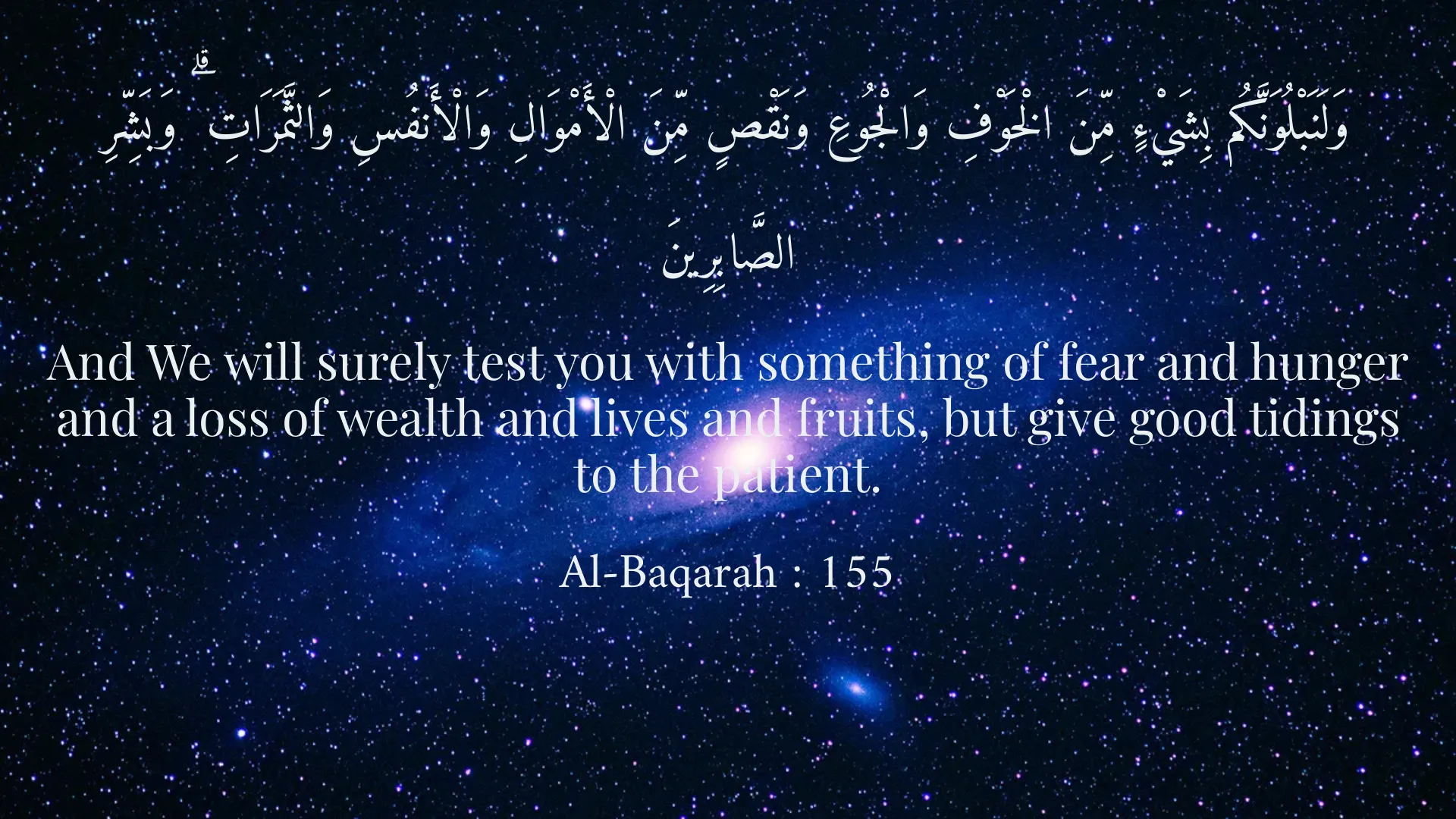
وَلَنَبْلُوَنَّكُم بِشَيْءٍ مِّنَ الْخَوْفِ وَالْجُوعِ وَنَقْصٍ مِّنَ الْأَمْوَالِ وَالْأَنفُسِ وَالثَّمَرَاتِ ۗ وَبَشِّرِ الصَّابِرِينَ
And We will surely test you with something of fear and hunger and a loss of wealth and lives and fruits, but give good tidings to the patient.
Al-Baqarah : 155
وَلَا يَحْسَبَنَّ الَّذِينَ بَخِلُوا بِمَا آتَاهُمُ اللَّهُ مِن فَضْلِهِ أَنَّهُ خَيْرًۭ لَّهُمْ ۚ بَلْ هُوَ شَرٌّ لَّهُمْ
And let not those who withhold from what Allah has given them of His bounty think that it is better for them; rather, it is worse for them.
Al-Imran : 180
Short Story
One day, I saw a young boy helping elderly people in the street. He told me, 'God is always with good people, even if we can't see good results.' His words reminded me of the verses of the Quran, and I realized that sometimes, God's silence in response to our good deeds is a sign of testing. We must be patient and have faith because Allah never forgets us.