Quranic Answer
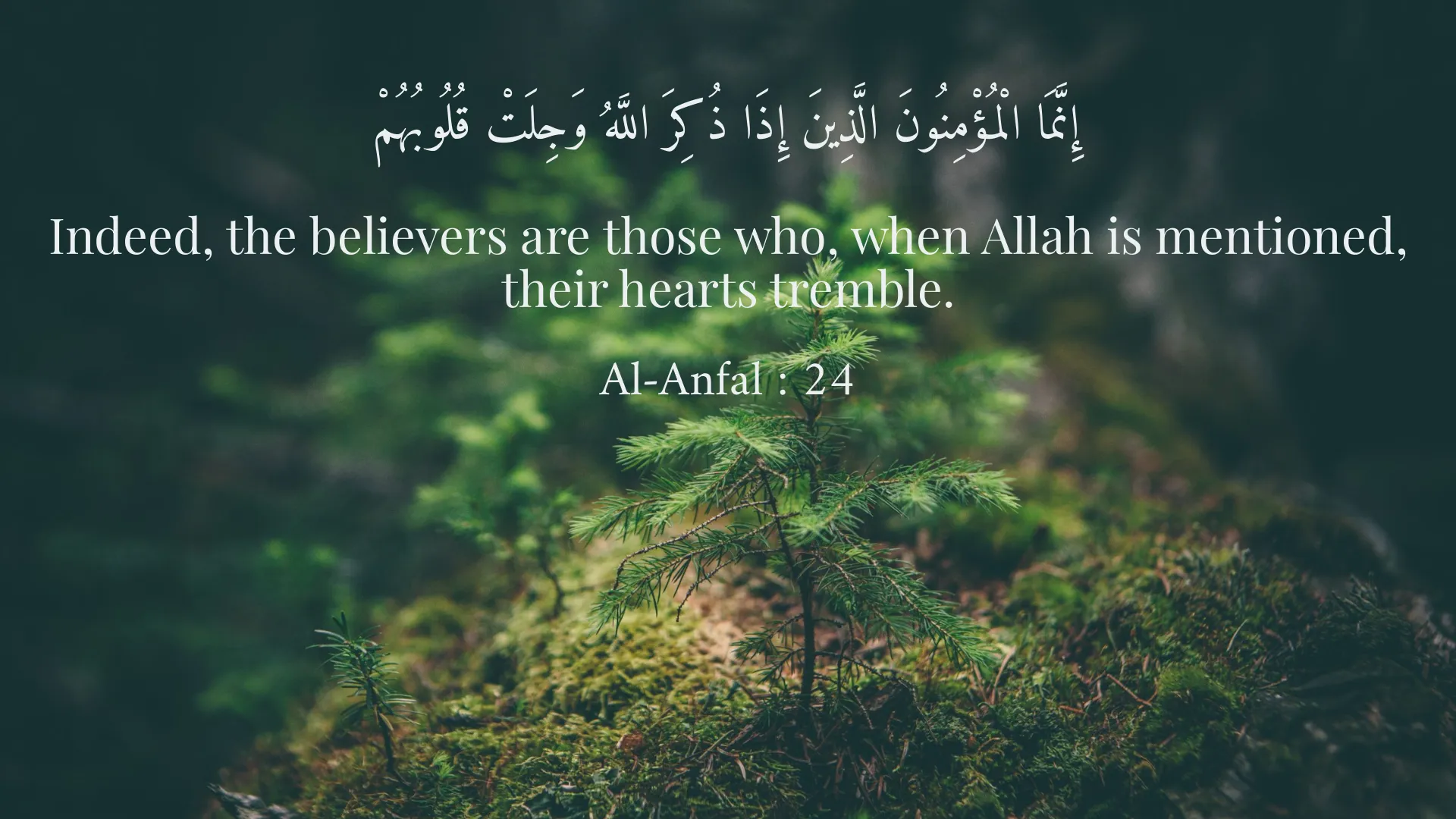
The issue of why some people believe while others do not is a profound and complex topic that has been explored throughout history, across cultures, and within various religious contexts. The foundations of belief—or the lack thereof—are addressed extensively in the verses of the Holy Quran, a sacred text for Muslims that serves as a guide for faith, morals, and actions. Understanding the dynamics of belief and disbelief can provide insights into the complexities of human nature and spirituality. One significant verse that encapsulates the emotional response of believers is found in Surah Al-Anfal, verse 24: 'Indeed, the believers are those who, when Allah is mentioned, their hearts tremble.' This powerful statement not only highlights the profound connection between believers and their Creator but also emphasizes the deep emotional impacts that the mention of God has on true believers. The use of the word "tremble" signifies a heightened state of awareness and reverence that those who have faith experience. It suggests that faith is not merely an intellectual agreement but a deeply felt emotional response. In contrast, others who may not share this connection may find their hearts unresponsive or lost in negligence. This poses an inherent question: what causes this dissonance between individuals who believe and those who do not? From a Quranic perspective, belief is seen as a divine gift that varies from person to person, shaped by their internal state as well as their life circumstances. In further elucidation of this theme, Surah Al-Baqarah, verses 6 and 7 state: 'Indeed, those who disbelieve, it is all the same for them; whether you warn them or do not warn them, they will not believe.' This verse points to a troubling reality in the human condition—that despite the truth and clarity brought forth by divine messages, some individuals choose to remain in disbelief. The implication here is that the hardness of one's heart can obstruct the path to faith. A 'hard heart' refers to an individual’s emotional and spiritual state, where openness to divine messages and guidance is stifled by indifference, skepticism, or even pride. So, why do some individuals possess hardened hearts while others are receptive to the messages of faith? The Quran suggests that various factors contribute to this divergence. Among them are upbringing, personal experiences, social environments, and emotional dispositions towards the concepts of God and religion. For instance, individuals who grow up in environments where faith is encouraged may develop an innate sense of spirituality and belief. Conversely, those raised in secular or hostile environments may cultivate skepticism or disbelief. Beyond mere upbringing, personal experiences play a crucial role in shaping one's belief system. Individuals who have encountered profound moments of personal crisis, loss, or spiritual awakening often find themselves grappling with existential questions that may lead them towards belief or reinforce their skepticism. The hardships of life can act as a catalyst for some to seek solace in faith, while others may perceive these experiences as evidence against the existence of a loving and caring God. Moreover, emotional dispositions are profoundly significant in determining one's faith journey. People are uniquely wired emotionally—some may possess a natural inclination towards spirituality and a yearning for connection with the divine, while others may remain more materially focused or skeptical of anything beyond physical existence. This emotional makeup does not exist in a vacuum; it evolves through interactions with the world, experiences of suffering, joy, and ultimately, personal reflection. Thus, the spiritual landscape of individuals becomes a complex matrix of innate traits, life experiences, and emotional responses to various stimuli. An important aspect of belief is also the power of community and social influence. Human beings are inherently social creatures, and the communities they are part of can significantly impact their belief systems. Participation in religious communities provides not just a sense of belonging but also reinforces beliefs through shared experiences, rituals, and teachings. However, disillusionment with community practices, religious leaders, or theological interpretations can push some individuals away from faith, exacerbating feelings of isolation and disbelief. Additionally, the concept of free will is deeply entrenched in the discussions surrounding faith and disbelief. The Quran indicates that every individual has the choice to accept or reject faith. This autonomy highlights the complexity of belief as a personal journey influenced by divine guidance and individual choice. While some may turn towards faith, others may choose the path of disbelief, often ignoring the signs and messages that could lead them to a deeper understanding of life and existence. Furthermore, the ongoing discourse surrounding science and religion has added another layer of complexity to beliefs today. As the world becomes increasingly driven by scientific inquiry and a desire for empirical evidence, individuals may find themselves caught in the tension between faith and reason. The perception that science competes with religious belief can lead some to abandon traditional views on spirituality, seeking instead rational explanations for existence and reality, which may further contribute to the prevalence of disbelief. In conclusion, the question of why some people believe while others do not is multilayered and intricately connected to spiritual, emotional, and social dynamics as illuminated in the Holy Quran. The verses cited above provide profound insights into the nature of the human heart in relation to faith and disbelief. Ultimately, faith is often seen as a divine gift granted to those whose hearts are receptive and whose souls seek a connection with the Divine. The path to belief can be complex and is deeply influenced by personal experiences, emotional dispositions, community contexts, and the exercise of free will. In this age of information and inquiry, it is crucial to approach the topic of belief and disbelief with humility and understanding, recognizing that each individual's journey is unique, shaped by a confluence of factors that govern their understanding of the divine.
Related Verses
إِنَّمَا الْمُؤْمِنُونَ الَّذِينَ إِذَا ذُكِرَ اللَّهُ وَجِلَتْ قُلُوبُهُمْ
Indeed, the believers are those who, when Allah is mentioned, their hearts tremble.
Al-Anfal : 24
إِنَّ الَّذِينَ كَفَرُوا سَوَاءٌ عَلَيْهِمْ أَأَنْذَرْتَهُمْ أَمْ لَمْ تُنذِرْهُمْ لَا يُؤْمِنُونَ
Indeed, those who disbelieve, it is all the same for them; whether you warn them or do not warn them, they will not believe.
Al-Baqarah : 6
Short Story
Once upon a time, there was a man who was always seeking the truth of his life. One day, he was sitting with a scholar and asking him questions. The scholar kindly said to him, 'O friend! Faith can bring peace and light to your heart, but you must have the capacity for it.' These words resonated within him, and through effort and exploration, he embraced the world of faith.