Quranic Answer
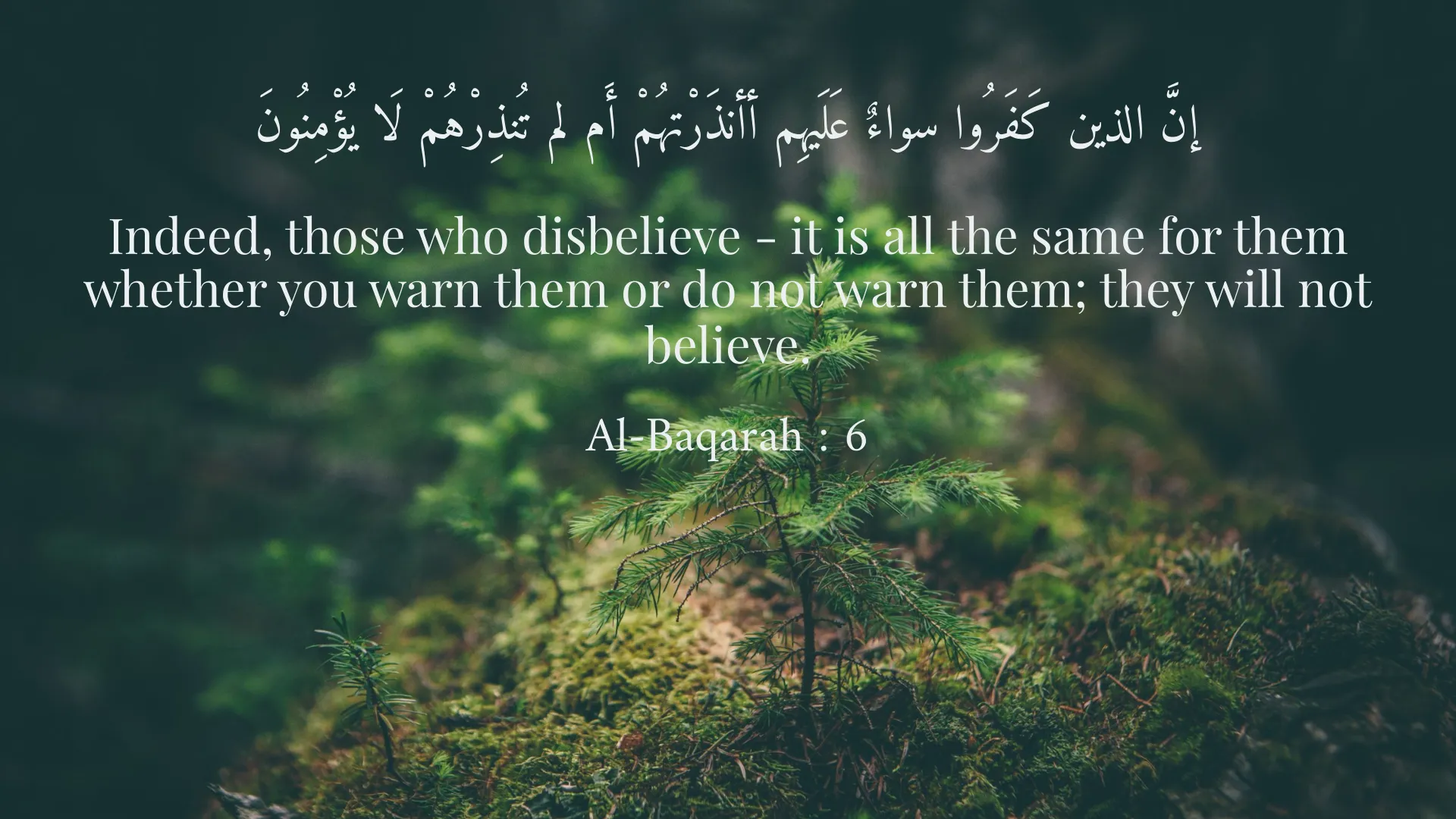
In the Holy Quran, many verses delve into the intricate topic of faith and disbelief, shedding light on the numerous reasons that sway individuals toward belief or steer them away from it. The nuances of these conditions pose essential questions about the nature of faith and divine guidance. Through the examination of key verses, particularly in Surah Al-Baqarah and Surah Al-Anfal, one can unravel profound insights regarding the relationship between belief, human predisposition, and divine intervention. Surah Al-Baqarah, one of the foundational chapters of the Quran, poignantly discusses the concept of belief and disbelief in verses 6 and 7. Allah states: 'Indeed, those who disbelieve - it is all the same for them whether you warn them or do not warn them; they will not believe. Allah has set a seal upon their hearts and upon their hearing, and over their vision is a veil; and for them is a great punishment.' These verses resonate deeply with the understanding that disbelief can lead to a spiritual paralysis. The imagery of hearts being sealed, ears deafened, and visions veiled is particularly striking. It suggests that the barriers to faith can be significantly robust, rendering individuals impervious to introspection or divine guidance. This profound encapsulation of the human condition indicates that faith is not a mere passive acceptance but rather an active engagement with the truth. The sealing of hearts and the veiling of vision serve as a metaphor for the consequences of persistent rejection of divine truth. Those who persist in disbelief do so at their own peril, as the Quran makes it explicit that such a state leads to severe spiritual ramifications, ultimately resulting in a 'great punishment.' Moreover, the commentary surrounding these verses reveals important theological insights about human agency and divine decree. The concept that Allah controls the hearts of individuals raises questions about free will and predestination. While individuals are encouraged to seek faith and embrace the truth, these verses pose a cautionary tale that emphasizes the gravitas of ongoing denial and rebellion against divine teachings. It indicates that the consistent act of turning away from faith may culminate in losing the capacity to recognize and accept guidance altogether. Conversely, in Surah Al-Anfal, verse 24, Allah addresses the believers with a clearer directive, saying: 'O you who have believed, respond to Allah and to the Messenger when he calls you to that which gives you life.' This call to action is a poignant reminder that faith in Allah and His Messenger must be accompanied by a sincere and proactive response. The use of the phrase 'that which gives you life' underscores that faith is not merely a set of beliefs but a vitalizing force that nourishes the spirit and revives the soul. This verse intricately ties the act of believing to responsiveness and action, highlighting that faith requires more than just acknowledgment; it demands commitment and practice. Therefore, individuals caught in the snares of worldly distractions and relentless desires may find it challenging to heed the divine call to faith. The struggle between worldly attachments and spiritual awakening is a common theme in human lives, and this verse starkly illustrates that those who are absorbed in material pursuits may miss the opportunity to flourish in their spiritual lives. Furthermore, the dichotomy between belief and disbelief highlighted in these verses points to a deeper existential reality—faith is a gift that requires recognition and acceptance. Believing in Allah and His Messenger, therefore, displays an alignment with one’s inner heart and soul, a heart that is uncluttered and ready to receive guidance. This condition of purity is crucial; thus, belief becomes an elective element associated with hearts that are free from the impurities that often plague human intentions. Ultimately, these verses convey an intricate interplay of various elements—human free will, divine mercy, and the innate deficiencies that can hinder individuals from faith. While human beings are equipped with the ability to choose, it appears that Allah also influences the hearts and inclinations of individuals in ways that may promote or deter faith. Thus, one can infer that while individuals have the capacity for self-determination, the journey toward belief is nuanced by divine will. The significance of these teachings and their implications for understanding the nature of faith cannot be overstated. They compel individuals to reflect upon their relationship with the divine and actively seek to cultivate the sincerity of their hearts. It serves as a reminder that the journey toward belief is both personal and divinely orchestrated, inviting a humble recognition of one’s place in the broader tapestry of faith and existence. In conclusion, the verses from Surah Al-Baqarah and Surah Al-Anfal encapsulate a profound understanding of the dynamics at play when it comes to faith and disbelief. They underscore the critical importance of maintaining an open heart and a willingness to respond to divine guidance. Ultimately, these teachings inspire individuals to navigate their struggles, overcome worldly distractions, and foster a deepened connection with Allah, realizing that belief is more than merely a choice, but also an alignment with divine will and mercy.
Related Verses
إنَّ الذين كَفَرُوا سواءٌ عَلَيهِم أأنذَرْتهُمْ أَم لم تُنذِرْهُمْ لَا يُؤْمِنُونَ
Indeed, those who disbelieve - it is all the same for them whether you warn them or do not warn them; they will not believe.
Al-Baqarah : 6
خَتَمَ اللهُ عَلَى قُلُوبِهِمْ وَعَلَى سَمْعِهِمْ وَعَلَى أَبْصَارِهِمْ غِشَاوَةٌ وَلَهُمْ عَذَابٌ عَظِيمٌ
Allah has set a seal upon their hearts and upon their hearing, and over their vision is a veil; and for them is a great punishment.
Al-Baqarah : 7
يَا أَيُّهَا الَّذِينَ آمَنُوا استَجِيبُوا لِلَّهِ وَلِلرَّسُولِ إذا دَعَاكُمْ لِمَا يُحْيِيكُمْ
O you who have believed, respond to Allah and to the Messenger when he calls you to that which gives you life.
Al-Anfal : 24
Short Story
One day, a man named Ali sat in a corner, pondering his life. He was troubled by why some of his friends had embraced faith while others remained disbelievers. One day, a friend of his said, 'Ali, we humans sometimes lose our way, but we must trust in God.' Reflecting on the verses of the Quran and realizing that everyone seeks their own truth, Ali felt a greater sense of peace. He decided to strengthen his beliefs and strive more in his search for truth.