Quranic Answer
The feeling of injustice from God among some individuals is a complex emotion that often arises from the struggle to comprehend the divine wisdom and knowledge that governs the universe. This sentiment can be particularly pronounced during difficult times, when life's challenges seem overwhelming, and the light of understanding appears dim. The Holy Quran, the sacred text of Islam, addresses these feelings directly, providing insights and guidance that can help individuals navigate through their emotional turmoil. Through a closer examination of God's attributes and the guidance offered in the Quran, we can develop a deeper understanding of justice, patience, and the transformative power of life's trials. Understanding God's Justice In the pursuit of understanding divine justice, one must first recognize the fundamental belief in God's omnipotence and omniscience. Allah, in His infinite wisdom, has created a world that operates according to principles and laws that may not always be immediately apparent to human beings. In Surah An-Nisa, verse 40, Allah emphasizes that 'Indeed, Allah does not do injustice, [even] as much as an atom's weight; while if there is a good deed, He multiplies it.' This profound verse underscores two critical aspects of divine justice: the absolute nature of God's fairness and the boundless generosity of His rewards. The idea that God does not commit injustice, even in minuscule measures, reassures believers that every action is accounted for, and every hardship serves a purpose. This verse invites reflection on the very nature of justice. Human beings often perceive justice through a limited lens based on personal experiences, societal norms, and cultural contexts. However, divine justice transcends these limitations and operates on a level beyond human comprehension. God sees the intentions behind actions and knows the trials individuals may face, which can lead to rewards that far exceed what is understood in this life. The Challenge of Perception When confronted with life's adversities, individuals may assume that God is being unjust to them. This misjudgment often stems from a narrow understanding of their circumstances. The Quran highlights this concept in Surah Al-Imran, verse 186, which states, 'You will surely be tested in your possessions and in yourselves.' Here, God prepares believers for the inevitability of trials, reminding them that hardship is a universal experience intended for their growth and development. During moments of distress, it is natural for an individual to feel abandoned or unfairly treated. However, it is essential to recognize that these challenges can serve as catalysts for personal growth, self-reflection, and drawing closer to Allah. Difficulties may push one to develop qualities such as resilience, patience, and empathy, which are invaluable traits in the journey of life. The Role of Patience and Faith To combat feelings of injustice, believers are encouraged to embrace patience (sabr) and faith (iman). Patience is not merely about enduring hardships silently; it is an active process of maintaining one's convictions in the face of adversity. In times of trial, turning to faith can provide comfort and reassurance, reminding individuals that they are not alone in their struggles and that God is aware of their plight. Moreover, faith instills hope, allowing individuals to perceive challenges as necessary steps in their spiritual journey. It encourages them to understand that a higher purpose often underlies their experiences, even if that purpose remains unclear initially. The journey of faith and patience is one of continual learning, growth, and transformation. As believers navigate their trials, they become more attuned to the complexities of life and the divine wisdom that guides them. The Transformative Power of Trials God’s tests manifest in various forms, including loss, illness, hardship, or relational strife. These experiences challenge individuals to reflect on their relationship with God, encouraging them to lean on their faith for support and guidance. Surah Al-Baqarah, verse 155 reinforces this idea by stating, 'And We will surely test you with something of fear and hunger and a loss of wealth and lives and fruits, but give good tidings to the patient.' Here, patience is tied directly to the reward of faithfulness amidst tribulations. Moreover, trials can lead to the cleansing of one's heart and soul, allowing individuals to emerge stronger and more connected to their purpose. They help develop profound compassion for others who experience suffering, fostering a greater sense of community and empathy. The awareness of shared hardship can motivate individuals to support one another, reinforcing the bonds of compassion, charity, and understanding within society. Conclusion In conclusion, the feeling of injustice from God can often stem from a lack of understanding of divine wisdom. The Holy Quran provides believers with a framework to reassess their perceptions of justice, urging them to cultivate patience and faith during challenging times. Recognizing that hardships are opportunities for growth transforms the narrative of injustice into one of empowerment and purpose. As believers realize that God’s wisdom is far beyond human understanding, they can embrace their trials with resilience, continually striving toward a closer relationship with the Divine. By fostering patience and keeping faith at the forefront, believers can alleviate feelings of injustice and navigate life’s adversities with grace and hope. This journey of understanding ultimately leads to a deeper appreciation of God's perfect justice and mercy, allowing individuals to grow spiritually and emotionally in an often unpredictable world.
Related Verses
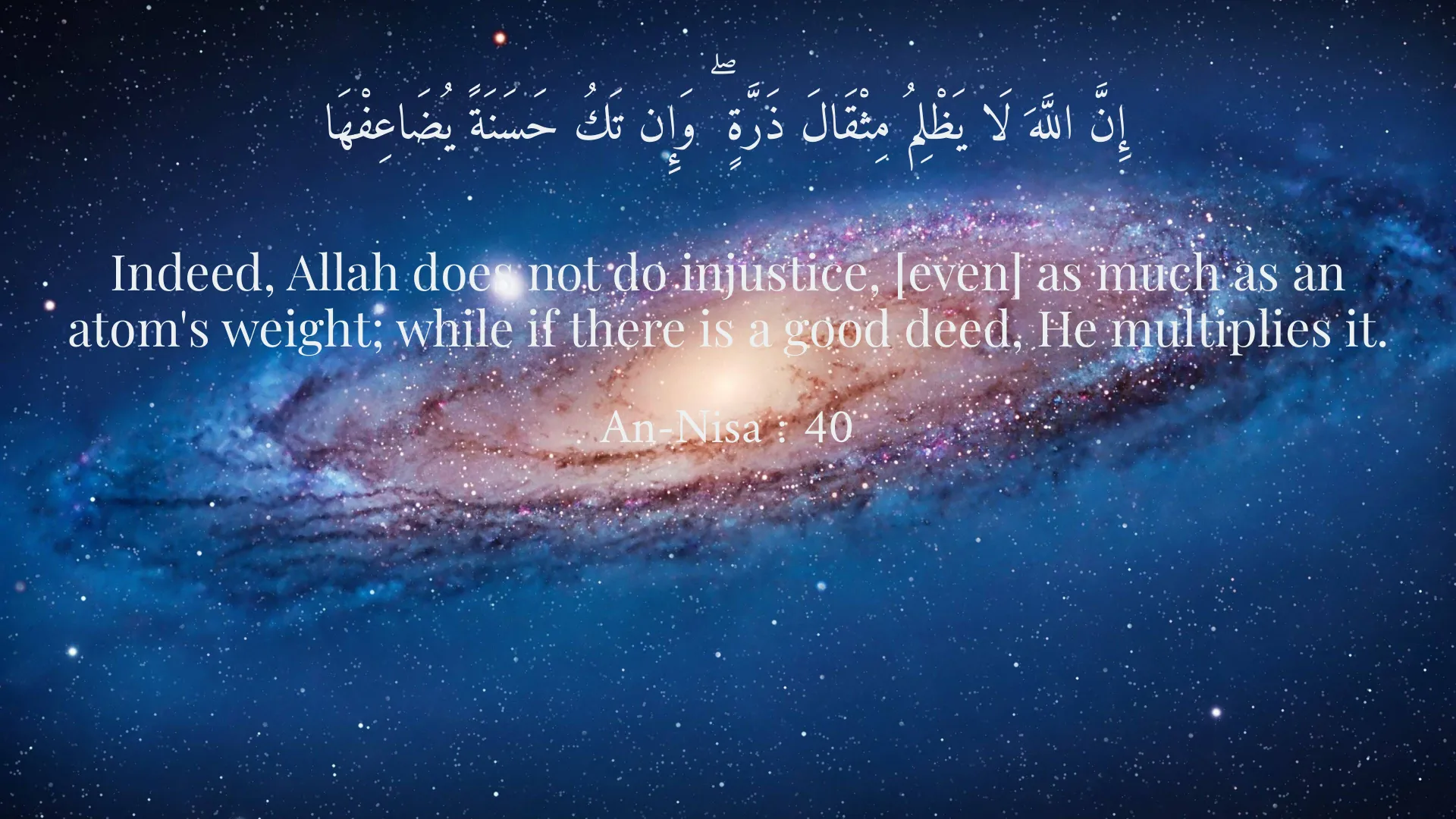
إِنَّ اللَّهَ لَا يَظْلِمُ مِثْقَالَ ذَرَّةٍ ۖ وَإِن تَكُ حَسَنَةً يُضَاعِفْهَا
Indeed, Allah does not do injustice, [even] as much as an atom's weight; while if there is a good deed, He multiplies it.
An-Nisa : 40
لَتُبْلَوُنَّ فِي أَمْوَالِكُمْ وَأَنفُسِكُمْ
You will surely be tested in your possessions and in yourselves.
Al-Imran : 186
Short Story
One day, Zayd was pondering over his troubles and felt injustice from God. He decided to consult with a friend and read the Quran. While reading, he came across a verse that said, 'Every hardship is a test and an opportunity for growth.' Zayd thought deeply about this and realized that no matter how tough life may get, there is always an opportunity to draw closer to God and learn.