Quranic Answer
In the realm of spirituality and faith, the Holy Quran provides profound insights into the contingent nature of belief and knowledge. A fundamental theme presented in the Quran is the bifurcation of humanity into two distinct groups: believers and disbelievers. This delineation raises critical questions about the nature of faith and the role of knowledge in the cultivation of belief. Within the verses of the Quran, particularly in Surah Al-Baqarah and Surah Al-An'am, the relationship between knowledge, righteous actions, and the presence of faith is dissected and analyzed. To understand this nuanced relationship, one must delve into the key Quranic verses that highlight these important concepts. For instance, in Surah Al-Baqarah, verse 146, Allah states that even among the most knowledgeable scholars of the Jews, there exists a vacuity of faith due to their underlying disbelief and envy. This particular observation draws attention to the notion that knowledge, by itself, is not a guaranteed pathway to faith. One can possess extensive and profound knowledge yet remain devoid of true belief; this reality serves as a stark reminder that knowledge must be coupled with humility, sincerity, and an earnest quest for divine truth. The Quran emphasizes that knowledge, when separated from righteous conduct, becomes devoid of value or benefit. In Surah Al-An'am, verse 88, Allah conveys the message that knowledge must lead to action; knowledge that does not manifest itself through righteous deeds is rendered futile. This highlights the critical principle that faith is not merely a cerebral concept but an embodiment of one’s beliefs through actions. An individual can be a repository of knowledge, yet if they remain inactive and disengaged from the application of that knowledge, they confront a barren and unfruitful existence. This reality demands an introspection into the very nature of how individuals perceive and uphold their faith amid the distractions of the world. As one considers the components that inhibit a person's ability to reach true faith, it becomes evident that attachment to worldly possessions and a fixation on material wealth can distract from the remembrance of Allah. In Surah Al-Imran, verse 14, Allah references those who, consumed by the allure of worldly adornments, find their hearts overshadowed and blind to the divine reminders that surround them. The desire for material gain often leads to a neglect of spiritual duties, impeding one's spiritual progress and detaching them from the core tenets of faith. Thus, the Quran urges believers to transcend the ephemeral nature of worldly gains and redirect their focus toward the eternal truths of life and the hereafter. The verses collectively illustrate that genuine faith is cultivated by transforming knowledge into righteous actions, which reflects a constant mindfulness of Allah and the spiritual reality that awaits after death. Engaging in acts of worship, serving those in need, and maintaining a conscientious awareness of one’s ethical and moral responsibilities are essential pathways to fortifying one's faith. Moreover, the process of transforming knowledge into righteous actions involves continuous self-evaluation and conscious effort to align one's deeds with the moral and ethical guidelines set forth in the Quran. It is a journey of self-discovery that requires patience, resilience, and an unwavering commitment to seeking Allah’s pleasure. The Quran serves as an invaluable guide, providing believers with the wisdom and insights necessary to navigate through life's challenges while simultaneously nurturing their faith. In this incessant journey towards faith, believers must recognize the significance of community and collective support. Being surrounded by like-minded individuals fosters an environment conducive to spiritual growth and shared understanding. Engaging with scholars, participating in discussions, and seeking knowledge from reliable sources further enhance one's understanding and appreciation of faith in action. Such communal efforts can help to fortify the commitment to practice knowledge in ways that align with righteous behavior, ultimately leading to a more profound connection with Allah. The dichotomy of belief and disbelief illustrated in the Quran serves as a powerful reminder of the consequences of neglecting the pivotal relationship between knowledge and action. Believers are encouraged to remain vigilant against the distractions of the material world and to constantly seek knowledge with the intention of embodying it through righteous behavior. Through this dual commitment, the heart may find true faith, reflective of an unwavering connection to Allah, characterized by sincerity, humility, and a recognition of the ultimate purpose of human existence. In conclusion, the spiritual journey toward true faith as outlined in the Quran reveals the intricate interplay between knowledge, actions, and the remembrance of Allah. It beckons the believer to not only acquire knowledge but to actively implement it in everyday life, thus nurturing their faith and establishing a strong foundation for true belief. To achieve this, one must consciously seek to reinforce the remembrance of Allah within their hearts, understanding that it is through this connection that faith flourishes and blossoms into a meaningful and fulfilling spiritual existence.
Related Verses
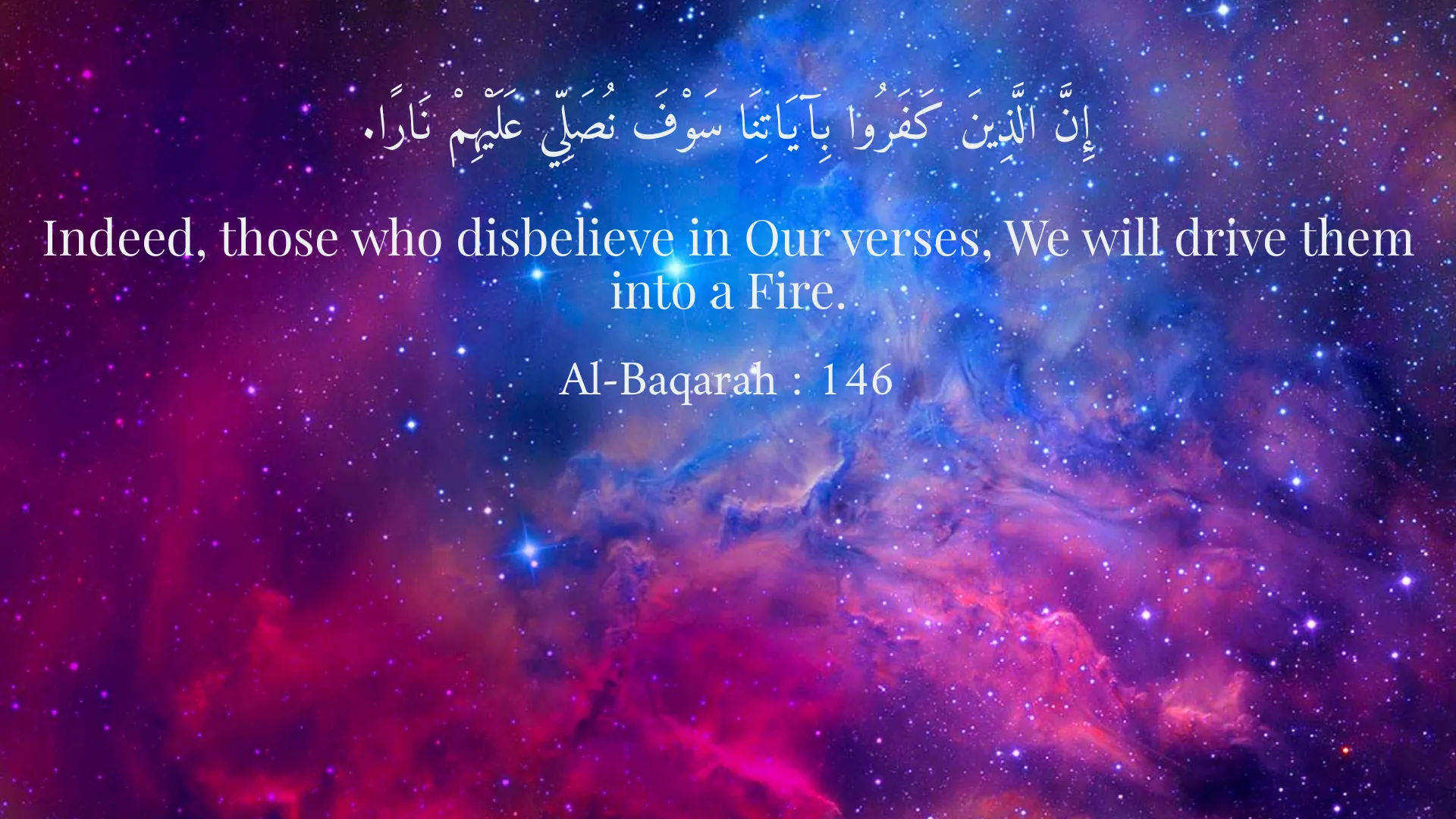
إِنَّ الَّذِينَ كَفَرُوا بِآيَاتِنَا سَوْفَ نُصَلِّي عَلَيْهِمْ نَارًا.
Indeed, those who disbelieve in Our verses, We will drive them into a Fire.
Al-Baqarah : 146
وَمَنْ كَانَ مُؤْمِنًا كَذَّبَ بِالْبَاطِلِ.
And whoever is a believer denies falsehood.
Al-An'am : 88
زُيِّنَ لِلنَّاسِ حُبُّ الشَّهَوَاتِ مِنَ النِّسَاءِ وَالْبَنِينَ وَالْقَنَازِعَ الْمُقَنَّعَةِ.
Beautified for people is the love of that which they desire - of women and sons, heaped-up sums of gold and silver.
Al-Imran : 14
Short Story
One day, a great sage was sitting by the sea, watching the waves. He noticed a fish pulling itself towards the rocks. He said to his disciples, 'See, this fish, though it needs the sea to survive, is heading towards the rocks. Many humans, despite achieving greater knowledge, follow the worldly desires and drift away from faith. We must strive to remember God and divine knowledge.'