Quranic Answer
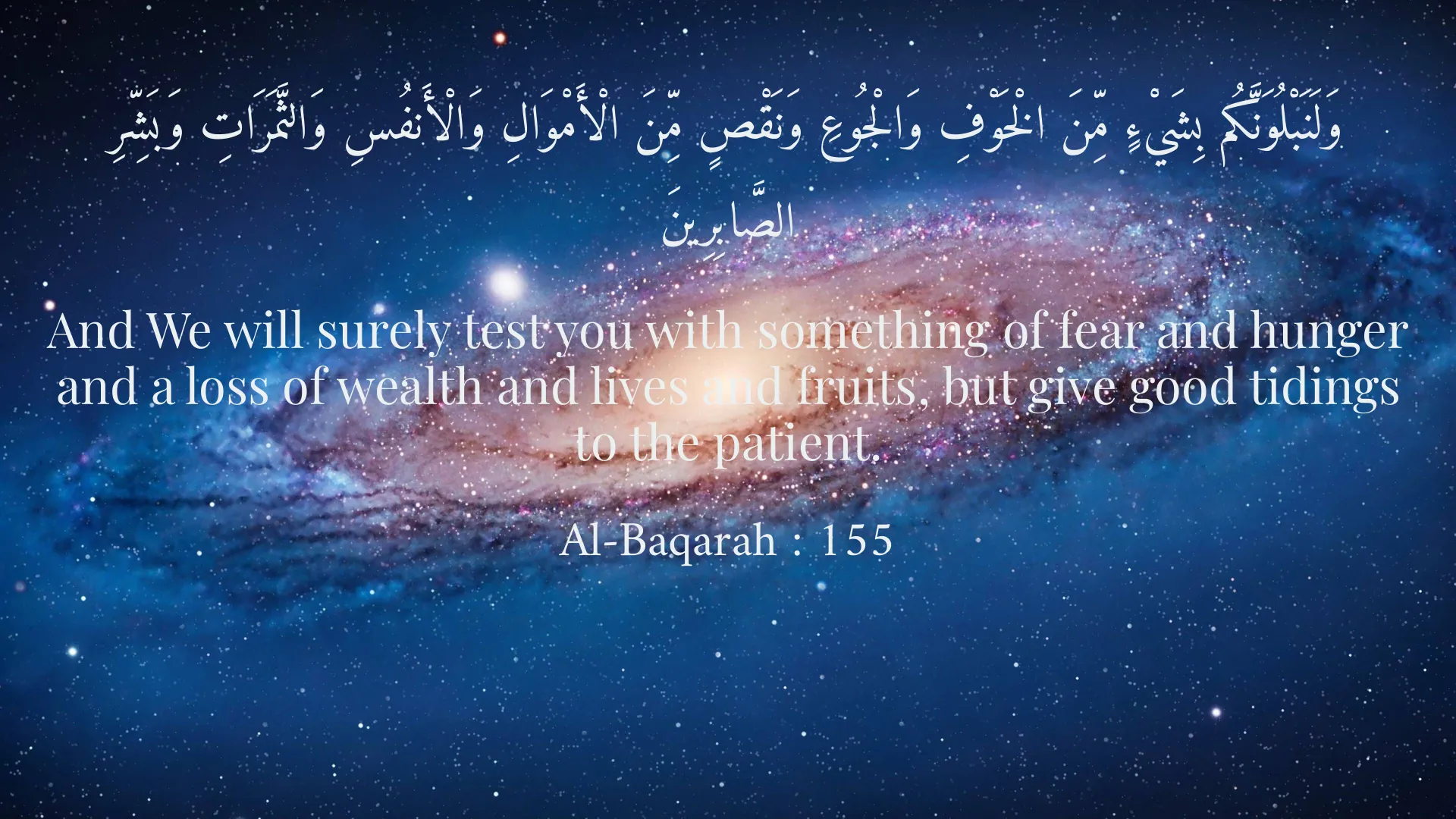
The concept of divine decree and wisdom is a central theme in the Holy Quran, serving as a guiding principle for Muslims worldwide. Among the many references found in the sacred text, one of the most profound is in Surah Al-Baqarah, verse 155, which states: 'And We will surely test you with something of fear and hunger and a loss of wealth and lives and fruits, but give good tidings to the patient.' This verse serves as a reminder of the trials and tribulations that humanity must endure throughout their lives, whether it be the loss of loved ones, economic hardships, or personal struggles. The Quran not only acknowledges these challenges but also provides a roadmap for navigating them with the right mindset and faith. The essence of human existence according to the Quran is rooted in the understanding that life is a test. Every individual is subject to various forms of adversity, but these hardships are part of God's divine plan. Allah, in His infinite wisdom, has decreed that every person will face challenges tailored to their own life circumstances, tailored specifically to test their faith, resilience, and character. The phrase 'give good tidings to the patient' is particularly important, as it highlights the virtue of patience (Sabr) in the face of adversity. Patience is not merely the ability to endure hardship but is a form of faith and trust in God’s plan. The Quran encourages believers to remain steadfast and hopeful, reinforcing the idea that these trials are temporary and serve a greater purpose in the divine narrative. In the context of loss, whether it be the death of a loved one or the loss of life itself, the Quran delivers a profound message: every death occurs at its appointed time, as decreed by God. This assertion serves to comfort those who mourn, providing a spiritual context that acknowledges the inherent pain of loss while reaffirming that it is all part of God’s overarching wisdom. Every individual, as a unique creation of Allah, plays a specific role in this world, and their time here is limited but significant. When we consider the premature death of individuals, it raises challenging questions about fairness, justice, and divine wisdom. The Quran suggests that those who are called back to Allah early may do so for various reasons. It could be a form of mercy; their suffering in this world may have been substantial, and thus, being drawn back to the divine presence allows them to find eternal peace. They may be destined for higher ranks in the Hereafter due to their purity of heart, devotion, or unwavering faith. In this light, early death can be reinterpreted as a divine mercy rather than a tragic end. Additionally, understanding death as a part of divine will offers profound insight into how believers are encouraged to view life and loss. The idea that knowledge of this divine wisdom belongs solely to Allah reinforces the importance of humility among humanity. As much as individuals struggle to understand the reasons behind certain events, the Quran presents the notion that human beings are limited in knowledge and comprehension compared to the omniscient nature of God. This unique position challenges individuals to trust in God’s plan and timing, cultivating a sense of peace amidst the chaos and unpredictability of life. Moreover, the Quran repeatedly reminds Muslims of the temporary nature of worldly existence. This temporary nature is a reminder that life’s pleasures and pains are fleeting. Emphasizing this perspective allows believers to navigate their experiences with a sense of purpose, recognizing that every trial faced on this earth is an opportunity for growth, learning, and character development. The wisdom behind each challenge can lead to a deeper understanding of faith, bringing individuals closer to their Creator. In summary, the Holy Quran offers a framework through which believers can understand their existence, trials, and the nature of death. The trials faced by humanity, as expressed in Surah Al-Baqarah 155, are not arbitrary but are purposeful, serving as reflections of God's wisdom. The promise of patience combined with the assurance of divine timing teaches individuals to embrace life, with all its challenges, as a precious opportunity to grow spiritually. Therefore, every ending—in the form of loss or death—is part of a larger tapestry of divine will, woven with infinite wisdom and love. Understanding this profound truth fosters patience, hope, and ultimately, a deeper connection with God. These insights create a comforting context for believers, offering solace and strength in the face of life’s inevitable trials.
Related Verses
وَلَنَبْلُوَنَّكُم بِشَيْءٍ مِّنَ الْخَوْفِ وَالْجُوعِ وَنَقْصٍ مِّنَ الْأَمْوَالِ وَالْأَنفُسِ وَالثَّمَرَاتِ وَبَشِّرِ الصَّابِرِينَ
And We will surely test you with something of fear and hunger and a loss of wealth and lives and fruits, but give good tidings to the patient.
Al-Baqarah : 155
أَفَحَسِبْتُمْ أَنَّمَا خَلَقْنَاكُمْ عَبَثًا وَأَنَّكُمْ إِلَيْنَا لَا تُرْجَعُونَ
Did you think that We created you uselessly and that to Us you would not be returned?
Al-Mu'minun : 115
Short Story
One day, in a village, there was a man who endured many hardships in his life. He would always say, 'O my God, why must I suffer so much?' One day, he noticed that his neighbor had passed away unexpectedly and without warning. From that day on, he learned that life is temporary, and that God has specific wisdom behind every death. The man decided to make the most of his life and serve others.