Quranic Answer
The concept of God's mercy and forgiveness is a central theme in the Holy Quran, offering profound insights into the relationship between the Creator and His creation. The Quran, revered as the literal word of God by Muslims, emphasizes divine mercy as a fundamental aspect of divine justice. Understanding these verses is crucial for believers seeking both solace and guidance in their journey of faith. This article will explore the significance of God’s mercy and forgiveness as illustrated in the Quran, particularly focusing on Surah Az-Zumar and Surah Al-Imran, while delving into the implications for human behavior and spiritual growth. One of the most poignant verses addressing the theme of mercy and forgiveness is found in Surah Az-Zumar (39:53), where Allah states, 'Say, O My servants who have believed, fear your Lord. For those who do good in this world is good, and the earth of Allah is spacious. Indeed, the patient will be given their reward without account.' This verse serves as a beacon of hope for all believers, emphasizing that despite their transgressions, they are not forsaken. Instead, God invites those who believe to acknowledge their shortcomings and strive for righteousness. The verse begins by identifying a specific audience: 'O My servants who have believed.' This phrase underscores a personal relationship between God and His creation. Believers are reminded of their duty to be conscious of their Lord, urging them to fear Him in the sense of reverence and awe, rather than sheer fright. The instruction to 'fear your Lord' is accompanied by the promise that those who engage in righteous deeds will find goodness not only in the afterlife but also in this world. Additionally, the verse highlights the vastness of God's mercy, depicted metaphorically through the phrase 'the earth of Allah is spacious.' This signifies that God's avenues for repentance and rectification are unlimited. It invites believers to embrace the notion that they have every opportunity to turn towards Him, no matter the extent of their misdeeds. The mention of patience and the promise of an expansive reward without accounting reinforces the idea that God is aware of human struggles and knows the sincerity of each individual’s intentions. Moreover, Surah Al-Imran (3:135) further amplifies these themes of mercy and redemption. Allah states, 'And those who commit wrongdoing or wrong themselves but remember Allah and seek forgiveness for their sins—and who can forgive sins except Allah?' This verse delineates a path for believers who find themselves enveloped in transgressions. The acknowledgment of sin, paired with the remembrance of Allah, is portrayed as a pivotal step in the process of seeking forgiveness. The phrase 'commit wrongdoing or wrong themselves' encapsulates the essence of human fallibility. All humans err, and this understanding is fundamental in Islamic theology. However, what follows is an essential component of faith: remembrance of Allah and the act of seeking forgiveness. The Quran insists that forgiveness is an exclusive domain of Allah, which reflects His omnipotence and unique ability to absolve sins. The juxtaposition of wrongdoing with the act of remembering Allah serves a dual purpose. First, it emphasizes accountability; believers must reflect on their actions honestly. Second, it fosters hope by portraying the act of turning back to Allah as an obtainable remedy for the sins committed. This divine encouragement is crucial for those struggling with guilt or remorse; it reassures them that they are never beyond the reach of God’s compassion. The overarching narrative in these verses offers insight into God’s character as a compassionate and merciful deity who desires the well-being of His servants. The active invitation to seek forgiveness underscores a proactive component of faith, urging individuals to engage in self-reflection and repentance. It nurtures a culture of accountability, where believers are encouraged to learn from their missteps rather than be consumed by them. This portrayal of God's forgiving nature is further reinforced throughout the Quran, generating a comprehensive understanding that the opportunity for repentance is always present. Faith is not just about adhering to rules but rather about nurturing a relationship characterized by love, repentance, and the pursuit of righteousness. Furthermore, God’s patience with His servants, as suggested in these verses, offers an invaluable lesson about the nature of the divine-human relationship. Just as God shows patience while waiting for His servants to return to Him, believers are encouraged to cultivate patience in their own lives, particularly in the face of personal trials or while dealing with the shortcomings of others. This call for patience extends to understanding that personal growth often emerges from the trials of life, and through patience, one can reap the rewards promised by God. The concept of patience in the face of transgression reverberates with contemporary messages around mental health, acceptance, and growth. In a world filled with instant satisfaction and often intolerant views of failure, the Quran’s emphasis on patience provides a timely reminder that growth is a process. Such understanding can inspire individuals to embrace their journeys, learn from their experiences, and recognize that mistakes can serve as stepping stones toward greater awareness and spiritual maturity. Ultimately, the Quran’s teachings concerning God’s mercy and forgiveness invite individuals to experience a transformative relationship with the Creator, wherein they do not see themselves merely as sinners in a state of despair but rather as potential returnees to grace. This perspective encourages a holistic approach to spirituality—one that encompasses acknowledgment of faults, active repentance, and the pursuit of goodness, coupled with the understanding that God’s mercy is boundless and always available. In conclusion, the messages found within Surah Az-Zumar: 53 and Surah Al-Imran: 135 provide a comprehensive exploration of the themes of mercy, forgiveness, and repentance in Islam. The Quran not only emphasizes the consequences of wrongdoing but also highlights the importance of seeking forgiveness, fostering a relationship characterized by hope and renewal. As believers navigate their spiritual journeys, they are reminded that God’s mercy is vast and that patience, reflection, and sincere repentance are pathways that lead to His everlasting grace.
Related Verses
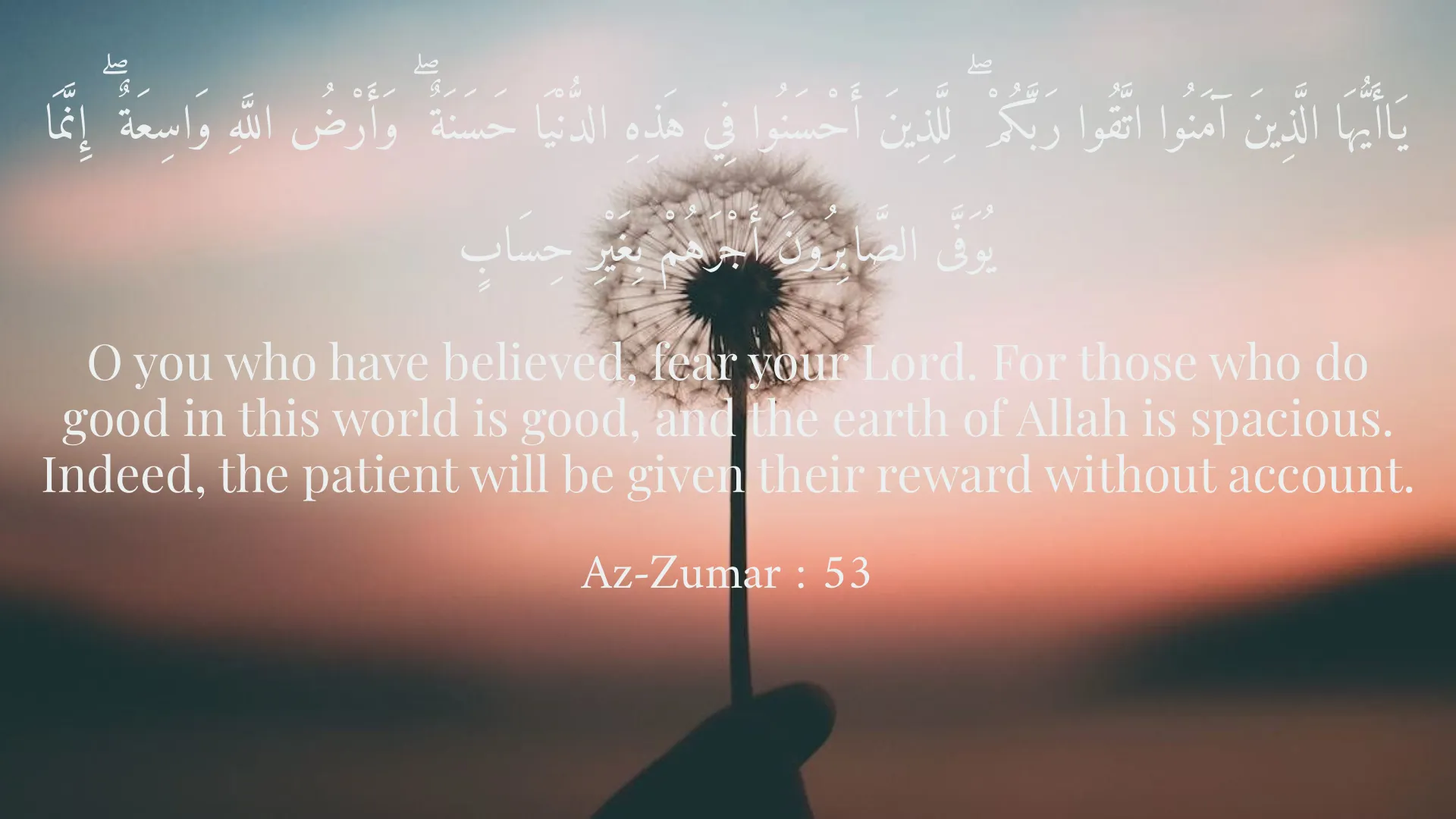
يَاأَيُّهَا الَّذِينَ آمَنُوا اتَّقُوا رَبَّكُمْ ۖ لِلَّذِينَ أَحْسَنُوا فِي هَذِهِ الدُّنْيَا حَسَنَةٌ ۖ وَأَرْضُ اللَّهِ وَاسِعَةٌ ۖ إِنَّمَا يُوَفَّى الصَّابِرُونَ أَجْرَهُمْ بِغَيْرِ حِسَابٍ
O you who have believed, fear your Lord. For those who do good in this world is good, and the earth of Allah is spacious. Indeed, the patient will be given their reward without account.
Az-Zumar : 53
وَالَّذِينَ إِذَا فَعَلُوا فَاحِشَةً أَوْ ظَلَمُوا أَنفُسَهُمْ ذَكَرُوا اللَّهَ فَاسْتَغْفَرُوا لِذُنُوبِهِمْ ۖ وَمَن يَغْفِرُ الذُّنُوبَ إِلَّا اللَّهُ؟
And those who commit wrongdoing or wrong themselves but remember Allah and seek forgiveness for their sins—and who can forgive sins except Allah?
Al-Imran : 135
Short Story
One day, a man came to pray on a rainy day and noticed that his neighbors were sinning. He became angry and asked God to punish them. At that moment, he recalled a verse from the Quran where Allah says: ‘My mercy prevails over My wrath’. He remembered that God grants His servants the opportunity to return and repent. Hence, he decided to assist his neighbors and guide them towards goodness.