Quranic Answer
In the Holy Quran, the world is depicted as a fleeting and ever-changing realm, emphasizing the transient nature of human life. This concept serves as a central theme in Islamic teachings, urging believers to focus on the impermanence of worldly existence while preparing for the eternal life that follows. In particular, Surah Al-Imran, verse 185 articulates this notion clearly: "Every soul shall taste death, and you will only be given your full compensation on the Day of Resurrection." This verse encapsulates the essence of life in this world as a stage for testing and striving—a temporary journey aimed at achieving a greater reward in the Hereafter. The Quran consistently reminds its readers of life's ephemeral qualities. Surah Al-Hadid, verse 20 aggravates this concept by stating, "Know that the life of this world is only play and entertainment, and that the best life is in the Hereafter." Through these verses, the Quran delineates a clear distinction between two realms: the transitory life on Earth filled with distractions and the everlasting life after death characterized by divine recompense. By recognizing the inherent temporality of earthly pleasures, individuals are encouraged to seek a deeper understanding of their purpose. In light of these teachings, attachment to worldly possessions can lead to misguided priorities. The emphasis on material wealth and social standing can ultimately distract individuals from their primary existential purpose, which is the worship of Allah. Surah Al-Kahf, verse 46 further elucidates this point with the statement: "Wealth and children are [but] adornment of the worldly life, but the enduring good deeds are better to your Lord for reward and better for [one's] hope." This echoes the message that while enjoying the bounties of this world is permissible, they should never become an obsession overshadowing our spiritual obligations. The Quran urges believers to not be overly attached to worldly life, as it is designed to be a temporary phase. This detachment does not imply a complete renunciation of the world and its pleasures; instead, it promotes a balanced approach wherein one enjoys material benefits while never losing sight of their spiritual responsibilities. The challenge lies in maintaining this balance within the complexities of daily life. The fleeting nature of worldly pleasures should inspire a perspective that focuses on the eternal—leading to the cultivation of virtues, good deeds, and a connection with the Divine. Seeking knowledge and goodness is essential in preparing for the Hereafter. This pursuit determines the quality of one’s inner self and contributes to a meaningful existence aligned with spiritual principles. According to Islamic teachings, knowledge is highly esteemed, as it serves as a means to navigate life’s intricacies and make informed choices that benefit oneself and society. Hence, the emphasis placed on acquiring knowledge should be recognized as a pivotal component for personal development and communal harmony. Moreover, striving for righteousness and adhering to ethical behavior are vital for those who aspire to attain contentment both in this life and the Hereafter. The Quran advocates for actions that generate lasting benefits, such as charity, compassion, and justice—qualities that not only elevate an individual's status in the eyes of Allah but also enrich society. Engaging in good deeds imbues life with purpose, illustrating that the heart's connection to Allah is preserved through acts of kindness and social responsibility. Consequently, the transient nature of this world challenges us to live with intention, guiding our desires towards higher ideals rather than superficial gratifications. Believers are encouraged to view life as an opportunity—a stage for personal growth and a testing ground for their faith. By adhering to the Quranic principles underscored in these verses, individuals can cultivate an attitude of gratitude rather than entitlement, recognizing that life’s bounties are temporary and should be used in service to others and in remembrance of the Almighty. In conclusion, the Quran’s messages serve as vital reminders regarding the temporary nature of worldly life. The verses from Surah Al-Imran, Surah Al-Hadid, and Surah Al-Kahf urge Muslims to adopt an attitude characterized by spiritual awareness and ethical sensibility. This holistic view encourages believers to reflect on their lives, reminding them that the ultimate goal lies beyond worldly achievements; it is found in the eternal reward of the Hereafter. Therefore, as Muslims traverse the complexities of life, they ought to remember the significance of good deeds and the pursuit of knowledge, striving for a future that is pleasing to Allah and fulfilling to the soul.
Related Verses
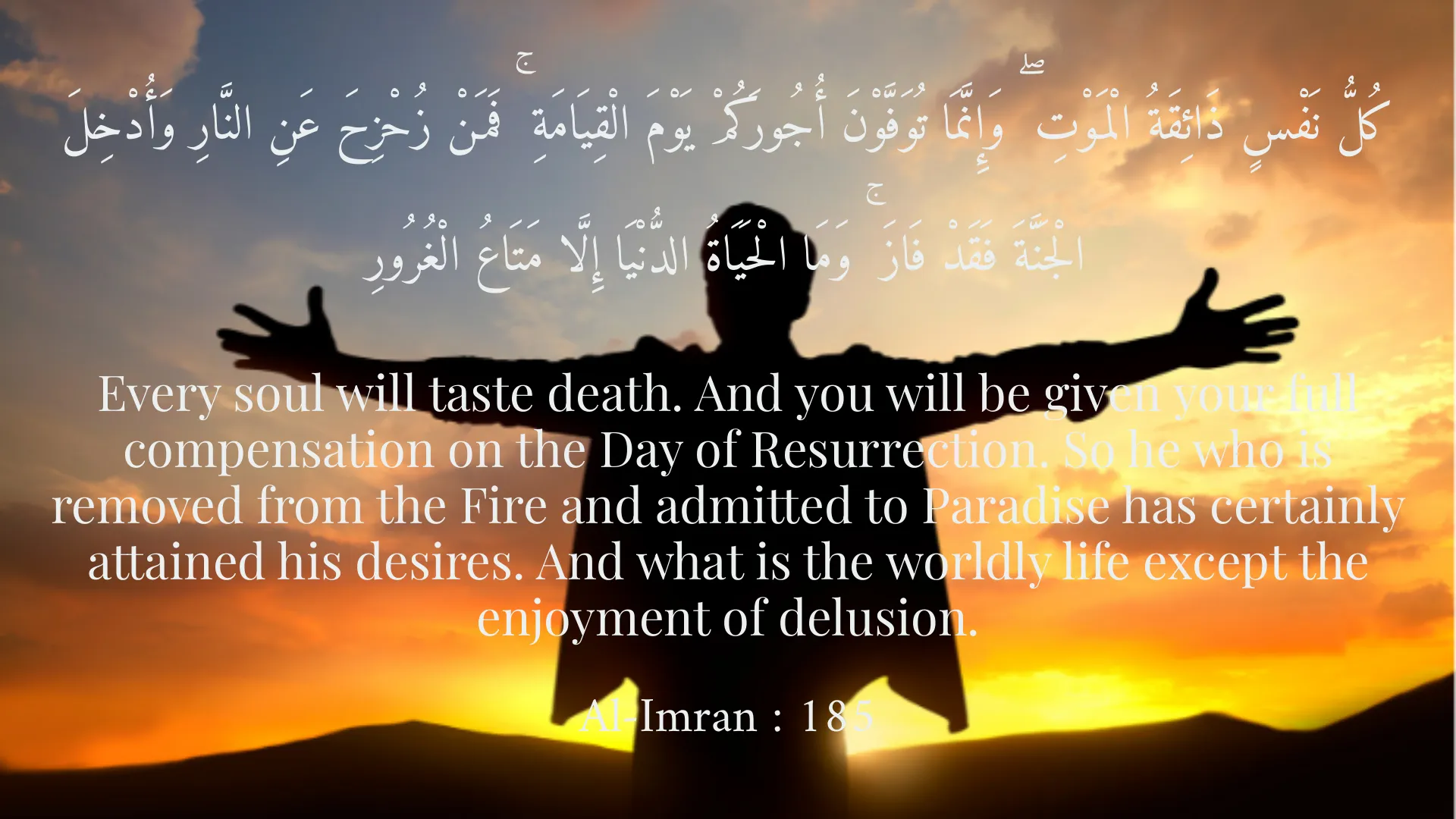
كُلُّ نَفْسٍ ذَائِقَةُ الْمَوْتِ ۖ وَإِنَّمَا تُوَفَّوْنَ أُجُورَكُمْ يَوْمَ الْقِيَامَةِ ۚ فَمَنْ زُحْزِحَ عَنِ النَّارِ وَأُدْخِلَ الْجَنَّةَ فَقَدْ فَازَ ۚ وَمَا الْحَيَاةُ الدُّنْيَا إِلَّا مَتَاعُ الْغُرُورِ
Every soul will taste death. And you will be given your full compensation on the Day of Resurrection. So he who is removed from the Fire and admitted to Paradise has certainly attained his desires. And what is the worldly life except the enjoyment of delusion.
Al-Imran : 185
اعْلَمُوا أَنَّمَا الْحَيَاةُ الدُّنْيَا لَعِبٌ وَلهْوٌ وَزِينَةٌ ۖ وَتَفَاخُرٌ بَيْنَكُمْ وَتَكَاثُرٌ فِي الْأَمْوَالِ وَالأَوْلَادِ ۚ كَمَثَلِ غَيْثٍ أَعْجَبَ الْكُفَّارَ نَبَاتُهُ ۖ ثُمَّ يَهِيجُ فَتَرَاهُ مُصْفَرًّا ۖ وَفِي الْآخِرَةِ عَذَابٌ شَدِيدٌ ۖ وَمَغْفِرَةٌ مِّنَ اللَّهِ وَرِضْوَانٌ ۗ وَمَا الْحَيَاةُ الدُّنْيَا إِلَّا مَتَاعُ الْغُرُورِ
Know that the worldly life is but play and amusement and adornment and boasting among yourselves and competition in increase of wealth and children. Like the example of a rain whose [resulting] plant growth pleases the tillers; then it dries and you see it turned yellow; then it becomes scattered debris. And in the Hereafter is severe punishment and forgiveness from Allah and approval. And what is the worldly life except the enjoyment of delusion.
Al-Hadid : 20
الْمَالُ وَالْبَنُونَ زِينَةُ الْحَيَاةِ الدُّنْيَا ۖ وَالْبَاقِيَاتُ الصَّالِحَاتُ خَيْرٌ عِندَ رَبِّكَ ثَوَابًا وَخَيْرٌ أَمَلًا
Wealth and children are [but] adornment of the worldly life. But the enduring good deeds are better to your Lord for reward and better for [one's] hope.
Al-Kahf : 46
Short Story
One day, in the market, a person observed how people were thirsty for the world and its adornments. He pondered whether these possessions truly held value or not. After reflecting on the verses of the Quran, he decided to focus on remembering God and striving for his Hereafter rather than getting attached to the worldly life. Ultimately, he attained peace and kindness toward others.