Quranic Answer
The Holy Quran serves as a profound guide for humanity, illustrating the transient nature of the world and material possessions and emphasizing the importance of the Hereafter. In our pursuit of happiness and fulfillment, it is easy to become ensnared in the allure of worldly possessions and achievements. However, the Quran implores us to reconsider our priorities and to seek the eternal pleasures of the Hereafter rather than the fleeting joys of this life. As mentioned in Surah Al-Imran, verse 185: "Every soul will taste death." This verse serves as a vital reminder that life on Earth is temporary and that we will all face death eventually. This realization encourages believers to reflect on the greater purpose of life and to strive for what lies beyond the grave. Life, as described in the Quran, is akin to a passing cloud, momentarily gracing our existence before vanishing. We witness this reality every day, as material possessions come and go, relationships evolve, and fortunes change. The transient nature of life is a central theme throughout the Quran, reinforcing the idea that our time in this world is a mere preparation for the Hereafter. Thus, the ultimate goal should not merely be to accumulate wealth or elevate our status in society, but to seek eternal life in the Hereafter and the pleasure of Allah. In Surah Al-Baqarah, verse 96, Allah advises believers: "They do not envy people for what Allah has given them of His bounty." This verse serves as a critical reminder that envy and attachment to worldly matters can lead to discontent. Instead of desiring what others possess, believers are encouraged to focus on their own blessings and seek the grace of God. Wealth and material possessions can stir feelings of envy and competition, diverting our attention from our spiritual journey. Moreover, Allah's guidance in the Quran extends beyond just personal reflection; it encompasses a communal approach towards life. By encouraging believers to let go of envy, the Quran promotes unity and harmony among individuals. Recognizing that everything we possess is a blessing from Allah helps cultivate gratitude and contentment, essential virtues in achieving inner peace. In the face of worldly temptations, the believer must have unwavering faith and reliance on Allah. Surah An-Nahl, verse 99 states: "Indeed, he has no authority over those who believe and put their trust in their Lord." This verse underscores the importance of placing one’s faith solely in Allah instead of being swayed by the materialistic aspects of life. Trusting in Allah involves knowing that He has absolute control over our sustenance and well-being, and that true happiness comes from pleasing Him rather than accumulating wealth or status. One must reflect on the transient nature of material gains. Wealth can disappear overnight, relationships can fracture, and health can decline, all reminders of the impermanence of life. The Quran teaches us to look beyond these ephemeral matters and to cultivate a deeper understanding of what it means to be truly wealthy. True wealth lies in good deeds, compassion, love, faith, and a pursuit of knowledge. Considering the endless pursuit of material possessions can lead to a cycle of dissatisfaction and unhappiness. The more we acquire, the more we want. The Quran encourages believers to break free from this cycle and to focus on what is eternal. By investing in our spiritual growth and the betterment of society, we prepare ourselves for the Hereafter, where our true rewards lie. The Quran does not advocate for abandoning the material world entirely. Rather, it emphasizes the balance between the needs of this life and the requirements for the next. Engaging in worldly activities can be permissible as long as they do not lead one away from the remembrance of Allah or fulfilling their spiritual obligations. This principle promotes a healthy engagement with the world while maintaining a strong spiritual foundation. Many individuals may feel overwhelmed by the responsibilities and challenges of life. They may believe that achieving success is solely dependent on their material achievements. However, the Quran reassures believers that true success is a connection to Allah and doing good deeds, which surpass transient worldly pursuits. Thus, life becomes a vital platform for growth, learning, and developing one's character in alignment with divine principles. As humanity navigates through the trials of life, it is essential to continuously remind ourselves of these teachings from the Quran. Regular self-reflection on our life’s purpose can steer us back toward our ultimate goal: to live a life that pleases Allah and to work towards earning a place in Paradise. Reciting the Quran, engaging in prayer, and partaking in community service can serve as significant steps towards reestablishing that focus on our spiritual journey. In conclusion, the Holy Quran directs us to prioritize our spiritual well-being over our material possessions. Life is fleeting, and every individual will eventually face death; thus, we must invest in what truly matters: our relationship with Allah and our actions in this world. By heeding the Quranic guidance to put our trust in Allah and focus on the Hereafter, we can achieve a fulfilling and purposeful existence that extends beyond the limits of this life. The teachings of the Holy Quran are a timeless guide that reminds us of our ultimate destination and inspires believers to live with intention and hope for an eternal reward.
Related Verses
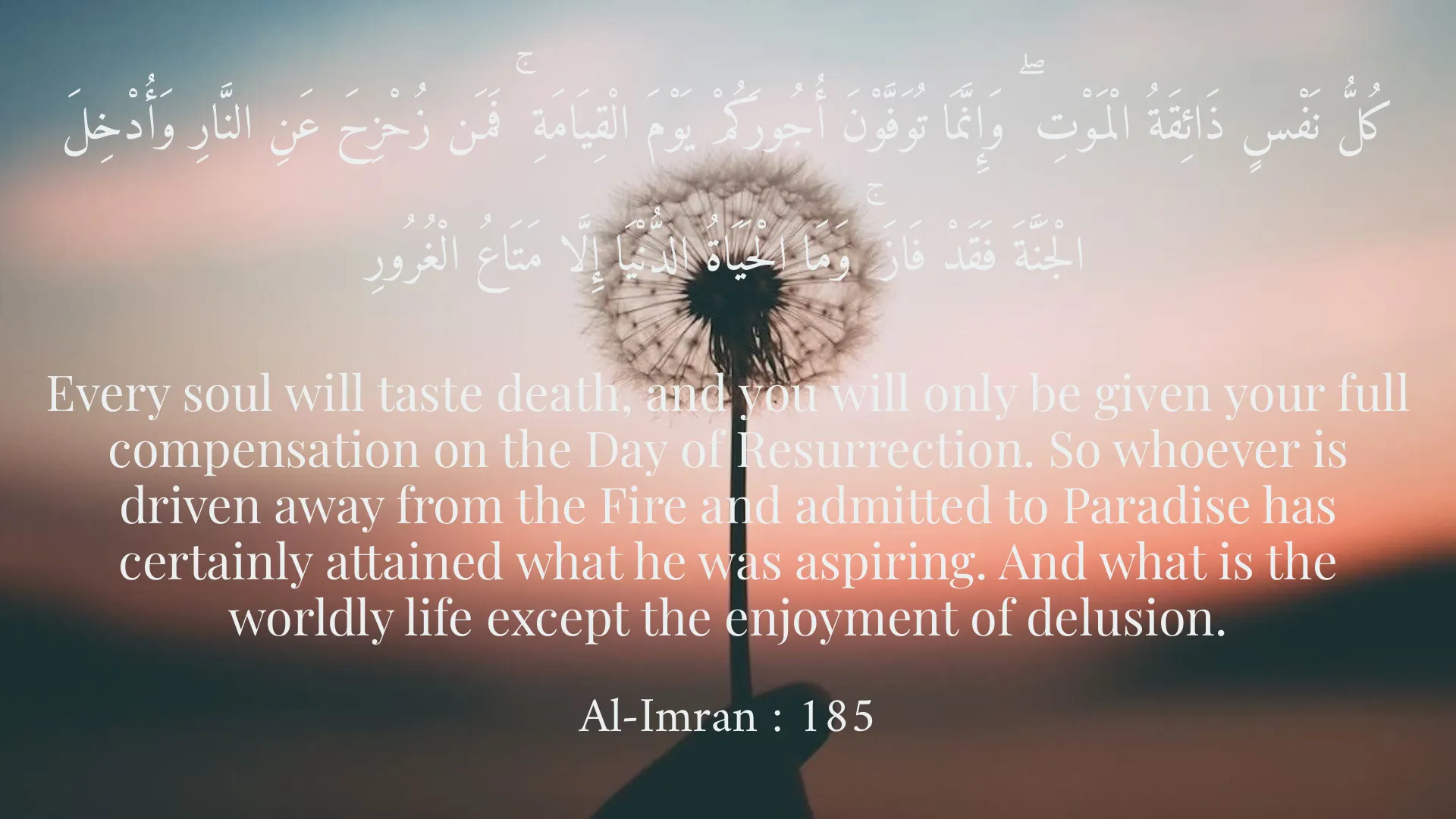
كُلُّ نَفْسٍ ذَائِقَةُ الْمَوْتِ ۖ وَإِنَّمَا تُوَفَّوْنَ أُجُورَكُمْ يَوْمَ الْقِيَامَةِ ۚ فَمَن زُحْزِحَ عَنِ النَّارِ وَأُدْخِلَ الْجَنَّةَ فَقَدْ فَازَ ۚ وَمَا الْحَيَاةُ الدُّنْيَا إِلَّا مَتَاعُ الْغُرُورِ
Every soul will taste death, and you will only be given your full compensation on the Day of Resurrection. So whoever is driven away from the Fire and admitted to Paradise has certainly attained what he was aspiring. And what is the worldly life except the enjoyment of delusion.
Al-Imran : 185
وَإِنَّهُمْ لَا يَحْسَدُونَ النَّاسَ عَلَى مَا آتَاهُمُ اللَّهُ مِن فَضْلِهِ ۚ فَخُذُوا مَا آتَاكُمْ اللَّهُ وَاسْتَعِينُوا بِاللَّهِ.
And they do not envy people for what Allah has given them of His bounty. So take what Allah has given you and seek the help of Allah.
Al-Baqarah : 96
إِنَّهُ لَيْسَ لَهُ سُلْطَانٌ عَلَى الَّذِينَ آمَنُوا وَعَلَى رَبِّهِمْ يَتَوَكَّلُونَ.
Indeed, he has no authority over those who believe and put their trust in their Lord.
An-Nahl : 99
Short Story
Once in a city, there lived a young man named Ali. He spent all his time working and accumulating wealth. One day, an old man approached him and said, 'Dear Ali! Have you ever thought about what happens to all your wealth after you die?' Initially, Ali ignored him, but later he pondered. He remembered the verses of the Quran he had read, which reminded him that the world is transient. He decided that he would dedicate as much of his time and wealth as possible in the way of God and helping others.