Quranic Answer
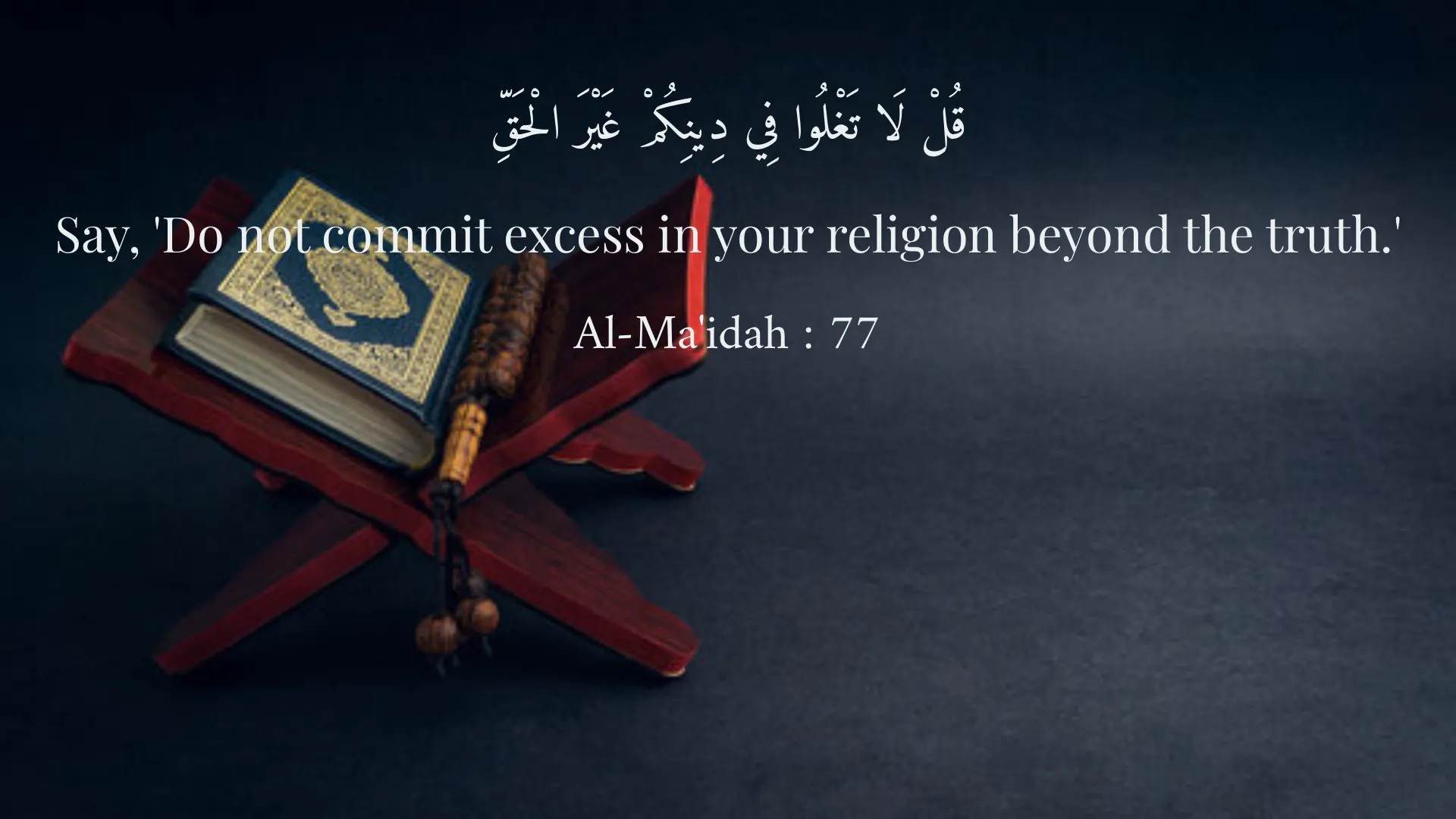
In the Holy Quran, avoiding excess and deficiency in religion is clearly emphasized. Allah states in Surah Al-Ma'idah, verse 77: "Say, 'Do not commit excess in your religion beyond the truth.'" This particular verse serves not only as guidance but as an overarching principle for followers of Islam, urging them to maintain a balanced approach towards their faith. Far too often, believers can find themselves swayed by extremes—whether by rigidly adhering to certain practices or by disregarding faith entirely, both of which can lead to significant spiritual and social consequences. The concept of moderation in religion is recurrent in various teachings of Islam. The Imams have repeatedly pointed out that moderation is not just an ancillary principle but rather one of the bedrocks upon which belief is established. It is vital to maintain a balanced perspective to uphold the integrity of one’s faith. Without this balance, both intellectual and social constrictions may arise. For instance, consider an individual who immerses themselves excessively in worship and religious activities; while their intentions may be noble, such an extreme fixation may lead to a radical mindset, alienating them from the communal and integrative aspects of faith. On the opposite end of the spectrum, we have individuals who neglect religious obligations altogether. In doing so, they distance themselves from God’s mercy and the blessings that come with sincere belief and worship. This dichotomy illustrates the peril of extremes in faith. The path of Islam, as elucidated in the Quran, encourages followers to attain a sense of spiritual equilibrium that encourages growth rather than alienation. Surah Al-Jumu'ah, verse 9 reinforces this concept profoundly, where Allah commands Muslims to engage in prayer with sincerity and correctness. The directive underscores the necessity of balance in religious practices. Rather than overloading oneself with extraneous rituals or abandoning the core aspects of faith, believers are called to harmonize their spiritual practices with the demands of life around them. This relevance of moderation manifests in various facets of Muslim life—whether through daily prayers, charitable acts, or adhering to ethical guidelines all portrayed through the lens of balance and consideration for oneself and others. Islam, by its very nature, is a religion of ease and convenience, reflected in the life and teachings of the Prophet Muhammad (PBUH). He famously stated, "Religion is easy," simplifying the notion that faith should be an enabler of peace rather than a source of burden. When believers recognize the simplicity of their faith, they also come to appreciate that avoiding excess and deficiency means comprehending religion not merely as a set of rules but as a way of life that is intrinsic to the human experience. Furthermore, achieving this balance extends beyond just personal practice and spills over into one's social and familial relationships. Individuals who embody moderation in their faith tend to cultivate healthier interactions with those around them. They are more likely to engage in open dialogue, encourage others, and work toward common goals within their communities. In contrast, those who lean towards extremism often find themselves isolated, as their radical ideas tend to repel rather than unite. This is starkly evident in the current socio-political climate globally. Extremism—be it religious, ideological, or political—has alienated countless individuals, creating divides not only between communities but also within families. Education and mutual respect become casualties in a world where excess and deficiency dominate. Therefore, it is crucial that Muslim leaders and scholars promote a message of balance, cultivating an environment where understanding and compassion prevail over dogma and rigidity. Historically, societies that have adopted a moderate approach to religion—accepting diversity, fostering dialogue, and practicing empathy—have thrived. They created rich cultures infused with the essence of unity and harmony, showcasing the beauty of a balanced life. In contrast, extremist environments have fostered hostility, conflict, and despair. This historical context serves as a significant lesson for contemporary believers, illustrating the dire consequences of failing to uphold moderation. In conclusion, the teachings of Islam, as encapsulated in the Quran and the practices of Prophet Muhammad (PBUH), provide a guiding framework for believers to attain balance in their faith. The call to avoid excess and deficiency resonates with timeless wisdom, emphasizing the importance of spirituality as a pathway that leads to tranquility, community, and personal growth. By nurturing an understanding of the faith that encourages balance and practical engagement, Muslims can foster a sense of belonging both within their own hearts and towards the world around them. In a time when extremes are pervasive, the call for moderation is not merely a religious directive but a societal necessity that echoes through the ages.
Related Verses
قُلْ لَا تَغْلُوا فِي دِينِكُمْ غَيْرَ الْحَقِّ
Say, 'Do not commit excess in your religion beyond the truth.'
Al-Ma'idah : 77
يَا أَيُّهَا الَّذِينَ آمَنُوا إِذَا نُودِيَ لِلصَّلَاةِ مِنْ يَوْمِ الْجُمُعَةِ فَاسْعَوْا إِلَى ذِكْرِ اللَّهِ وَاتْرُكُوا الْبَيْعَ ۚ ذَٰلِكُمْ خَيْرٌ لَّكُمْ إِن كُنتُمْ تَعْلَمُونَ
O you who have believed, when the call to prayer is announced on the day of congregation, then proceed to the remembrance of Allah and leave trade. That is better for you if you only knew.
Al-Jumu'ah : 9
Short Story
Once upon a time, there was a man named Ahmad who was caught in excess and deficiency in his religion. He was trying to perform everything to extremes, even in acts of worship. However, over time, he realized that this behavior caused him distress and confusion. One day, while reading the Quran, he came across a verse that talked about moderation in religion. This verse made him reflect and decide to create balance in his actions and worship to find peace. Ahmad gradually learned that religion is a gentle and easy path, and by maintaining balance, he could reach better places in his life.