Quranic Answer
The Holy Quran, the sacred text of Islam, holds a profound emphasis on the significance of monotheism, advocating against the act of turning humans or any entities into idols. This fundamental teaching is woven throughout the Quran, highlighting the transcendence and uniqueness of Allah (God) and underscoring the importance of directing all forms of worship and devotion solely towards Him. The theme of idolism, particularly in the context of idol-making from among humans, is repeatedly condemned as it leads to a dilution of one's faith and a misalignment of spiritual priorities. In Surah Az-Zumar, verse 31, it articulates a crucial reminder that ultimately, 'And to Him you will be returned.' This indicates that all creations, regardless of their stature or significance in the worldly life, ultimately have one destination: the return to God. The acknowledgment of this truth is essential for believers, as it reinforces the concept of accountability and the importance of maintaining a connection with Allah throughout the course of one's life. Furthermore, in Surah Al-Baqarah, verse 22, Allah provides us with a profound perspective on His creations. It states, 'He it is Who made for you the earth a resting place and the sky a canopy, and sent down from the sky rain and brought forth thereby fruits as provision for you, so do not attribute to Allah equals while you know [that there is nothing similar to Him].' This verse serves to illustrate the unparalleled significance of Allah as the sole Creator and Sustainer of the universe, emphasizing that no entity can be placed on par with Him. The act of attributing equals to Allah is delineated as a serious transgression, for it indicates a fundamental misunderstanding of His nature and the essence of divinity. Humans, regardless of their achievements, wisdom, or any perceived greatness, are ultimately creations of God, capable of serving as inspirations and role models but never to be worshipped or elevated to a divine status. In Surah Maryam, verse 47, the Quran states, 'And We have made you a role model for the people.' This verse, directed towards Prophet Ibrahim (AS), serves as a reminder of the importance of setting an example based on faith and righteousness without crossing the boundary into idolization. Prophet Ibrahim (AS) is revered in Islam for his unwavering devotion to Allah, and while his exemplary life can guide others, he remains firmly a servant and worshipper of God. The emphasis on directing worship solely to Allah is not merely a matter of theological discourse but serves to shape the foundation of a believer's life. When individuals create idols from among humans, they run the risk of forgetting the profound nature of God and the importance of reliance and faith required in their spiritual journey. Idolization can lead to misplaced priorities, where the worshipper's focus shifts from the Divine to the created, resulting in spiritual stagnation and a potential erosion of faith. The Quran repeatedly stresses the oneness of God – a central tenet in Islamic belief. It warns against the worship of anything other than Him, underscoring that engaging in idol worship damages not only the glory of God but also the spiritual fabric needed for humans to connect meaningfully with their Creator. When one's attachment turns towards idols, be they human or otherwise, it creates a chasm in the relationship with God, ultimately resulting in a diminished spiritual experience. Additionally, idol-making can have far-reaching consequences on a community and society at large. The act of idolizing individuals can foster a culture of dissent and division, where loyalty towards humans eclipses allegiance to God’s teachings. This can lead to the elevation of sectarianism, where disagreements among followers are exacerbated when leaders or influencers are placed on pedestals – leading followers to prioritize human opinions over divine guidance. Such phenomena can result in factionalism, where the unity of the Muslim community is undermined by differing allegiances to human figures rather than a shared commitment to God. The Quran’s teachings serve as a constant reminder to prioritize monotheism above all else, advocating that true harmony can only be achieved when devotion is directed towards Allah alone. Moreover, the spiritual need for individuals to seek guidance, purpose, and connection to something greater than themselves is intrinsic to human existence. The act of idolizing human figures often arises from an intrinsic desire to find relatable examples and motivation. However, when this desire translates to idolism, it ultimately leads to a superficial and flawed understanding of faith, undermining the quest for true spiritual fulfillment. Instead of seeking inspiration from figures, believers are encouraged to reflect on the teachings of the Quran and the examples of the prophets, realigning their focus back towards Allah, the source of all wisdom and guidance. In conclusion, the Quran distinctly emphasizes the significance of avoiding idolization of humans or any entities, clearly articulating that worship should be solely directed towards Allah. This foundational principle fosters a healthy spiritual trajectory in the lives of believers, enabling them to maintain a profound and unblemished connection to their Creator. The relevance of these teachings is timeless, reminding humanity that our ultimate purpose lies in recognizing the grandeur of God’s existence and nurturing our dependence on Him. By resisting the temptation to elevate any being to a status on par with Almighty Allah, we can cultivate a more meaningful, spiritually enriching existence – one rooted in faith, harmony, and devotion to the One who is unmatched in greatness.
Related Verses
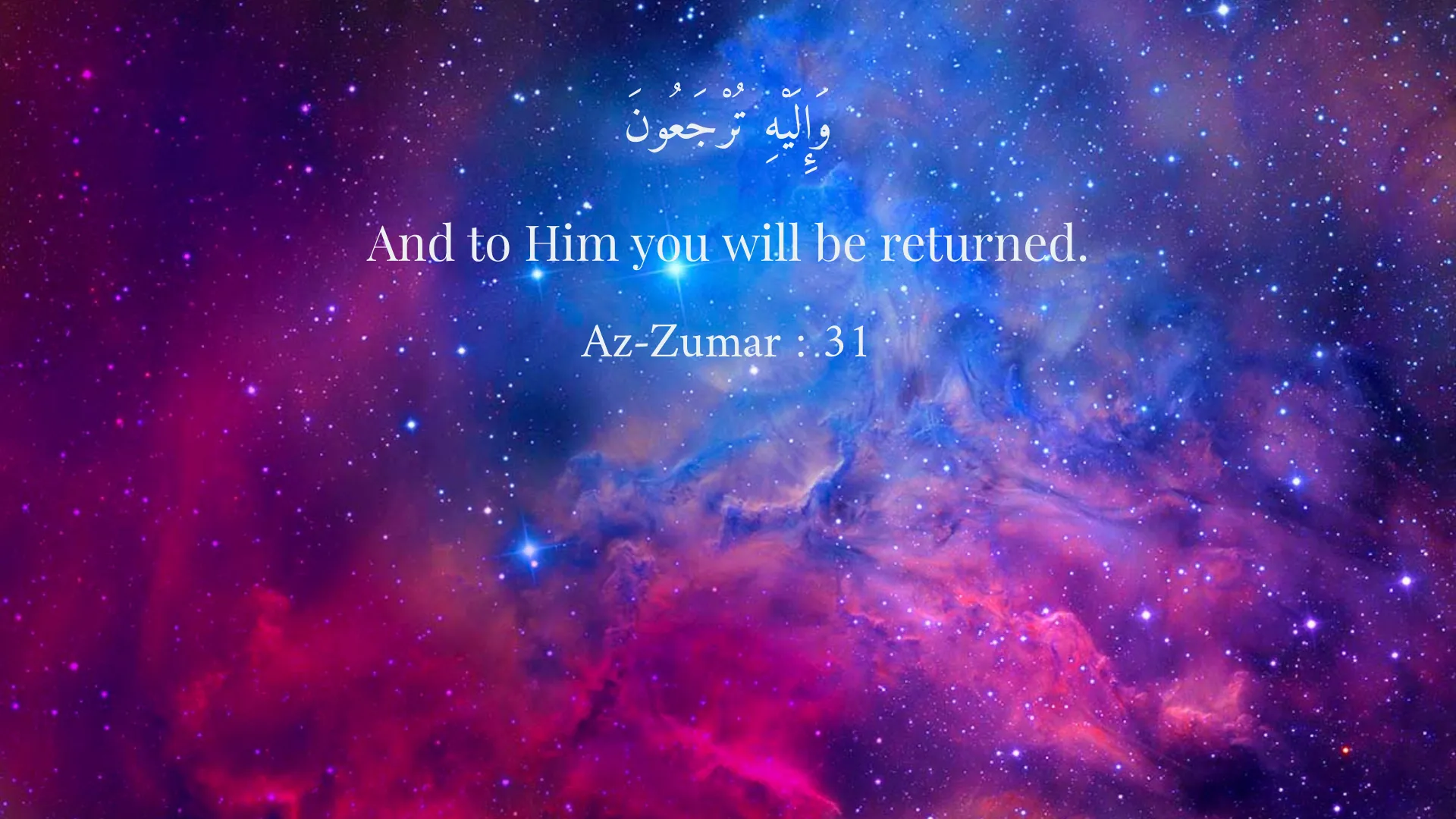
وَإِلَيْهِ تُرْجَعُونَ
And to Him you will be returned.
Az-Zumar : 31
هو الذي جعل لكم الأرض فراشاً والسماء بناءً وأنزل من السماء ماءً فأخرج به من الثمرات رزقاً لكم فَلَا تَجْعَلُوا لِلَّهِ أَندَادًا وَأَنْتُمْ تَعْلَمُونَ
He it is Who made for you the earth a resting place and the sky a canopy, and sent down from the sky rain and brought forth thereby fruits as provision for you, so do not attribute to Allah equals while you know.
Al-Baqarah : 22
إني جعلتك للناس إماماً
And We have made you a role model for the people.
Maryam : 47
Short Story
One day, a devout young man was sitting by the river reflecting on Quranic verses. He felt sad knowing that some people look up to others instead of God. He remembered a verse from the Quran that states that no being can equal God's status. He resolved to always follow his faith in God and His righteous servants, and in times of despair or confusion, he would only seek refuge in Allah.