Quranic Answer
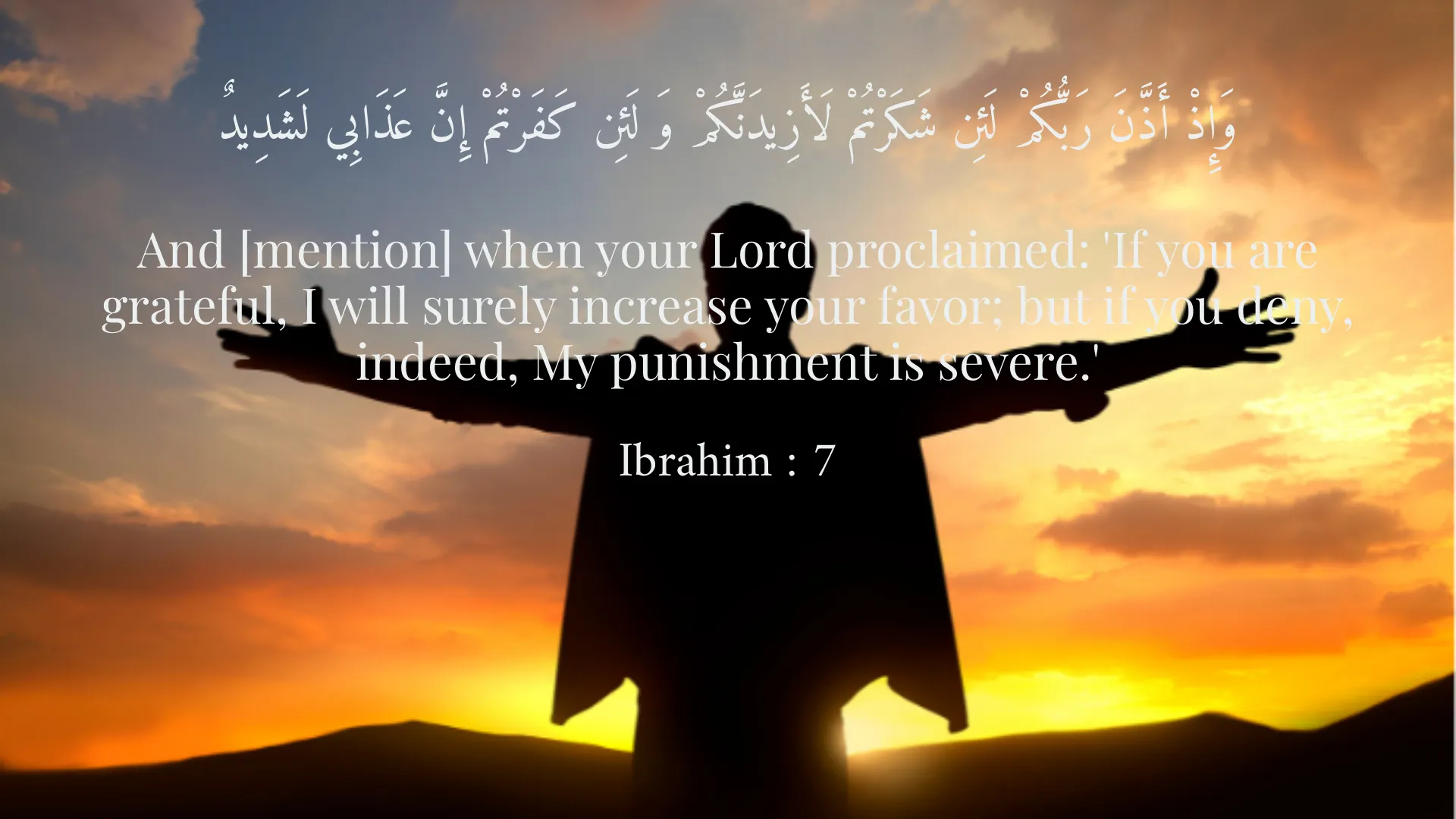
In the Holy Quran, the importance of gratitude and appreciation for divine blessings is clearly emphasized. The Quran encourages believers to acknowledge the myriad gifts bestowed upon them by Allah, stressing that gratitude serves as a pathway to the increase of such blessings. In this context, Surah Ibrahim, verse 7, stands at the forefront: "And [mention] when your Lord proclaimed: 'If you are grateful, I will surely increase your favor; but if you deny, indeed, My punishment is severe.'" This profound verse encapsulates a crucial principle of Islamic belief – the more we express our gratitude for Allah's favors, the more He bestows upon us. Central to this belief is the idea that gratitude not only enriches our spiritual lives but also provides a safeguard against ingratitude, which can lead to severe consequences, including loss of those very blessings we neglect to appreciate. ### The Concept of Gratitude in Islam Gratitude, or "shukr" in Arabic, is not merely a verbal expression in the Islamic tradition. It is a way of life that encompasses awareness of Allah's bounties and adherence to His commands. This awareness is imperative for spiritual growth and serves as an anchor in the tumultuous seas of life. As believers, practitioners of Islam are urged to recognize the countless blessings, big and small, that manifest in their daily lives. Gratitude, therefore, becomes a powerful tool for enhancing one’s faith and connection with the Creator. In Surah An-Nahl, verse 18, the Quran states: "And if you count the favors of Allah, you will not be able to enumerate them." This verse serves a dual purpose: it highlights the sheer abundance of Allah's blessings and simultaneously urges individuals not to underestimate their significance. This assertion implies that blessings can often be taken for granted, leading to a lack of appreciation that can, in turn, diminish their presence in our lives. This message carries a profound lesson: that it is crucial to continually reflect on and appreciate the gifts we receive. ### The Consequences of Ingratitude The Quran is clear about the dangers of ingratitude. In both verses and prophetic traditions, the potential consequences of failing to recognize Allah's blessings are articulated. Ingratitude not only risks losing current fortunes but can also result in bringing about divine displeasure. The severity of this punishment, as mentioned in Surah Ibrahim, should serve as a reminder for believers to remain vigilant about their attitude towards the blessings they receive. When people adopt an attitude of neglect towards what they possess, they may find themselves empty-handed in times of need. The psychological, emotional, and spiritual repercussions of ingratitude are far-reaching. Just as being grateful fosters positive emotions such as joy and contentment, ingratitude can lead to feelings of discontent and despair. By failing to recognize and cherish the abundance in their lives, individuals can easily spiral into negativity, affecting both their mental and spiritual well-being. ### Recognizing the Abundance of Blessings Islam teaches that blessings come in manifold forms – from basic necessities such as food and shelter to intangible gifts like love, friendship, health, knowledge, and faith. To cultivate an attitude of gratitude, one must practice mindfulness, actively seeking to observe and acknowledge the blessings of everyday life. Simple gestures of kindness, moments of reflection in nature, or even connections with family and friends can renew our sense of gratitude and appreciation. In an age characterized by fast-paced living and an insatiable drive for more, it is vital to take a step back and appreciate what we have. The act of slowing down to reflect on our lives and acknowledge our blessings not only gifts us inner peace but also strengthens the connection with our Creator. It is an opportunity to engage in an inner dialogue where we can recite words of thanks and appreciation, reinforcing our faith and the notion that everything we have is indeed a gift from Allah. ### The Role of Community in Fostering Gratitude The importance of gratitude is also reflected in the communal aspects of Islamic teachings. Collectively practicing gratitude strengthens community bonds and enhances the fabric of society. By coming together to express thankfulness, whether through communal prayers or gatherings, individuals reinforce one another's appreciation of Allah's blessings. This communal reinforcement serves to cultivate a culture of gratitude — where individuals inspire each other to remain mindful of their blessings. Furthermore, community service and acts of charity are vital expressions of gratitude in Islam. When individuals extend their blessings to others, they not only cultivate their own gratitude but also set an example for those around them. The act of giving reinforces the understanding that true wealth does not lie in the mere possession of material goods but in utilizing one's resources to help those in need and share blessings with others. ### Practical Steps to Cultivate Gratitude To embody gratitude authentically, it is essential to adopt practical steps. Here are a few suggestions: 1. Daily Reflection: Allocate a few moments each day to reflect on your blessings. It could be as simple as writing them down or meditating on them. 2. Express Gratitude Verbally: Make it a habit to express appreciation to others for their contributions in your life, whether it is a family member, friend, or community member. 3. Practice Gratitude in Prayer: Incorporate expressions of gratitude within your daily prayers, thanking Allah for His countless gifts. 4. Engage in Community Service: Actively participate in charitable initiatives that allow you to share your blessings with others, fostering a greater sense of community and gratitude. 5. Mindfulness Practices: Explore mindfulness and meditation techniques that help sharpen your focus on the present, leading to increased awareness of the blessings surrounding you. ### Conclusion In summary, gratitude is an essential aspect of Islamic teachings, deeply enshrined in the Quran. The significance of acknowledging Allah's blessings cannot be overstated; it is a means of enhancing one's spiritual connection, ensuring a steady flow of divine favors, and avoiding the pitfalls of ingratitude. By cultivating a mindset of gratitude, individuals can enjoy the richness of their lives, nurture their relationships, and contribute positively to their communities. Ultimately, recognizing and appreciating our blessings leads to a fulfilling life steeped in faith, love, and a profound understanding of our Creator's mercy and generosity.
Related Verses
وَإِذْ أَذَّنَ رَبُّكُمْ لَئِن شَكَرْتُمْ لَأَزِيدَنَّكُمْ وَ لَئِن كَفَرْتُمْ إِنَّ عَذَابِي لَشَدِيدٌ
And [mention] when your Lord proclaimed: 'If you are grateful, I will surely increase your favor; but if you deny, indeed, My punishment is severe.'
Ibrahim : 7
وَإِن تَعَدُّوا نِعْمَةَ اللَّهِ لَا تُحْصُوهَا
And if you count the favors of Allah, you will not be able to enumerate them.
An-Nahl : 18
مَلكَتَ السَّمَاوَاتِ وَالأَرْضِ ۖ وَأَعْلَمُ مَا تُخْفُونَ وَمَا تُعْلِنُونَ
To Allah belongs the dominion of the heavens and the earth, and I know what you conceal and what you declare.
Aal-e-Imran : 27
Short Story
Once upon a time, there was a man named Hasan who often complained about his life. He believed that everything was against him and that bad outcomes constantly plagued him. One day, he went to the market and met a wise scholar. The scholar said to him, "Why don't you appreciate the blessings you have? God has bestowed many blessings upon you, including your family, health, and friends." After hearing this, Hasan realized his life was full of blessings, and he began to express gratitude for them every day.