Quranic Answer
The Importance of Planning for the Hereafter in Islam The Holy Quran frequently emphasizes the importance of planning for the Hereafter, illustrating a vital aspect of an individual's relationship with God and the world. Life, as depicted in sacred texts, is temporary, and the ultimate goal of every human being should be to prepare for the life after death. Understanding this concept deeply resonates in the hearts of believers, encouraging them to lead lives full of purpose, righteousness, and devotion. In Surah Al-Imran, verse 185, it is stated, "Every soul will taste death. And you will be compensated your full reward on the Day of Resurrection." This profound declaration serves as a reminder of the inevitability of death, an event that transcends cultural and geographic boundaries. All individuals, regardless of their background or status in this worldly life, will ultimately confront mortality. The Quran assures that true recognition of death entails an understanding that this life is merely a temporary abode; it is the Hereafter where real compensation occurs. With this perspective, it is clear why planning for the Hereafter arises as a necessity for believers. It is not enough to live a life fueled by momentary pleasures and material gains; one must invest in their spirituality and morality to ensure a favorable position in the afterlife. The Quran, through its countless verses, beckons individuals to engage in righteous deeds, shun wickedness, and constantly seek redemption for their transgressions, reinforcing the notion that this life is a trial where the real rewards lie ahead. Further elaborating on the theme of righteous living, Surah Al-Baqarah, verse 177 highlights, “True piety is not that you turn your faces toward the east or the west, but rather, it is in one’s faith in Allah, the Last Day, the Angels, the Book, and the Prophets; and to give of one’s wealth, out of love for Him, to relatives, orphans, the needy, the traveler, those who ask [for help], and for freeing slaves; and to establish prayer and to give zakah; and those who fulfill their promise when they promise; and the patient in poverty and hardship and during battle. It is those who have been true, and it is those who are the righteous.” In this enlightening verse, the Quran defines the essence of true faith and devotion. Mere acts of worship, such as prayer and fasting, are not sufficient if one does not possess the underlying virtues of compassion, empathy, and righteousness. The belief in Allah and the Day of Judgment must propel one into action, prompting believers to perform good deeds to manifest that belief. Such actions comprise not just adherence to religious rituals, but also a commitment toward serving humanity and living harmoniously with others. Therefore, planning for the Hereafter encompasses an all-encompassing guide to ethical living, embodying the core tenets of faith through conduct. The teachings of Islam, as presented in the Quran, further emphasize the transient nature of worldly pursuits. In Surah Al-Mu'minun, verse 115, Allah reminds us, "Did you think that We created you uselessly and that you would not be returned to Us?" This question compels individuals to reflect on their lives and divine purpose. The verse underscores the belief that every individual was created with an intention and objective; to live meaningfully and intentionally in a manner that aligns with the Creator’s will. Ignoring this divine reminder evokes a sense of carelessness and disregard for the spiritual consequences of one’s actions. Therefore, planning for the Hereafter is not simply an abstract notion; it is a grand, essential mission inherent in Islam. It echoes through every facet of a Muslim's daily life and underlies the importance of accountability. The belief that each action—no matter how small—will be scrutinized on the Day of Judgment, instills a sense of conscientiousness in the believer. Muslims are urged to foster a relationship with their Creator through obedience and to recognize the profound impact their decisions can have on their eternal fate. This emphasis on preparation fosters a spiritual mindset in believers that extends beyond mere fear of punishment. Instead, it invites them to embrace a life of joy in fulfilling the commands of Allah, knowing that the path is illuminated with hope for a serene afterlife in Paradise. It motivates believers to cultivate habits that are beneficial and constructive, both for themselves and society, thereby contributing to a just and moral world. In conclusion, the Holy Quran serves not just as a religious manual but as an essential guide to life, deeply embedding within its verses the call for believers to plan for the Hereafter. Understanding that life is fleeting charges individuals with the responsibility to live meaningfully, accumulating not just material wealth, but divine rewards through righteous deeds. This journey towards the Hereafter is intertwined with the pursuit of personal growth, ethical living, and relentless striving toward pleasing Allah. Such comprehensive planning becomes a source of tranquility and fulfillment that extends beyond the confines of earthly existence, culminating in eternal bliss. Thus, the call to plan for the Hereafter is indeed a call for sublimation—a quest for ultimate purpose.
Related Verses
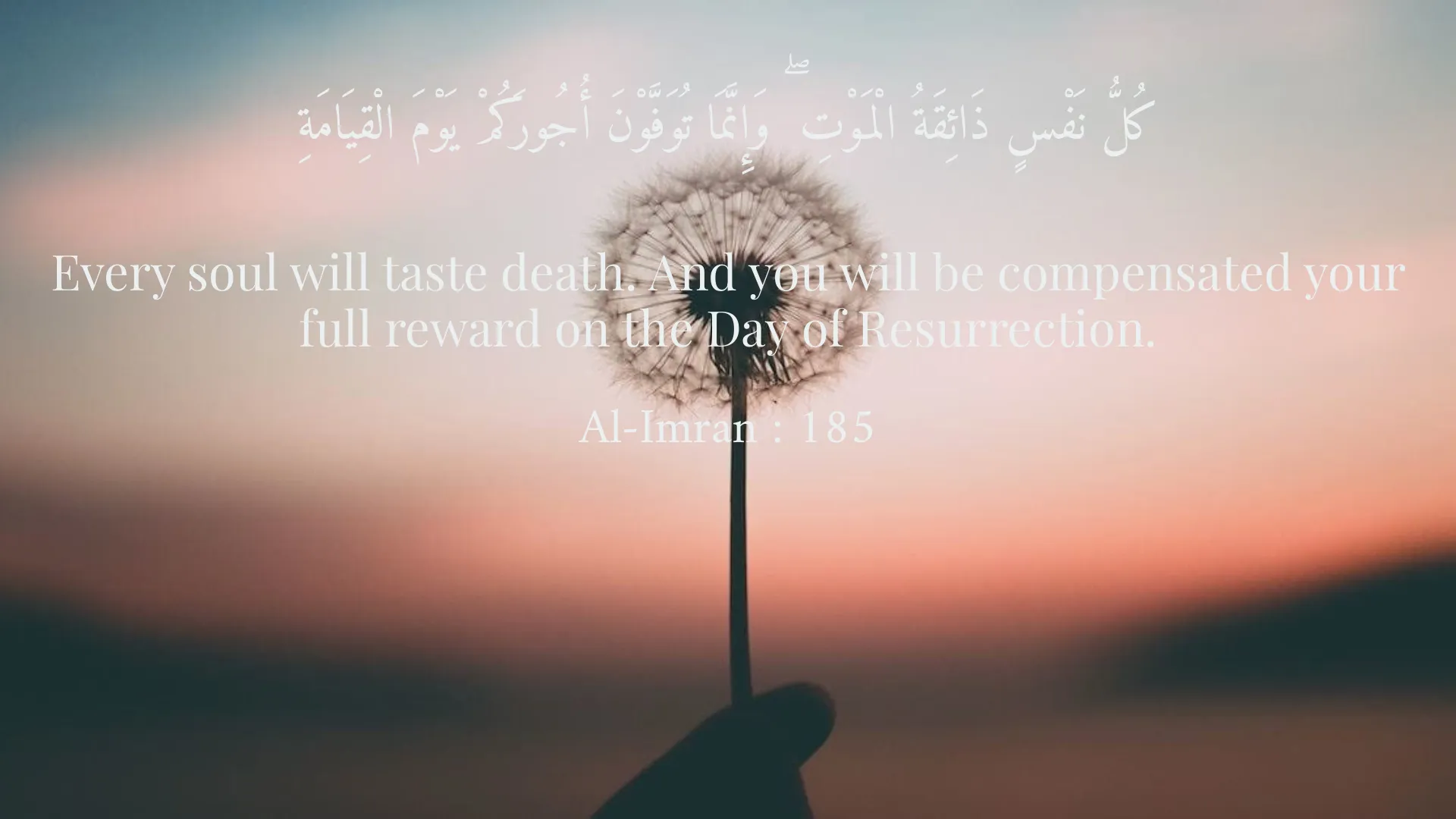
كُلُّ نَفْسٍ ذَائِقَةُ الْمَوْتِ ۖ وَإِنَّمَا تُوَفَّوْنَ أُجُورَكُمْ يَوْمَ الْقِيَامَةِ
Every soul will taste death. And you will be compensated your full reward on the Day of Resurrection.
Al-Imran : 185
لَيْسَ الْبِرَّ أَن تَوَلُّوا وُجُوهَكُمْ قِبَلَ الْمَشْرِقِ وَالْمَغْرِبِ وَلَكِنَّ الْبِرَّ مَن آمَنَ بِاللَّهِ وَالْيَوْمِ الْآخِرِ وَالْمَلَائِكَةِ وَالْكِتَابِ وَالنَّبِيِّينَ وَآتَى الْمَالَ عَلَى حُبِّهِ ذَوِي الْقُرْبَى وَالْيَتَامَى وَالْمَسَاكِينِ
Righteousness is not that you turn your faces towards the East or the West, but [true] righteousness is in one who believes in Allah, the Last Day, the Angels, the Book, and the Prophets...
Al-Baqarah : 177
أَفَحَسِبْتُمْ أَن مَّا خَلَقْنَاكُمْ عَبَثًا وَأَنَّكُمْ إِلَيْنَا لَا تُرْجَعُونَ
Did you think that We created you uselessly and that you would not be returned to Us?
Al-Mu'minun : 115
Short Story
Once upon a time, there was a man named Hasan who lived in the green meadows. Hasan loved working in the fields but spent a lot of time on worldly matters, rarely thinking about the Hereafter. One day, he met a wise old man who said to him, 'My son! You are passing your life heedlessly; why don't you prepare for your Hereafter?' Hasan was influenced by this and decided to dedicate an hour daily to remember Allah and study the Quran. From that day on, he constantly thought of the Hereafter and the Day of Judgment, feeling much more at peace.