Quranic Answer
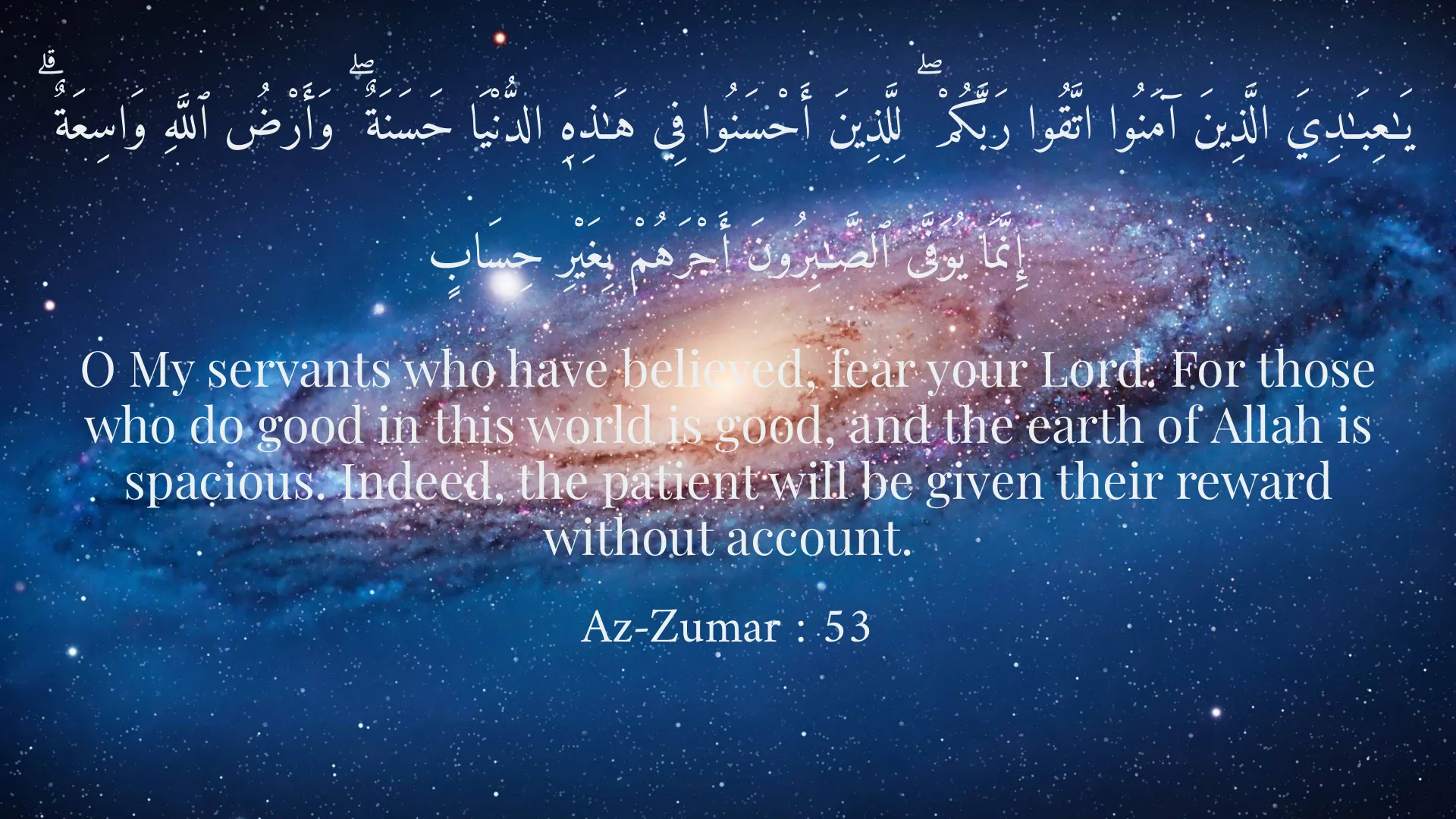
In the Holy Quran, Allah instructs His servants not just to avoid being ashamed of Him but to connect with Him in all aspects of their lives. This instruction serves as a guiding principle for believers, encouraging them to foster a profound and personal relationship with their Creator. The Quran repeatedly emphasizes the importance of this relationship, which is central to the Islamic faith. The concept of a personal connection with God is beautifully illustrated in various verses, including Surah Az-Zumar, verse 53. This verse states, 'Say, “O My servants who have believed, fear your Lord. For those who do good in this world is good, and the earth of Allah is spacious. Indeed, the patient will be given their reward without account.”' Through this verse, Allah not only reminds His devotees of His omnipresence and greatness but also reassures them that His mercy and compassion are limitless. The phrase 'fear your Lord' might initially evoke feelings of trepidation. However, in the context of Islam, 'fear' translates to reverence and deep respect for Allah. This reverence fosters a sense of responsibility and encourages believers to strive for righteousness in their lives. The subsequent part of the verse, which highlights that 'for those who do good in this world is good,' reaffirms that righteous deeds yield positive results and are rewarded not just in the afterlife but also during one's earthly existence. Moreover, the mention of Allah’s expansive earth serves as a reminder that there are ample opportunities for individuals to seek goodness and live their lives in alignment with divine principles. The Quran encourages believers to be proactive in their worship and actions, promoting the belief that patience and perseverance in the face of adversity will lead to untold rewards. The verse concludes with a powerful statement that 'the patient will be given their reward without account,' illustrating the boundless nature of Allah's generosity for those who remain steadfast in their faith. The theme of shame is particularly significant when discussing the relationship between believers and Allah. In Surah Al-Maidah, verse 54 emphasizes the idea that love for Allah and following Him should dominate the hearts of people. The understanding that one’s God is all-loving and merciful should eliminate any feelings of shame that may arise due to one’s shortcomings or sins. Instead of viewing oneself as unworthy or embarrassed when seeking Allah’s assistance, believers are encouraged to embrace their imperfections and reach out to their Creator openly and confidently. This perspective challenges societal norms where individuals often feel the need to hide their true selves from others. In the same way, believers may feel hesitant to display their faith openly, fearing judgment or misunderstanding from those around them. However, when it comes to divine connection, the Quran advocates for authenticity and transparency in approaching God. Believers are encouraged to share their struggles, aspirations, and fears with Allah regardless of societal judgments. This open dialogue serves as a crucial aspect of spirituality, fostering trust and a robust connection with the Divine. Furthermore, understanding that 'Allah is the greatest and most compassionate entity' can provide immense comfort and security for believers. The idea that God is above human judgment allows individuals to approach Him freely, without reservations. This reinforces the notion that Allah is not only a figure of authority but also a source of solace, guidance, and unconditional love. The limitless mercy of Allah is a recurring theme throughout the Quran, inviting believers to seek refuge in Him rather than distancing themselves due to perceived flaws. In a world increasingly marked by materialism and superficial connections, the relationship between individuals and their faith can often become diluted or overshadowed by daily struggles. Yet the Quran insists that true fulfillment comes from genuinely connecting with Allah. By prioritizing this connection, believers can cultivate a sense of purpose and direction that transcends worldly challenges. The act of engaging with Allah—whether through prayer, reflection, or acts of charity—invites divine blessings and instills a sense of contentment within. As believers cultivate their relationship with Allah, they begin to see shifts in their perspectives and emotions. Where once there may have been doubt and uncertainty, confidence rises; where there was isolation, a sense of community develops. The spiritual nourishment derived from this connection ultimately enriches not just the individual’s life but also the lives of those around them. Moreover, this fostering of a deep relationship with Allah can engender a broader sense of empathy and kindness towards others. When believers recognize the vastness of Allah’s compassion, they may be inspired to extend that same compassion to those around them, hence cultivating a spirit of community and understanding. This reflects the Quranic teachings that emphasize mutual support, kindness, and the importance of uplifting one another. In summary, the instructions from the Holy Quran guide believers to connect earnestly with Allah, devoid of any shame or embarrassment. The overwhelming themes of mercy, love, and encouragement found within the verses motivate individuals to approach their faith with confidence. Through this heartfelt connection, believers can transform their spirituality from merely performing rituals to cultivating a meaningful, personal relationship with their Creator. By embracing their imperfections and seeking Allah's guidance, they can find the solution to their life’s difficulties. For in the eyes of Allah, love, compassion, and forgiveness reign supreme, empowering individuals to boldly express and enhance their connection with Him.
Related Verses
يَـٰعِبَـٰدِيَ الَّذِينَ آمَنُوا اتَّقُوا رَبَّكُمْ ۖ لِلَّذِينَ أَحْسَنُوا فِي هَـٰذِهِٖ الدُّنْيَا حَسَنَةٌ ۖ وَأَرْضُ ٱللَّهِ وَاسِعَةٌ ۗ إِنَّمَا يُوَفَّى ٱلصَّـٰبِرُونَ أَجْرَهُمْ بِغَيْرِ حِسَابٍ
O My servants who have believed, fear your Lord. For those who do good in this world is good, and the earth of Allah is spacious. Indeed, the patient will be given their reward without account.
Az-Zumar : 53
يَا أَيُّهَا الَّذِينَ آمَنُوا مَن يَرْتَدَّ مِنكُمْ عَنْ دِينِهِ فَسَوْفَ يَأْتِي اللّهُ بِقَوْمٍ يُحِبُّهُمْ وَيُحِبُّونَهُ أَذِلَّةً عَلَى ٱلْمُؤْمِنِينَ أَعِزَّةً عَلَى ٱلْكَافِرِينَ يُجَاهِدُونَ فِي سَبِيلِ اللّهِ وَلَا يَخَافُونَ لَوْمَةَ لَائِمٍ ۚ ذَٰلِكَ فَضْلُ ٱللَّهِ يُؤْتِيهِ مَن يَشَاءُ ۗ وَكَفَىٰ بِاللَّهِ عَلِيمًا
O you who have believed, whoever of you should revert from his religion, - Allah will bring forth [for] a people He will love and who will love Him, [who are] humble toward the believers, powerful against the disbelievers. They strive in the cause of Allah and do not fear the blame of a critic. That is the favor of Allah; He bestows it upon whom He wills. And Allah is All-Encompassing and Knowing.
Al-Maidah : 54
Short Story
Once upon a time, a young man named Ali struggled with the embarrassment he felt in front of God. He often asked himself if he could truly speak about his mistakes or ask God for help. One day he went to the mosque, and there he shared his true feelings with his Creator. He said from the depths of his heart, 'O God, I have many faults, but I am not hopeless about Your mercy.' That day Ali realized that God listens to His servants and never abandons them. From that day on, he decided never to feel ashamed of God, aiming to establish a loving relationship with Him.