Quranic Answer
In the Islamic tradition, based on the clear teachings of the Holy Quran, the answer to this question is unequivocally positive: Yes, all human beings are born with a 'pure nature.' This concept, known as 'Fitra' in Arabic, refers to the pristine and inherent disposition that Allah Almighty has instilled in every human being. Fitra signifies an innate and unconscious inclination towards truth, justice, beauty, goodness, and perfection; an inclination that guides one towards Tawhid (monotheism) and the acceptance of divine messages. This divine trust is a gift from God, making humans, from birth, inherently predisposed to recognize their Creator and embark on a journey towards spiritual perfection. The Holy Quran explicitly refers to this truth. One of the most prominent verses in this regard is Surah Ar-Rum (30:30), which states: "So direct your face toward the religion, inclining to truth. [Adhere to] the fitra of Allah upon which He has created [all] people. No change should there be in the creation of Allah. That is the correct religion, but most of the people do not know." This verse clearly indicates that the true religion is none other than the divine fitra upon which people have been created, and there is no alteration in Allah's creation. This implies that religion is not something external to human existence but is in harmony with one's intrinsic nature. Humans naturally and instinctively tend to worship a supreme and transcendent being, and this inclination is the most significant manifestation of the divine fitra. Furthermore, the famous prophetic narration, "Every child is born on Fitra, then his parents make him a Jew, a Christian, or a Magian," further clarifies this concept. This noble Hadith emphasizes that deviation from the pure divine fitra is a result of external factors, improper upbringing, social environment, and negative influences, rather than an inherent flaw or defect in human creation. Fitra is like a pure seed planted in the soil of human existence; if its growth environment is favorable, it will blossom towards goodness and righteousness. However, if exposed to pests and toxins, it may deviate from its original path or remain hidden. The divine fitra is not limited to the inclination towards monotheism; it also encompasses the tendency towards moral values such as honesty, justice, benevolence, kindness, and avoidance of impurities. Humans are inherently repulsed by injustice and falsehood and are inclined towards compassion and fairness, unless certain factors suppress or distort this innate inclination. These innate tendencies form the ethical foundation of society and guide humans on their path to perfection and happiness. The role of prophets and heavenly scriptures is also defined in this context. They did not come to teach something entirely new to humanity but to awaken the dormant fitra within them and remind them of the treasure they possess. Divine teachings act like water for this seed of fitra, helping it to grow and flourish. Ignorance, heedlessness, following desires, and social pressures can draw layers of dust over the mirror of fitra, dulling its reflection. However, this does not mean the fitra is destroyed, but merely covered. For this reason, Islam always emphasizes repentance and returning to God, because repentance is, in essence, a return to one's original and pure human fitra. Ultimately, this Quranic perspective on fitra ignites a spark of hope in the heart of every human being. No matter how far one may have strayed, there is always hope for return and rectification, for the light of fitra within them never extinguishes. The human's responsibility in this world is to consciously strive to remove obstacles from the path of their fitra and allow this inner gem to shine, guiding them towards their ultimate destination, which is closeness to Allah. This belief in pure fitra also places a great responsibility on parents, educators, and society to provide a healthy and nurturing environment for the growth of these divine potentials and prevent their contamination.
Related Verses
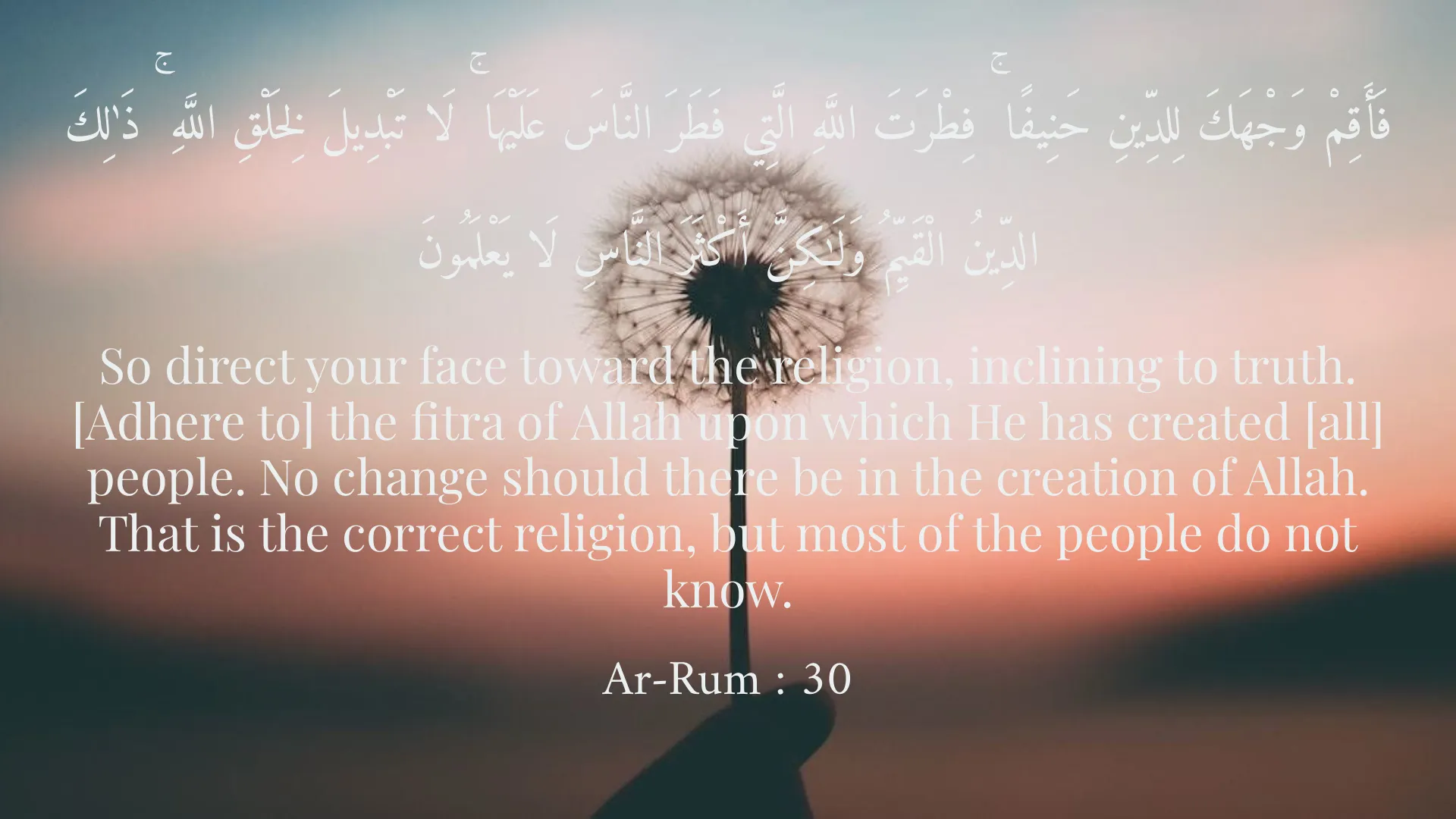
فَأَقِمْ وَجْهَكَ لِلدِّينِ حَنِيفًا ۚ فِطْرَتَ اللَّهِ الَّتِي فَطَرَ النَّاسَ عَلَيْهَا ۚ لَا تَبْدِيلَ لِخَلْقِ اللَّهِ ۚ ذَٰلِكَ الدِّينُ الْقَيِّمُ وَلَٰكِنَّ أَكْثَرَ النَّاسِ لَا يَعْلَمُونَ
So direct your face toward the religion, inclining to truth. [Adhere to] the fitra of Allah upon which He has created [all] people. No change should there be in the creation of Allah. That is the correct religion, but most of the people do not know.
Ar-Rum : 30
وَإِذْ أَخَذَ رَبُّكَ مِن بَنِي آدَمَ مِن ظُهُورِهِمْ ذُرِّيَّتَهُمْ وَأَشْهَدَهُمْ عَلَىٰ أَنفُسِهِمْ أَلَسْتُ بِرَبِّكُمْ ۖ قَالُوا بَلَىٰ ۛ شَهِدْنَا ۛ أَن تَقُولُوا يَوْمَ الْقِيَامَةِ إِنَّا كُنَّا عَنْ هَٰذَا غَافِلِينَ
And [mention] when your Lord took from the children of Adam - from their loins - their descendants and made them testify concerning themselves, [saying to them], "Am I not your Lord?" They said, "Yes, we have testified." [This] lest you say on the Day of Resurrection, "Indeed, we were of this unaware."
Al-A'raf : 172
Short Story
It is narrated in Sa'di's Golestan: "Ten dervishes may sleep in one blanket, but two kings cannot fit in one clime." This beautiful anecdote, though seemingly about contentment and greed, can subtly reflect on the pure nature of humanity. The dervishes, with their simple, uncorrupted hearts, live by their original pure nature. They are so detached from worldly possessions and attachments that ten of them find peace even on a single blanket. However, kings, whose innate pure nature might be obscured by the dust of worldly ambition and desire, even with vast domains, find no peace due to their covetousness and excesses, constantly warring with each other. This story reminds us that inner purity and tranquility do not stem from outward possessions but from a return to that original, unburdened nature that God has placed within each of us. May we all be able to wipe the dust of the world from the mirror of our hearts and return to our pure fitra.