Quranic Answer
Guidance is an integral aspect of human interaction and societal development, deeply rooted in the fundamental principles of many cultures and religions. In Islam, guidance stands as a shared obligation among believers, emphasizing its significance in establishing a just and moral society. This article delves into the concept of guidance as portrayed in the Holy Quran, elucidating the responsibilities of individuals in leading others toward righteousness, and understanding the divine nature of true guidance. The Qur'an's perspective on guidance is profound and multifaceted. It is portrayed not merely as a task but as a form of collective responsibility. One notable verse showcasing this importance is found in Surah Al-Imran, verse 104, where it is stated: 'And let there be [arising] from you a nation inviting to all that is good and enjoying what is right and forbidding what is wrong, and those will be the successful.' This verse is a potent reminder that Muslims are encouraged to cultivate communities that embody principles of goodness and righteousness. The call to action articulated here underscores that Islam isn't a solitary endeavor but rather a community-centered faith where individuals rally to guide one another. In this light, the duty of guiding others is not confined to a select few; instead, it encompasses all believers. The communal aspect of faith is highlighted by the responsibility to 'enjoy what is right and forbid what is wrong,' establishing a moral framework for interaction. This proactive engagement is essential in fostering an environment where positive morals can flourish. It is this fundamental belief that reinforces the notion that one individual's actions can resonate and create significant ripple effects throughout society, encouraging others to embrace goodness. Furthermore, guidance is intricately linked to the prophetic responsibility. In Surah Al-Ma'idah, verse 67, Allah commands the Prophet Muhammad (pbuh) with the words: 'O Messenger, proclaim that which has been revealed to you from your Lord. And if you do not, then you have not conveyed His message.' This instruction illuminates the role of the Prophet as both a messenger and guide, tasked with the crucial responsibility of conveying divine truths to humanity. It implies that the propagation of God's message is essential and that failing to share these teachings is tantamount to neglecting an entrusted duty. This divine directive serves as a clarion call for all believers to transmit the teachings of Islam to those around them actively. The weight of this responsibility is significant, as it stresses that sharing knowledge about faith is not an option but an obligation of faith. This notion carries with it the understanding that participation in the act of guiding others is a vital form of righteous action, highlighting the importance of interpersonal relationships and communication within the Islamic framework. However, it is crucial to understand that while individuals are called to guide others, the essence of true guidance is ultimately in the hands of Allah. Numerous verses throughout the Qur'an reinforce this belief, reminding us that no one can guide the hearts except Allah. Humans can strive to inform, teach, and inspire, but the true transformation of the heart and acceptance of the faith is a divine matter. This realization encourages individuals to adopt a humble approach when engaging in the act of guiding others, understanding that their role is to seek Allah’s assistance and guidance in their efforts. Moreover, it is the quality of an individual's character and behavior that significantly influences their ability to guide others effectively. The Qur'an emphasizes the need for righteous actions to complement guidance. The Prophet Muhammad (pbuh) is often cited as the best example of virtue, embodying the very principles he taught. His life serves as a critical reference point for Muslims striving to guide others; it highlights the importance of demonstrating integrity, kindness, and humility. To be effective guides, individuals should strive to cultivate virtues within themselves—even as they seek to enlighten others. This journey through self-improvement not only enriches the individual’s spiritual experience but also enhances their capacity to impact others positively. Practicing patience, empathy, and understanding plays a vital role in forming meaningful connections that facilitate guiding relationships. Moreover, the concept of guidance extends beyond mere verbal communication. It encompasses actions that speak louder than words, signifying that guidance can be rooted in everyday behaviors. A person committed to righteousness can influence those around them simply by leading a life infused with Islamic values. Engaging in community service, promoting social justice, or exhibiting compassion towards others can serve as compelling tools for guiding individuals toward the truth. The importance of guidance also layers into the broader community dimension—creating networks of support within Muslim societies. Collectively, when individuals come together to support each other in their pursuit of righteousness, they become part of a thriving community that fosters mutual growth. Such environments allow for shared learning experiences and encourage individuals to seek mentorship and guidance from one another, thereby reinforcing the communal bonds that enrich faith. Ultimately, the endeavor to guide others serves a higher purpose: to work towards establishing a society rooted in justice and moral clarity. Each Muslim carries within them a potential beacon of light that reflects the teachings of Islam and can share that light with those around them. This mutual reinforcement of the faith within communities underlines the critical role that guidance plays in personal and collective development. In conclusion, individuals have the ability to serve as instruments of guidance, inspired by the teachings of the Holy Quran. The responsibilities are manifold, extending from personal conduct to community involvement, all while recognizing the divine nature of true guidance that lies in Allah’s hands. As believers unite in their quest to invite others toward good and embody the principles of righteousness, the collective impact can lead to transformative change within individuals and society as a whole. The mission of guidance, therefore, stands as both a privilege and a duty—urging each person to strive for personal excellence, uphold their faith, and assist others on their spiritual journeys.
Related Verses
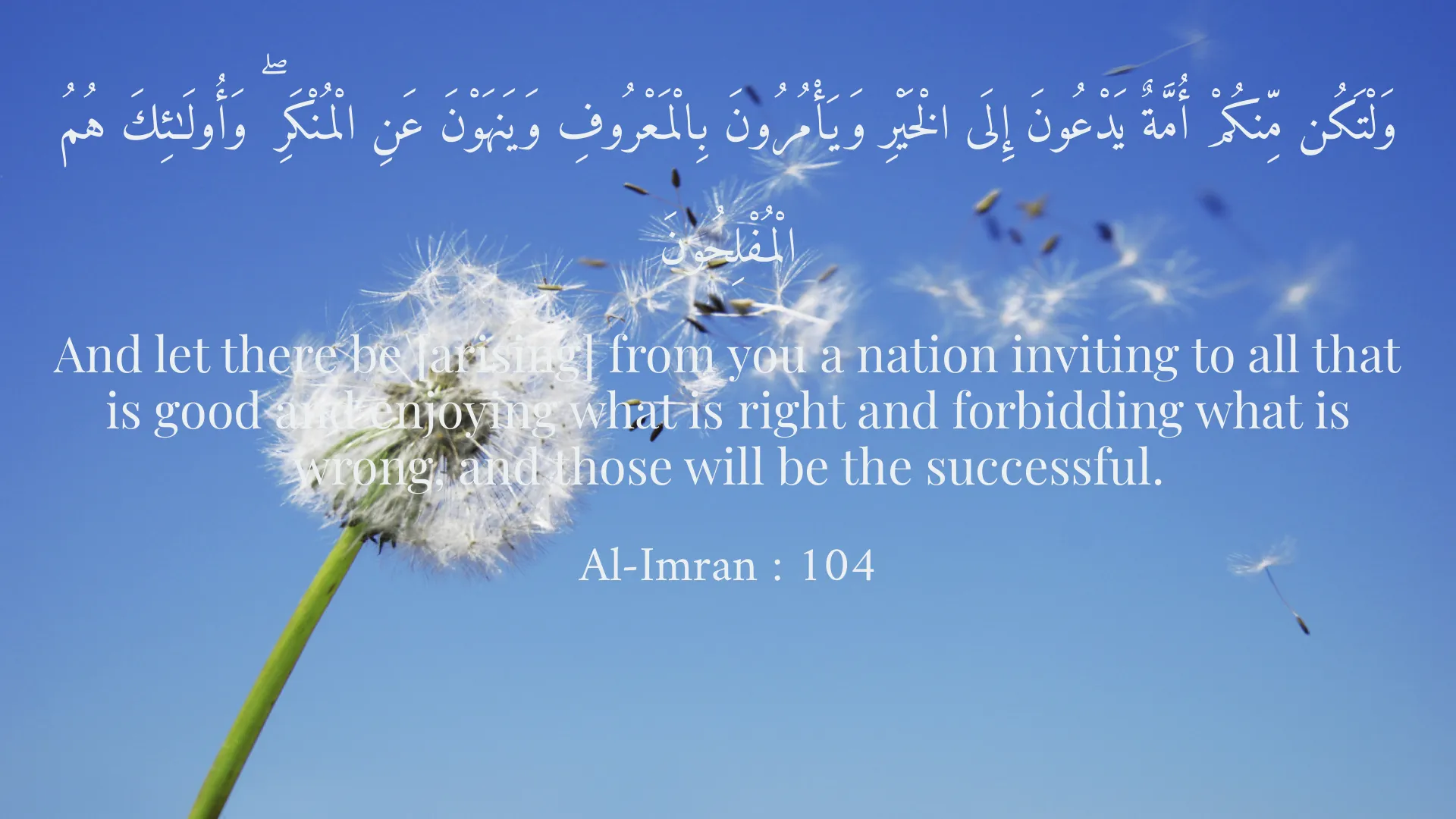
وَلْتَكُن مِّنكُمْ أُمَّةٌ يَدْعُونَ إِلَى الْخَيْرِ وَيَأْمُرُونَ بِالْمَعْرُوفِ وَيَنهَوْنَ عَنِ الْمُنْكَرِ ۖ وَأُولَـٰئِكَ هُمُ الْمُفْلِحُونَ
And let there be [arising] from you a nation inviting to all that is good and enjoying what is right and forbidding what is wrong, and those will be the successful.
Al-Imran : 104
يَا أَيُّهَا الْرَّسُولُ بَلِّغ مَا أُنزِلَ إِلَيْكَ مِن رَّبِّكَ ۖ وَإِن لَّمْ تَفْعَلْ فَمَا بَلَّغْتَ رِسَالَتَهُ ۖ وَأَللَّهُ يَعْصِمُكَ مِنَ النَّاسِ
O Messenger, proclaim that which has been revealed to you from your Lord. And if you do not, then you have not conveyed His message. And Allah will protect you from the people.
Al-Ma'idah : 67
Short Story
One day, a young man named Ehsan approached a great teacher of Islam and asked, 'How can I help guide others?' The teacher replied, 'Through good deeds and teaching the truths of the faith, you can achieve righteousness and guide others. The first step is to go on the right path yourself, and then through questioning and guiding your friends, you can lead them towards goodness.' Ehsan was inspired and decided to help others by being a role model.