Quranic Answer
The relationship between knowledge and faith is a profound and multifaceted theme woven into the fabric of the Holy Quran. The Quran is not merely a book of laws and rituals; it is a comprehensive guide that encourages believers to seek knowledge and deepen their understanding of their faith. In this article, we will explore how the Quran emphasizes the importance of knowledge, its role as a source of light and guidance, and how it strengthens and enriches one's faith. At the heart of the Quranic message is the idea that knowledge is a divine gift. This is evident from the very first revelation given to the Prophet Muhammad (peace be upon him), which begins with the command 'Iqra' (Read). This initial command signals a paradigm shift in human understanding and suggests that the pursuit of knowledge is not just encouraged but is a sacred obligation. By seeking knowledge, believers are actively participating in a quest for truth and understanding, which ultimately leads them closer to God. One of the key verses highlighting the connection between knowledge and faith is found in Surah Al-Anfal, verse 22, where Allah states, 'Indeed, the most severe of enemies to the believers are the Jews and those who associate others with Allah.' This verse underscores the need for knowledge, particularly in understanding the dynamics between faith and disbelief. It indicates that those lacking in knowledge may be vulnerable to deception and misleading ideologies. Knowledge empowers believers to discern truth from falsehood and strengthens their commitment to their faith. Additionally, Surah Az-Zumar, verse 9 provides another profound insight into the relationship between knowledge and devotion. It states, 'Is he who is devoutly obedient during periods of the night prostrating and standing [in prayer] fearing the Hereafter and hoping for the mercy of his Lord.' This verse illustrates that true devotion is accompanied by knowledge. The obedient believer seeks to understand the deeper implications of their worship and the mercy of God, which solidifies their faith. This pursuit of knowledge is not merely for academic sake; it transforms an individual's spiritual practices and enhances their relationship with the Divine. Moreover, the Quran frequently illustrates that knowledge serves as a source of guidance and light. In Surah Al-Baqarah, verse 269 states, 'He grants wisdom to whom He wills; and whoever has been granted wisdom has certainly been given a great good.' This wisdom, which can be derived from knowledge, is invaluable in navigating the complexities of life. It enables individuals to apply Quranic teachings in practical ways that can lead to a fulfilling and balanced life. The interplay between knowledge and faith is also reflected in the actions of the Prophet Muhammad (peace be upon him) and his companions. They consistently sought knowledge throughout their lives, demonstrating that a true believer should have a relentless pursuit of learning. For instance, during the early years of Islam, many companions would travel great distances to learn even a single verse or hadith, showcasing their dedication to understanding their faith on a deeper level. There is also an intrinsic relationship between knowledge and personal development. When one seeks knowledge, it contributes to their character development and moral rectitude. The Quran emphasizes ethical conduct, and knowledge equips believers with the insight needed to embody these values. As stated in Surah Al-Mujadila, verse 11, 'Allah will raise those who have believed among you and those who were given knowledge, by degrees.' This verse indicates that knowledge and faith are progressive; as one expands their understanding, they also elevate their status in the eyes of God. The Quran encourages believers not only to acquire knowledge but to apply it in their daily lives. Knowledge without application is insufficient; it is through practice that understanding is actualized. Scholars and believers alike are urged to become embodiments of the knowledge they possess, demonstrating principles of justice, compassion, and righteousness in their interactions with others. Hence, acquiring knowledge is not just about intellectual growth; it is about fostering a life that reflects the teachings of Islam. Furthermore, the pursuit of knowledge extends beyond the religious domain. The Quran advocates for a holistic approach to learning that encompasses various fields, including science, philosophy, and the arts. Knowledge is presented as a means of comprehending the universe and humanity's place within it, creating a profound sense of purpose and connection to the world. In Surah Al-Anfal, verse 22, and throughout the Quran, believers are encouraged to observe the signs in creation, seek knowledge, and derive lessons that strengthen their faith and understanding of God’s majesty. Curiosity and the quest for learning should be fundamental aspects of a believer’s identity. The Quran praises those who ponder, reflect, and seek answers to their questions. In Surah Al-Imran, verse 191, Allah says, 'Indeed, in the creation of the heavens and the earth and the alternation of the night and the day are signs for those of understanding.' Those who strive to understand these signs will find their faith fortified, while simultaneously nurturing a sense of awe and gratitude towards their Creator. In conclusion, the Quran intricately connects knowledge and faith, asserting that the pursuit of knowledge enriches spiritual life and strengthens one's relationship with God. Knowledge, presented as a divine blessing, empowers believers to understand their faith on a deeper level and enables them to apply its teachings in their lives effectively. Thus, it is essential for every believer to embrace a lifelong journey of learning, allowing knowledge to illuminate their path to faith and personal growth. Through the lens of knowledge, believers can navigate the complexities of life, deepen their understanding of the divine, and embody the core principles of their faith.
Related Verses
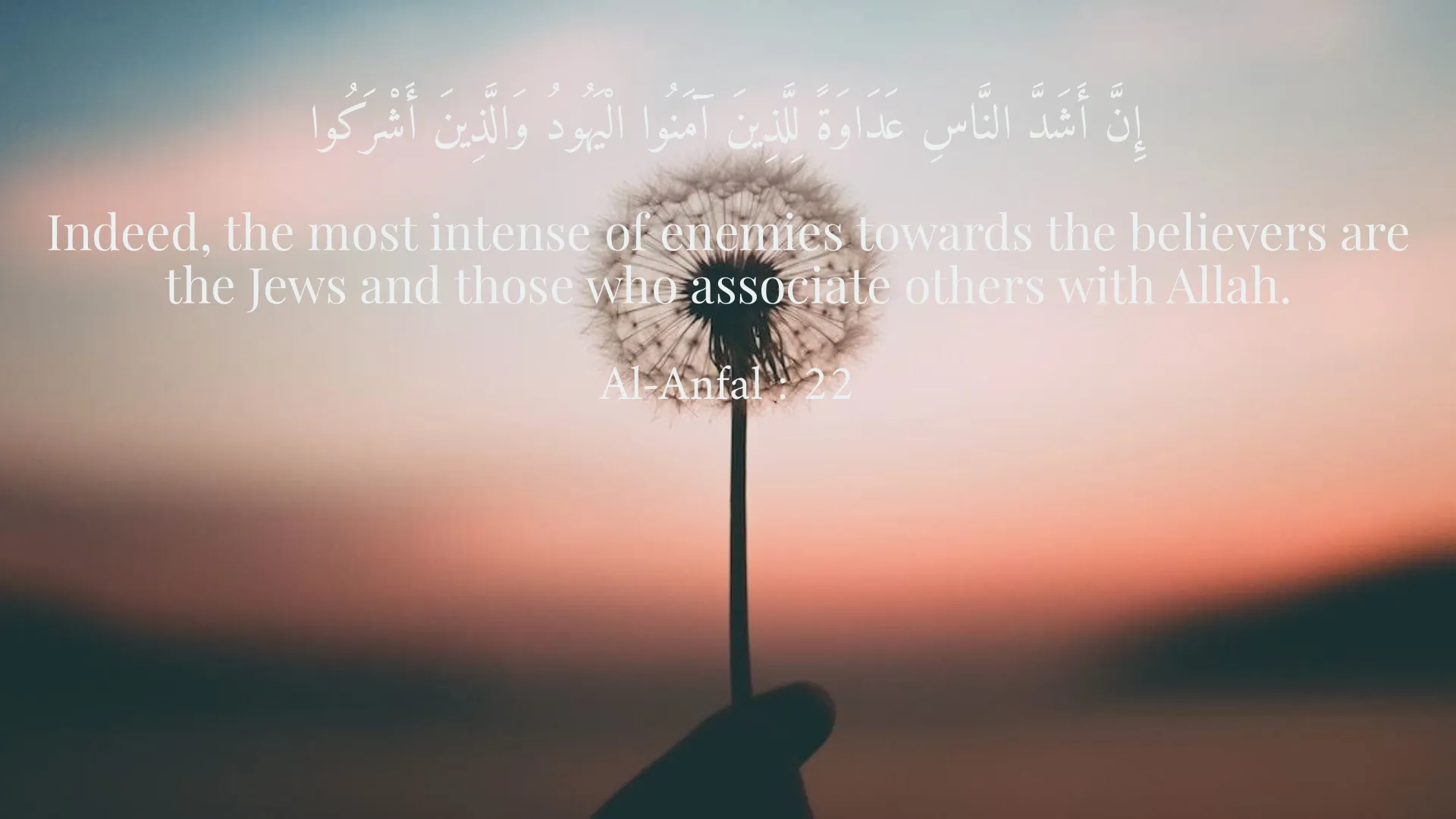
إِنَّ أَشَدَّ النَّاسِ عَدَاوَةً لِلَّذِينَ آمَنُوا الْيَهُودُ وَالَّذِينَ أَشْرَكُوا
Indeed, the most intense of enemies towards the believers are the Jews and those who associate others with Allah.
Al-Anfal : 22
أَمَّنْ هُوَ قَانِتٌ آنَاءَ اللَّيْلِ سَاجِدًا وَقَائِمًا يَحْذَرُ الْآخِرَةَ وَيَرْجُو رَحْمَةَ رَبِّهِ
Is he who is devoutly obedient during periods of the night, prostrating and standing [in prayer] fearing the Hereafter and hoping for the mercy of his Lord [equal to one who does not do so]?
Az-Zumar : 9
Short Story
One day, a man named Ali was reading the Quran and reflecting on its verses. Suddenly, he realized that knowledge and faith are interlinked and that he should seek knowledge in order to strengthen his faith. From that day on, Ali dedicated time each day to studying and tried to broaden his perspective on the world around him. By doing this, he not only developed a stronger faith but also experienced greater peace.