Quranic Answer
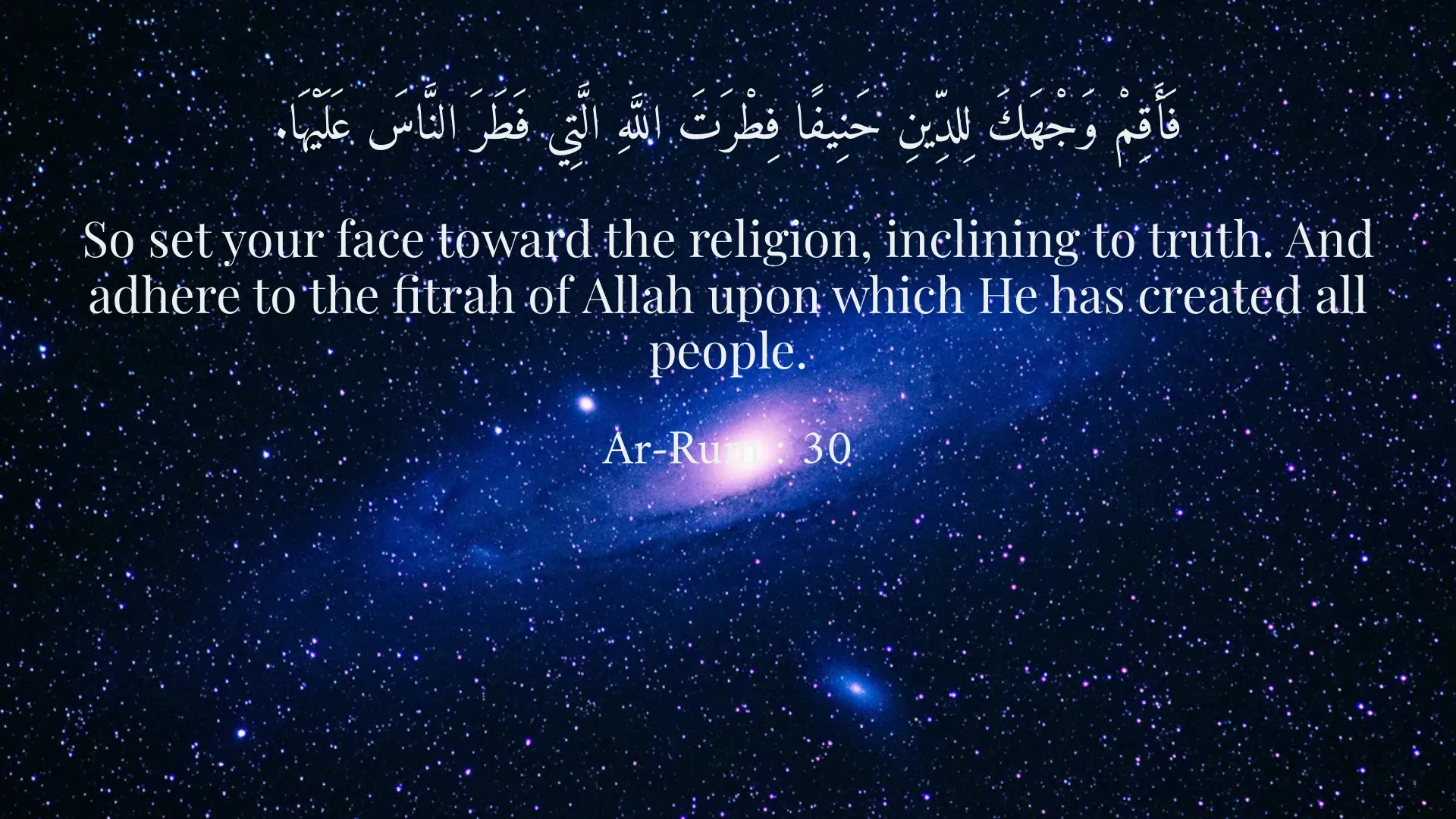
The Holy Quran, regarded as the ultimate guide for humanity, speaks profoundly about the monotheistic nature of human beings. Within its verses, we find compelling insights into the inherent inclinations of humans towards the worship of one God, establishing a foundational belief that resonates throughout the Islamic faith. In Surah Ar-Rum, verse 30, Allah states, 'So set your face toward the religion, inclining to truth. And adhere to the fitrah of Allah upon which He has created all people.' This particular verse draws attention to a fundamental aspect of our existence: that every human is born with a natural disposition, known as fitrah, that compels them towards monotheism and servitude to their Creator. This innate nature is a divine gift, a guiding compass that directs individuals towards the truth, and serves as a reminder of their ultimate purpose in life. The concept of fitrah is pivotal in understanding why humans have an intrinsic desire to acknowledge and worship God. It suggests that deep within each person lies a recognition of the One God, which can be obscured yet never entirely erased by external influences. In the hectic chaos of modern life, an individual may experience disconnection from this inner truth, often influenced by societal pressures, cultural variations, or family upbringing. However, the Quran emphasizes that the truth of monotheism is a part of human essence that each person can access and return to, especially when faced with life's challenges. This notion is further elaborated upon in Surah Al-A'raf, verse 172, where Allah alludes to the covenants made with humanity, which provide an enlightening context for our understanding of worship. The verse states, 'And [mention] when your Lord took from the Children of Adam - from their loins - their descendants and made them testify of themselves, [saying], 'Am I not your Lord?' They said, 'Yes, we have testified.' This profound moment emphasizes that every soul has an inherent awareness of God's sovereignty and authority. It illustrates that a recognition of God’s unity was instilled in humanity at the very outset of creation. Such a covenant forms a critical part of human consciousness, driving the inclination towards worship and establishing a link between the Creator and the created. The verse hints at the unyielding truth that the avenue to worship and connection is a fundamental part of human existence. As individuals navigate through life, encountering various obstacles and trials, many may find themselves at a crossroads. It is in these critical moments, when confronted by hardship or momentarily lost, that they often feel a compelling urge to reconnect with Allah. This reflects the universal truth that the acknowledgment of God's greatness and the need for submission are woven intricately into the fabric of human life. While some may temporarily stray from the path of religiosity, divine guidance is always within reach. A multitude of stories testify to this phenomenon; individuals immersed in the secularism of modernity often rediscover their spiritual roots when faced with life's tribulations. The return to faith during difficult times further showcases the innate need for connection with the Divine. In those moments, even those who have distanced themselves from the practice of their faith often find themselves searching for solace in prayer or seeking guidance from the teachings of the Quran. It highlights an essential human characteristic—the search for hope, meaning, and reassurance that only a relationship with God can fulfill. Moreover, the influence of our environment and upbringing cannot be dismissed. Families, cultures, and societies drastically shape individual perceptions of monotheism. Children raised in nurturing environments rich in spiritual guidance are likely to develop a strong affinity for their faith. Conversely, those growing up in environments marked by skepticism or deprivation of religious knowledge may initially stray, yet the core fitrah remains intact, waiting for opportunities to flourish. Education, community, and personal experiences play significant roles in either fortifying or undermining this monotheistic nature. Throughout history, scholars and theologians have explored the implications of fitrah and the inherent nature of belief. Various Islamic teachings emphasize nurturing this inner disposition to recognize and worship God, often reflecting on the prophetic examples. The importance of cultivating a connection with Allah from a young age is frequently underscored, aligning with the verse emphasizing an individual's innate acknowledgment of God's presence. The role of parents in instilling this awareness is fundamental, as children who witness their guardians engaging in acts of worship are likely to internalize and replicate these behaviors. As society evolves, modern challenges arise that test the faith of individuals and the collective belief systems of communities. Yet, despite the waves of change and uncertainty, the Quran's message remains relevant. The call to return to one's fitrah—the divine nature regarding belief in one God—serves as a timeless reminder. Rather than allowing external forces to dictate their spiritual journey, individuals are encouraged to revisit their inner selves, reflecting on the truths inherent in their nature. In conclusion, the Holy Quran intricately connects our understanding of monotheism with the fitrah bestowed upon every human being. The verses in Surah Ar-Rum and Surah Al-A'raf reaffirm the belief that the knowledge of God is embedded within us, waiting to be discovered and nurtured. Each individual may explore faith under varying circumstances, but at the core lies an unwavering longing to connect with the Divine. Thus, the essence of monotheism remains a timeless truth, guiding humanity toward the ultimate purpose of life: to worship and serve the One True God. As we navigate our existential journeys, we must remember to cultivate this relationship, embrace our fitrah, and recognize that, regardless of life's trials, the return to God is always possible.
Related Verses
فَأَقِمْ وَجْهَكَ لِلدِّينِ حَنِيفًا فِطْرَتَ اللَّهِ الَّتِي فَطَرَ النَّاسَ عَلَيْهَا.
So set your face toward the religion, inclining to truth. And adhere to the fitrah of Allah upon which He has created all people.
Ar-Rum : 30
وَإِذْ أَخَذَ رَبُّكَ مِن بَنِي آدَمَ مِن ظَهْرِهِمْ ذُرِّيَّتَهُمْ وَأَشْهَدَهُمْ عَلَى أَنفُسِهِمْ أَلَسْتُ بِرَبِّكُمْ قَالُوا بَلَى شَهِدْنَا.
And [mention] when your Lord brought forth from the Children of Adam their descendants and made them testify of themselves, 'Am I not your Lord?' They said, 'Yes, we have testified.'
Al-A'raf : 172
Short Story
On a beautiful day, Aref decided to immerse himself in nature, observing the trees and flowers in peace. He remembered the words of the Quran and thought about how human nature is inclined towards God and monotheism. Aref prayed in his heart and recalled Allah, feeling an incredible sense of joy. This day reminded him that life without the remembrance of God is meaningless and that humans are always in search of their monotheistic nature.