Quranic Answer
Title: The Balance Between Love for the World and Faith: A Spiritual Reflection Introduction In the fast-paced society we live in today, the allure of worldly pleasures often overshadows the more profound spiritual pursuits. Humanity has an inherent tendency to seek love and attachment to the world around them, finding joy in relationships, possessions, and experiences. While this inclination might seem harmless, it can, paradoxically, lead to a decline in one's faith and create a distance from God. To better understand this delicate balance, it is essential to explore various teachings from the Holy Quran and reflect on their implications in our daily lives. The Nature of Attachment Attachment to the material world is a natural component of the human experience. Humans require social interaction, and the emotional bonds we form with family and friends enhance our lives. Furthermore, pursuing a comfortable life filled with wealth, status, and the finer things often resonates with our innate desires. However, the challenge lies in ensuring that these attachments do not become so overwhelming that they eclipse our spiritual journey. The Quran addresses this struggle directly, reminding us of the importance of prioritizing our relationship with God. Divine Warning in Surah At-Tawbah In Surah At-Tawbah, verse 24, Allah addresses this struggle profoundly: "Say, 'If your fathers, your sons, your brothers, your wives, your relatives, the wealth which you have obtained, and the commerce in which you fear decline, and the dwellings in which you delight are more beloved to you than Allah and His Messenger and jihad in His cause, then wait until Allah executes His command.'" This verse serves as a powerful reminder that our love and attachment to worldly possessions and relationships should never overshadow the love we hold for God and His Messenger. The Quran does not propose the negation of these relationships or worldly pursuits; rather, it calls for a reassessment of our priorities. While it is natural to love our families and seek stability, we must ensure that our devotion to these aspects does not replace or diminish our commitment to God. The consequences of neglecting our spiritual duties often manifest in a decrease in our faith and an increased detachment from our Creator. The Consequences of Excessive Attachment A continuous preoccupation with the material world can ultimately lead to forgetfulness of God and the responsibilities that come with faith. Surah Al-Imran, verse 14 presents this notion clearly: "Beautified for people is the love of that which they desire - of women and sons, heaped-up sums of gold and silver, fine branded horses, tilted land. That is the enjoyment of worldly life, but Allah has with Him the best return." This verse lays bare the deceptive nature of worldly desires, portraying them as mere adornments that, while enticing, cannot compare to the spiritual rewards that await with God. The temporary satisfaction derived from worldly pursuits can foster complacency, leading one to forget the eternal hereafter. Moreover, excessive love for material possessions often breeds anxiety and greed, resulting in a perpetual cycle of wanting more without ever finding satisfaction. This cycle can hinder one’s spiritual growth, prompting distance from religious duties, and consequently, a weakening of faith. Cultivating a Spiritual Mindset Recognizing the natural tendencies toward attachment is the first step in cultivating a balanced spiritual mindset. The key lies in redirecting our attachments toward enhancing our faith rather than detracting from it. Achieving this balance requires conscious effort and a commitment to prioritizing God’s commands above all. In practice, this means engaging in regular self-reflection and taking the time to consider where our priorities lie. Are we spending more effort on worldly pursuits, or are we striving to fulfill our spiritual obligations, such as prayer, charity, and seeking knowledge? One might consider the time spent on vain pursuits versus time devoted to spiritual growth and connection with God. Incorporating spiritual practices into our daily routines can serve as a reminder of this balance. Daily prayer, reading the Quran, and engaging in discussions about faith can ground us, providing clarity amidst the distractions of life. Community involvement and acts of charity also serve to reinforce our connection with God, aligning our hearts and intentions with His teachings. Conclusion The allure of worldly pleasures is undeniable, with human attachment to these elements ingrained in our nature. However, this attachment must be navigated with care, for excessive love for the world can lead to a decline in faith and distance from God. The Quran serves as both a guide and a warning, urging believers to prioritize their relationship with Allah above all else. By fostering spiritual practices and maintaining awareness of our priorities, we can strike a vital balance between our worldly desires and our spiritual commitments. Ultimately, the true essence of fulfillment can only be found in the love and devotion we show towards our Creator. The journey of life becomes meaningful and richer when we remember to prioritize our faith and seek the eternal rewards that await us beyond this world.
Related Verses
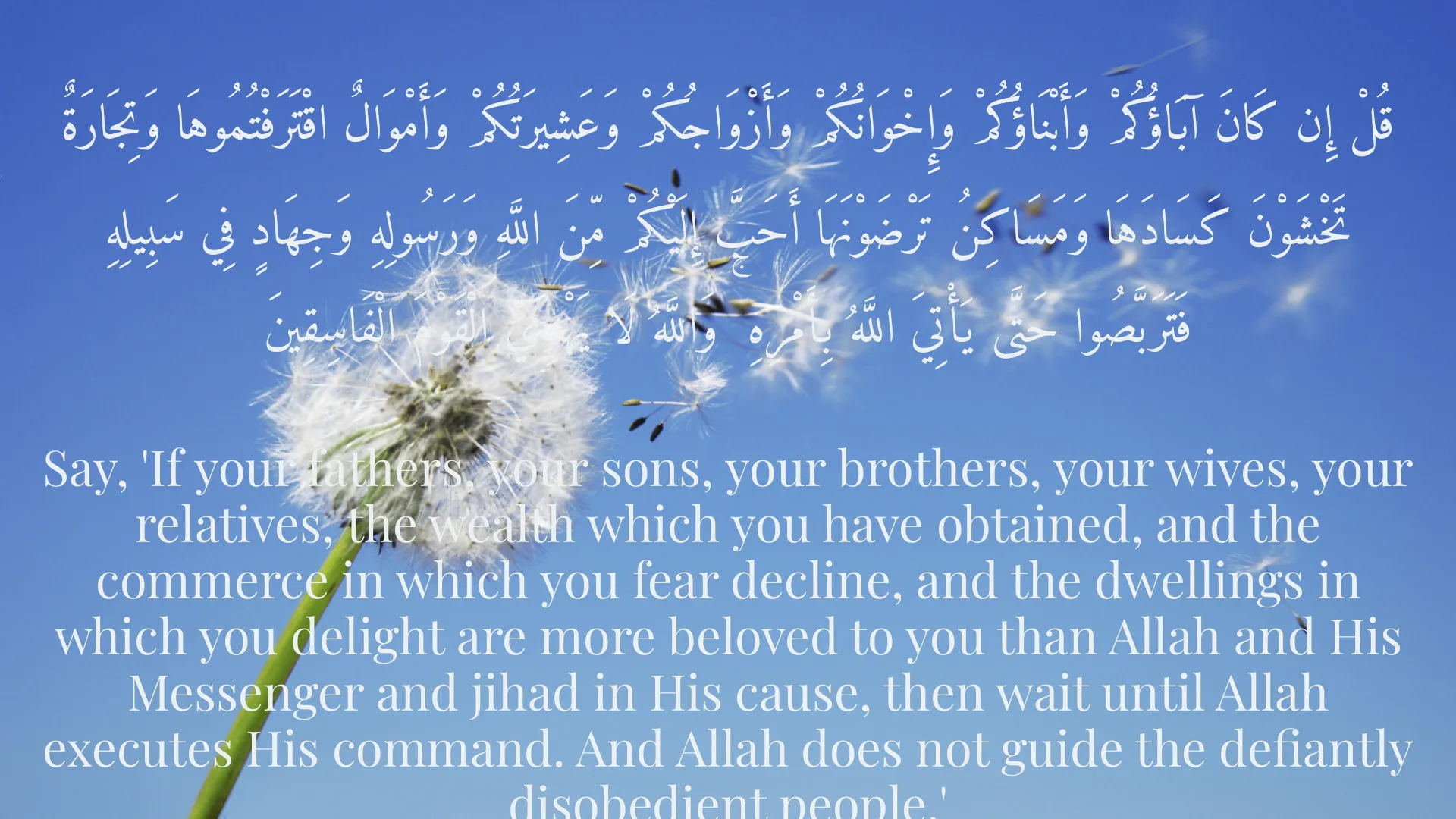
قُلْ إِن كَانَ آبَاؤُكُمْ وَأَبْنَاؤُكُمْ وَإِخْوَانُكُمْ وَأَزْوَاجُكُمْ وَعَشِيرَتُكُمْ وَأَمْوَالٌ اقْتَرَفْتُمُوهَا وَتِجَارَةٌ تَخْشَوْنَ كَسَادَهَا وَمَسَاكِنُ تَرْضَوْنَهَا أَحَبَّ إِلَيْكُمْ مِّنَ اللَّهِ وَرَسُولِهِ وَجِهَادٍ فِي سَبِيلِهِ فَتَرَبَّصُوا حَتَّى يَأْتِيَ اللَّهُ بِأَمْرِهِ ۚ وَاللَّهُ لَا يَهْدِي الْقَوْمَ الْفَاسِقِينَ
Say, 'If your fathers, your sons, your brothers, your wives, your relatives, the wealth which you have obtained, and the commerce in which you fear decline, and the dwellings in which you delight are more beloved to you than Allah and His Messenger and jihad in His cause, then wait until Allah executes His command. And Allah does not guide the defiantly disobedient people.'
At-Tawbah : 24
زُيِّنَ لِلنَّاسِ حُبُّ الشَّهَوَاتِ مِنَ النِّسَاءِ وَالْبَنِينَ وَالْقُنْطُرَةِ الْمُقَنْطَرَةِ مِنَ الذَّهَبِ وَالْفِضَّةِ وَالْخَيْلِ الْمُسَوَّمَةِ وَالزَّرْعِ ۚ ذَلِكَ مَتَاعُ الْحَيَاةِ الدُّنْيَا ۖ وَاللَّهُ عِندَهُ حُسْنُ الْمَئَابِ
Beautified for people is the love of that which they desire - of women and sons, heaped-up sums of gold and silver, fine branded horses, tilted land. That is the enjoyment of worldly life, but Allah has with Him the best return.
Al-Imran : 14
Short Story
Once upon a time, there was a man named Adel who was pondering about life and his purpose. He turned to the verses of the Quran and understood that life should focus on the love of God and fulfilling religious duties. Over time, as he paid attention to these matters, Adel felt a greater sense of peace and his heart was freed from the excessive love for the world and its allurements. He realized the divine values and was able to distance himself from the temptations of the world.