Quranic Answer
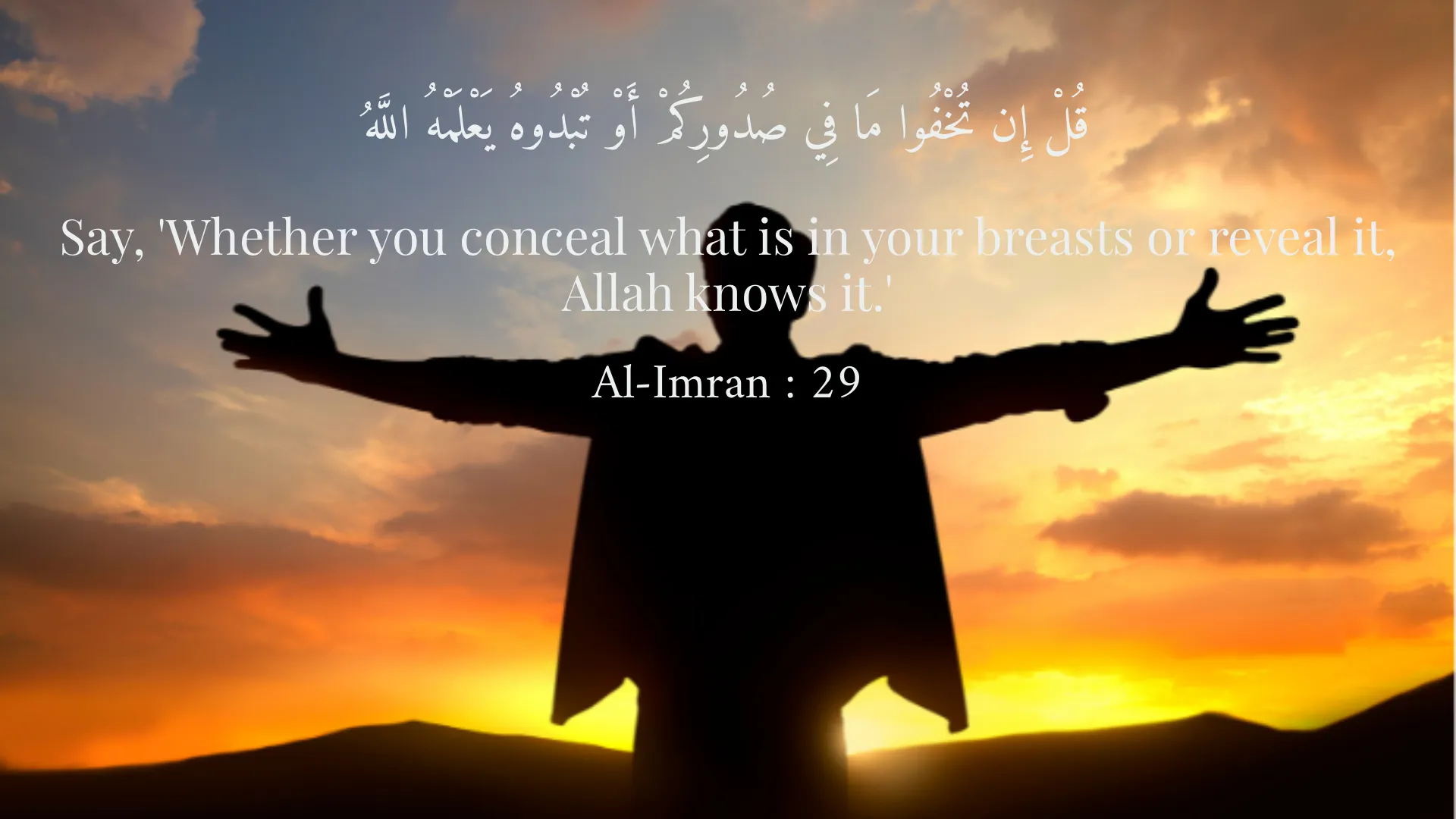
The Holy Quran, which is the holy book of Islam, is not only a compendium of spiritual guidance but also a profound source of knowledge about God’s omniscience. Among the various themes discussed in this sacred text is the extensive notion of divine knowledge, particularly concerning human thoughts, intentions, and actions. This aspect is illustrated vividly through various verses, one of the most notable being in Surah Al-Imran, where it states, 'Say, whether you conceal what is in your breasts or reveal it, Allah knows it.' (3:29) This powerful assertion highlights an essential Islamic belief: God's knowledge is not limited to actions observable by human beings but extends to the inner workings of the heart and mind. Understanding God’s all-encompassing awareness serves different purposes within the Islamic faith. Not only does it instill a sense of accountability among believers, but it also fortifies their faith in a just and omnipotent God. God's awareness of even the most concealed human intentions encourages individuals to reflect deeply on their desires and aspirations. In our daily lives, people might struggle with negative emotions and thoughts, often brushing them aside as inconsequential. However, the message conveyed through the Quran is clear: these hidden feelings and intentions are subject to divine scrutiny. Moreover, this divine knowledge acts as a moral compass for individuals as it makes them conscious of their inclinations—both the good and the bad. As people come to realize that their dark thoughts and intentions do not go unnoticed, they are urged to self-correct and seek forgiveness for their misdeeds. This self-awareness is crucial in the spiritual journey as it draws believers closer to God and enables them to embark on the path of righteousness. The ongoing narrative in the Quran pushes for a level of introspection, urging the followers of Islam to strive for sincerity in their hearts and clarity in their intentions. In Surah Al-Mu'minun, verse 115, it proclaims, 'Did you think that we created you in vain and that you would not be returned to Us?' This critical statement furthers the understanding that human existence is purposeful, a divine design with specific objectives. This verse also implies that believers will be held accountable for their earthly actions when they return to God. The promise of being returned to their Creator entices individuals to reflect on their intentions and to redirect their focus towards leading a life filled with purpose, values, and faith. Such verses amplify the awareness of the consequences associated with harboring negative intentions. When individuals acknowledge that both their shortcomings and virtuous aspirations are known to God, they may feel inclinations towards self-improvement. They may engage in constant self-reflection and seek out avenues for growth, virtues, and repentance. This understanding becomes particularly relevant in today’s fast-paced and often morally ambiguous world, where individuals may easily drift towards negativity and harmful behavior due to societal pressures. Every experience in life, every fleeting thought, and every desire can be transformed into an opportunity for personal and spiritual growth if individuals approach them with the correct mindset, seeking to align their intentions with God’s expectations. The Quran's messages about divine knowledge can thus serve as critical tools for anyone wishing to navigate these complexities of modern life. Furthermore, it is important to note that the Quran encourages a proactive approach towards self-evaluation and accountability. Believers are encouraged to maintain positive thoughts and to seek out good intentions actively. Simply recognizing that God is aware of their innermost feelings is not enough; it should motivate them to act with integrity, kindness, and love towards others. This responsibility becomes a means of spiritual purification, as engaging in good deeds and cultivating a positive mindset leads to a transformation that reflects a believer’s intentions. The relationship between divine knowledge and human actions also raises the importance of community and social responsibility. As Islamic teachings encourage compassion and empathy, knowing that one’s thoughts are scrutinized by God should urge individuals to foster positive interactions amid their communities. It brings forth the responsibility of being accountable not only for their personal actions but also for the impact they create on the lives of others. Overall, the verses in the Holy Quran concerning God’s awareness of human intentions call upon individuals to act with integrity, reflect upon their motivations, and strive towards righteousness. The Quran acknowledges the complexity of human emotion, and recognizing that intentions can be both good and harmful ensures a more comprehensive understanding of the self. It serves as a poignant reminder of the continuous journey of self-improvement through faith, awareness, and good intentions. As believers embrace this divine knowledge, they can move closer to their purpose, align their actions with their faith, and foster a life characterized by purpose and fulfillment.
Related Verses
قُلْ إِن تُخْفُوا مَا فِي صُدُورِكُمْ أَوْ تُبْدُوهُ يَعْلَمْهُ اللَّهُ
Say, 'Whether you conceal what is in your breasts or reveal it, Allah knows it.'
Al-Imran : 29
أَفَحَسِبْتُمْ أَنَّمَا خَلَقْنَاكُمْ عَبَثًا وَأَنَّكُمْ إِلَىٰنَا لَا تُرْجَعُونَ
Did you think that we created you in vain and that you would not be returned to Us?
Al-Mu'minun : 115
Short Story
Once upon a time, there was a man named Hasan who was always lost in his thoughts. He decided to leave behind his bad intentions and move towards good ones. After a while, he realized that his thoughts significantly impacted his life. He began reading the Quran, and its verses brought him peace and hope. Hasan felt in his heart that God not only observes his actions but also his intentions, and this realization made him choose to harbor only noble intentions.