Quranic Answer
The Holy Quran is often regarded as the ultimate source of guidance for Muslims, emphasizing the importance of compassion and kindness in human interactions. The text does not merely outline rules for worship and rituals but also provides a comprehensive moral framework that encourages believers to cultivate attitudes of generosity, empathy, and love for one another. At the core of this framework is the concept of God's love for those who demonstrate compassion and good-heartedness. This principle is clearly articulated in various verses throughout the Quran, with significant emphasis found in Surah Al-Baqarah and Surah Al-Ma'idah. In Surah Al-Baqarah, verse 177, the Quran urges believers to give from their wealth to help others, particularly the needy, orphans, and those who find themselves in dire circumstances. The verse states: "It is not righteousness that you turn your faces toward the east or the west, but [true] righteousness is in one who believes in Allah, the Last Day, the Angels, the Book, and the Prophets and gives his wealth, in spite of love for it, to relatives, orphans, the needy, the traveler, those who ask [for help], and for freeing slaves; [and who] establishes prayer and gives zakah; [those who] fulfill their promise when they promise; and [those who] are patient in poverty and hardship and during battle. Those are the ones who have been true, and it is those who are the righteous." This verse highlights a critical aspect of righteousness that goes beyond mere adherence to religious rituals. It emphasizes that true faith is reflected in one's actions towards others. Acts of kindness and compassion, such as assisting the poor and the vulnerable in society, are portrayed as essential components of genuine belief in God. This deep-rooted notion of altruism not only serves to uplift the community but also strengthens the believer's relationship with the Divine. Similarly, in Surah Al-Ma'idah, verse 54, Allah proclaims: "O you who have believed, whoever of you reverts from his religion - Allah will bring forth a people He will love and who will love Him. They are humble toward the believers, powerful against the disbelievers. They strive in the cause of Allah and do not fear the blame of a blamer. This is the favor of Allah; He bestows it upon whom He wills. And Allah is All-Encompassing and Knowing." This verse further illustrates the idea that God's love is intricately tied to behaviors that embody empathy, humility, and the willingness to support one another. The characteristics that denote the faithful are rooted in kindness and an ethical commitment to treating others with respect and dignity. The idea of being humble towards believers while being steadfast against agents of discord reinforces the notion that love and compassion are powerful tools for fostering unity and solidarity in the community. The Quran’s perspective on compassion is not limited to mere acts of charity; it extends to a holistic understanding of relationships and emotional engagement with one another. God’s love is described as encompassing and beyond conditional responses. Individuals are encouraged to develop qualities like forgiveness and understanding, which resonate with the divine attributes. This divine connection offers broader implications for human interaction, moving beyond a transactional view of relationships toward a more altruistic engagement. The teachings of the Quran guide believers not only in their relationship with God but also in their obligations toward their fellow beings. The acts of giving, supporting the oppressed, and genuinely caring for the well-being of others reflect the attributes of Allah and showcase the essence of divine love. Each act of kindness is portrayed not only as a moral obligation but also as a step toward becoming closer to God, thereby reinforcing that the embodiment of compassion leads to spiritual elevation. Moreover, the concept of forgiveness serves as another pillar in understanding God's love for compassionate individuals. The Quran frequently addresses the importance of forgiving others as a reflection of one's faith and love for God. Forgiveness is transformative, serving to heal relationships and bring peace to one's heart. It is through forgiveness that individuals can cultivate deeper connections, extend empathy, and foster a community rooted in love rather than conflict. The value placed on forgiveness in the Quran teaches believers that harboring grudges and resentment can distance them from the mercy of God. As individuals practice these values, they become agents of change in their communities. The transformative power of compassion and kindness creates environments where empathy thrives, further embedding the principles found in the Quran into daily life. In today's world, marked by tumult and division, the teachings of the Holy Quran provide a profound reminder of the necessity of embodying compassion. They serve not only as timeless moral principles but also as practical everyday guides for individuals seeking to cultivate loving relationships based on mutual respect and care. In conclusion, the Holy Quran conveys a clear and resonant message that God deeply loves compassionate and benevolent individuals. The verses discussed in Surah Al-Baqarah and Surah Al-Ma'idah specifically outline how acts of kindness, generosity, and understanding manifest true faith and reinforce human relationships. By fostering qualities like forgiveness, empathy, and humility, believers align themselves with divine attributes, thereby enhancing their connection with God. Ultimately, the Quran is a call to action, compelling individuals to engage in acts of brotherhood, thereby ensuring that faith and love are not merely concepts confined to prayer but lived realities that reflect the essence of one's belief and the unconditional love of God.
Related Verses
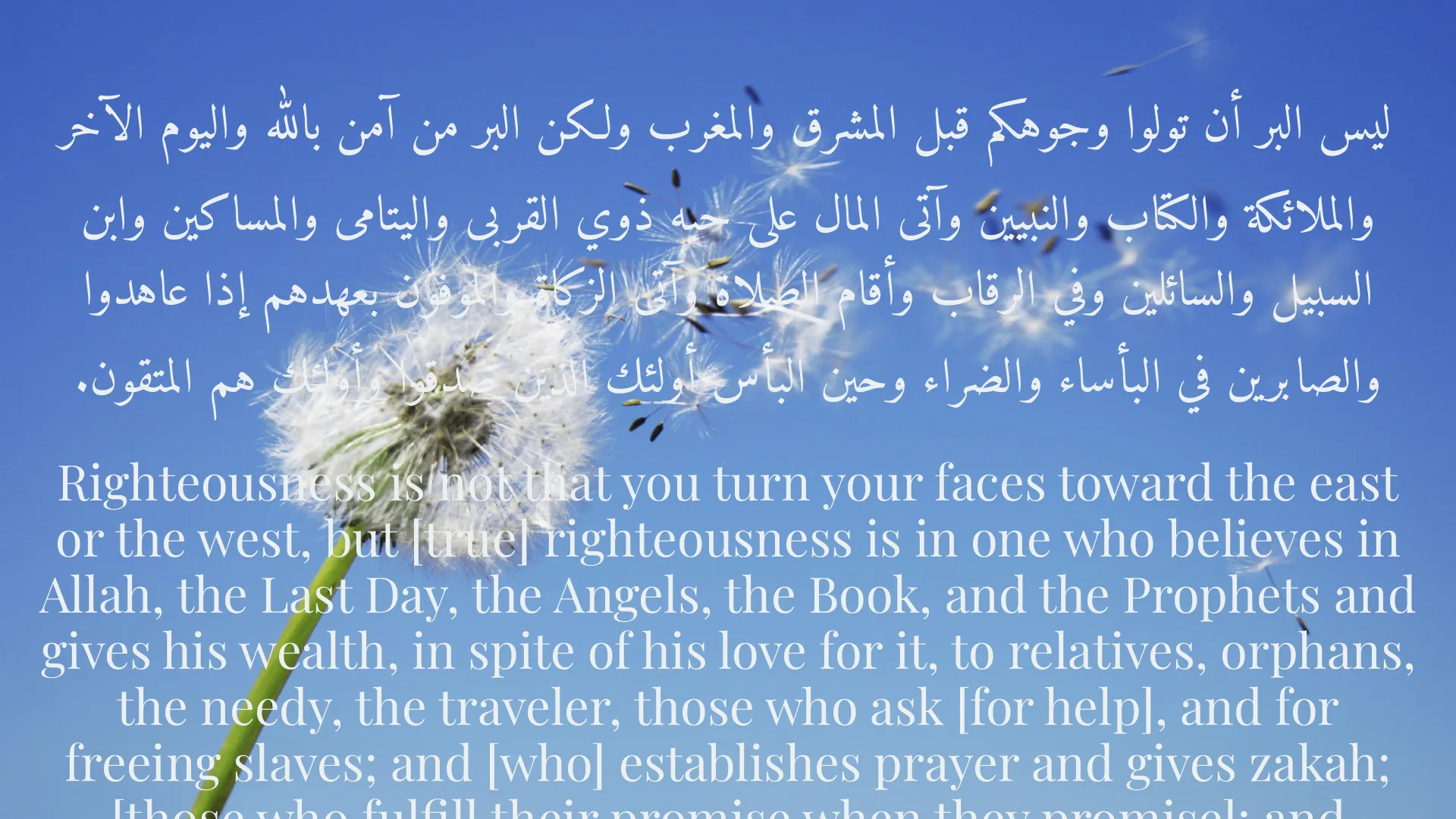
ليس البر أن تولوا وجوهكم قبل المشرق والمغرب ولكن البر من آمن بالله واليوم الآخر والملائكة والكتاب والنبيين وآتى المال على حبه ذوي القربى واليتامى والمساكين وابن السبيل والسائلين وفي الرقاب وأقام الصلاة وآتى الزكاة والموفون بعهدهم إذا عاهدوا والصابرين في البأساء والضراء وحين البأس أولئك الذين صدقوا وأولئك هم المتقون.
Righteousness is not that you turn your faces toward the east or the west, but [true] righteousness is in one who believes in Allah, the Last Day, the Angels, the Book, and the Prophets and gives his wealth, in spite of his love for it, to relatives, orphans, the needy, the traveler, those who ask [for help], and for freeing slaves; and [who] establishes prayer and gives zakah; [those who fulfill their promise when they promise]; and [those who] are patient in poverty and hardship and during battle. Those are the ones who have been true, and it is those who are the righteous.
Al-Baqarah : 177
يا أيها الذين آمنوا من يرتد منكم عن دينه فسوف يأتي الله بقوم يحبهم ويحبونه أشداء على الكفار رحماء بينهم تراهم ركعاً سجداً يبتغون فضلاً من الله ورضواناً.
O you who have believed, whoever of you reverts from his religion - Allah will bring forth a people He will love and who will love Him, [who are] humble toward the believers, mighty against the disbelievers, they strive in the cause of Allah and do not fear the blame of a blameworthy.
Al-Ma'idah : 54
Short Story
In ancient days, there was a man named Hasan, known for his compassion and love for others. Every day, he would help the poor and orphans with his wealth and felt a deep sense of happiness and satisfaction in life. One day, someone asked him, 'Why do you help others so much?' Hasan smiled and replied, 'Because I know that God loves compassionate people, and I want to be one of them.' His words inspired many friends to join him, and gradually, they began to do even more good deeds.