Quranic Answer
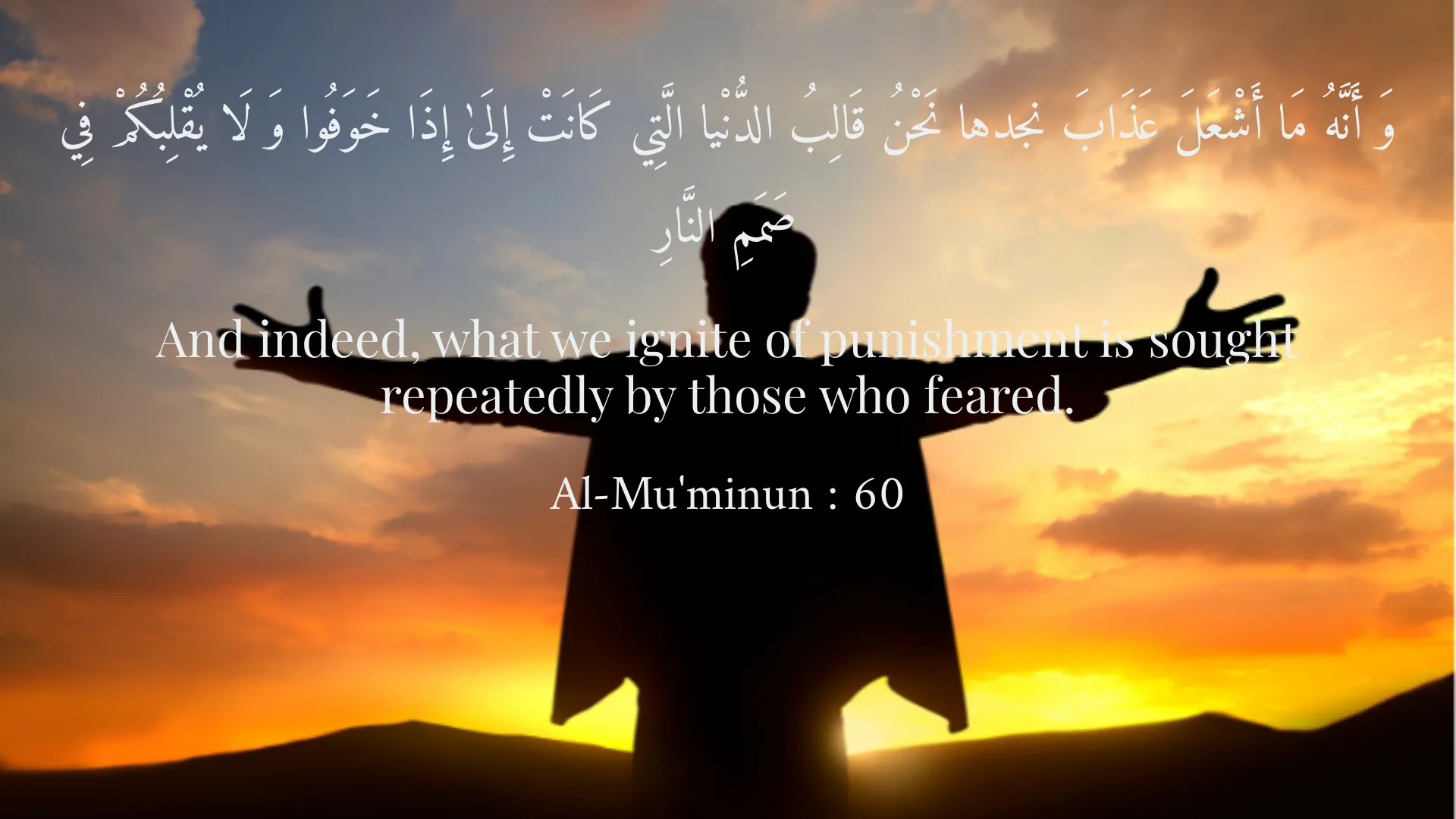
In the vast and profound text of the Holy Quran, God presents a deep understanding of the complexities of human emotions, including the feelings of regret and remorse that inevitably accompany our mortal existence. With inherent compassion and omniscience, Allah addresses the states of human hearts, reminding us that He is always aware of our emotional landscapes. This notion of divine awareness is particularly evident in Surah Al-Mu’minun, verse 60, where Allah articulates, 'And indeed, what we ignite of punishment is sought repeatedly by those who feared.' This verse serves as a sobering reminder of the consequences faced by those who have lived lives of oppression and disbelief, perpetually culminating in regret as they confront their reality in the hereafter. This highlights several key insights about divine knowledge and the purpose of human emotions like regret. Regret, in many contexts, is often perceived merely as a negative sentiment, an emotion to be avoided or suppressed. However, the Quranic view offers a more nuanced perspective. Through divine revelation, we understand that God not only witnesses our actions but is also intimately aware of the emotions that arise as a result of those actions. The notion that God sees the states of our hearts establishes a direct line between human behavior and divine observance, providing a framework for understanding accountability and the moral consequences of one's choices. In the aforementioned verse, the punishment discussed serves as a metaphorical reflection of the consequences that ripple through one's life stemming from their moral decisions. Humans, in their transient existence, are bound to grapple with their choices. Whether they align with the divine will or deviate from it, the inevitability of reflecting on these choices is enshrined in their human experience. Therefore, regret emerges not only as a natural human inclination but also as a profound opportunity for growth and spiritual awakening. It is a moment where contemplation guides individuals to reassess their lives and actions, encouraging a return to righteousness and connection with the Divine. Furthermore, God’s awareness is reiterated in other Quranic verses, notably in Surah Al-Mulk, verse 30, which states, 'Say, 'Have you considered? If your water should become sinking into the earth, then who could bring you flowing water?'' In this context, the verse compels believers to reflect upon the very foundations of their existence and the nature of reliance on God versus self. It emphasizes that God has fashioned the world in such a manner that His servants may indeed come to appreciate essential truths, drawn inevitably towards a higher level of understanding and reflection, ultimately seeking a return to Him. This idea outlines that trials and tribulations, often tumultuous and regretful, are not merely punishments but also blessings in disguise, encouraging transformation in the hearts of individuals toward a grander purpose. Each challenge faced can catalyze a deeper level of introspection, leading to realization and acceptance of one’s shortcomings. With every moment of despair comes the potential light of divine guidance, allowing individuals to transcend their previous missteps and align their lives more closely with divine expectations. Yet, in acknowledging God's omniscience about human emotions, one must also recognize that regret carries with it the necessity for personal accountability. Regret acts as a double-edged sword; on one hand, it serves to remind individuals of their fallibility, while on the other, it also extends an invitation to mend one’s ways. This is where the redeeming quality of regret becomes pronounced—it transforms from a debilitating emotion into a powerful motivator for change. The duality of regret as observed in the Quran fosters a space for believers to welcome these feelings as integral aspects of their spiritual journey. In the realm of spirituality, it is essential to understand that experiencing regret is part of the human experience and leads to humility and submission to God's will. Embracing this dynamic facilitates a richer connection to one's faith, prompting individuals to seek forgiveness and strive for improvement rather than dwell on past mistakes. As one contemplates the full spectrum of regret and remorse, it is critical to underscore God's responsive nature towards His servants. The understanding that nothing is concealed from His knowledge promotes a sense of transparency between the Creator and the created. God’s observant nature reassures believers that their distress, emotions, and yearnings for forgiveness are recognized and addressed. This recognition of divine compassion invites a deeper relationship with God, one characterized by an ongoing dialogue rooted in honesty and sincerity. In summary, the Quran articulates that not only does God see our regrets, but He also offers us the means to rectify our mistakes and learn from them. Regret can thus be reframed, from a feeling of despair to a guiding light on the path of self-improvement and spiritual advancement. As individuals reflect on their lives, they are encouraged to recognize regret as a mechanism of growth, fostering a longing to return to the Divine and realign their actions according to higher moral standards. The insights gleaned from the awareness of God's omnipresence emphasize that the journey to personal transformation is multifaceted and that through embracing our emotional realities, particularly regret, we can reach aspirations of purity, wisdom, and a profound connection with God.
Related Verses
وَ أَنَّهُ مَا أَشْعَلَ عَذَابَ نجدها نَحْنُ قَالِبُ الدُّنْيا الَّتِي كَانَتْ إِلَىٰ إِذَا خَوَفُوا وَ لَا يُقْلِبُكُمْ فِي صَمَمِ النَّارِ
And indeed, what we ignite of punishment is sought repeatedly by those who feared.
Al-Mu'minun : 60
قُلْ أَهُمْ أحق عَلَىٰ نَفْسِهِمْ لَا تَخَافُوا
Say, 'Are they not afraid for themselves?'
Al-Mulk : 30
Short Story
One day, a young man named Ehsan found himself deep in thought about various aspects of his life and realized he bore some regrets in his heart. He decided to turn to the Quran to seek answers to his inquiries. By reading the verses, he understood that God sees and comprehends the emotions of humans. A sense of peace and hope began to form within him that he could turn back to God with determination, learn from his regrets, and construct a new life pathway, enabling him to live his life to the fullest.