Quranic Answer
The Holy Quran, revered as the ultimate source of guidance for Muslims, is not only meant for adults but also serves as a profound guide for teenagers navigating the tumultuous journey of adolescence. This period is marked by significant changes—physical, emotional, and social—that play a crucial role in the development of a young person's identity. The teachings within the Quran are invaluable for teenagers as they seek to understand themselves and the world around them. Adolescence is a time of exploration, where individuals begin to form values, beliefs, and principles that will guide them throughout their lives. As they encounter various challenges, the Quran offers enduring wisdom to help them along this path. Referencing Surah Luqman, verse 13, we find Luqman's heartfelt advice to his son: "O my son! Do not associate anything with Allah; indeed, association is great injustice." This powerful statement serves as a reminder of the importance of monotheism and fosters a relationship of trust between the individual and God. For teenagers, this can translate into a foundational understanding of moral integrity—reinforcing that their choices should align with their beliefs and that they should keep their faith at the center of their decisions. Moreover, the Quran encourages self-reflection and awareness of one's surroundings. Adolescents often face peer pressure, making choices that may not align with their values. Therefore, passages; such as those found in Surah Al-An'am and Surah Al-Mu'minun, provide further insights into ethical behavior and personal conduct. The teachings encourage a life of virtue—emphasizing honesty, respect, and compassion toward others. In an ever-evolving world filled with distractions, the Quran emerges as a stable force, imparting the message that maintaining one's ethical compass is crucial to achieving true success and inner peace. In contrast to the challenges posed by society, including the influence of social media and the pressure to conform, the Quran can be seen as a sanctuary for teenagers. It offers clear guidance on navigating life's complexities, always steering them toward what is right and just. The notion of trust in God lies at the heart of this guidance. It reassures teenagers that they are never alone in their struggles; they can rely on a higher power for support and clarity during moments of doubt. Furthermore, understanding that trials and tribulations are part of life's journey encourages resilience—a quality much needed in today's fast-paced world. Additionally, imminent moral dilemmas and ethical choices become common as teenagers engage in more profound societal interactions. In Islamic teachings, the Quran emphasizes accountability; every individual is responsible for their actions, and this accountability becomes more pronounced during adolescence. The concept of accountability can help shape teenagers’ understanding that their choices, whether positive or negative, carry weight and repercussions. As such, the Quran serves as a constant reminder of the importance of making choices that align with moral values. This can enable teenagers to recognize the significance of their decisions and the impact they may have on themselves and others. Furthermore, the Quran can play an essential role in fostering emotional well-being among teenagers. Adolescence is a time characterized by emotional fluctuations, and young individuals often grapple with feelings of insecurity, anxiety, and stress. The Quran reminds them that they are essentially loved and valued by God. In this context, feeling supported and accepted through spiritual teachings can help alleviate some of the mental burdens faced by teenagers today. Verses stressing divine mercy, compassion, and the significance of prayer, such as Surah Al-Baqarah, verse 153, which mentions, "Indeed, seeking help through patience and prayer," can guide them in developing coping mechanisms for difficult situations. Moreover, the social dimension emphasized in the Quran helps teenagers understand the importance of community and relationships. Strong familial ties and friendships uphold the tenets of Islam, which teach the value of companionship, teamwork, and collaboration. Being part of a community provides teenagers with positive role models and support systems essential for their emotional and social development. The Quran underscores the need for mutual support and shared responsibility, which can combat isolation and loneliness—a growing concern for many teenagers today. Another critical aspect of the Quran's teachings is its encouragement of education and knowledge-seeking. The pursuit of knowledge is greatly emphasized, as illustrated in Surah Al-Mujadila, verse 11, which states, "Allah will raise those who have believed among you and those who were given knowledge, by degrees." Encouraging teenagers to be curious, explore, and learn helps them build intellectual resilience and discernment. This can be particularly impactful as they prioritize their education and strive for their aspirations while remaining grounded in their faith. In today's digital era, information is abundant, and teenagers are faced with numerous choices that can overwhelm them. The Quran provides a solid foundation to help navigate this sea of information effectively. Using it as a reference, teenagers can leverage the teachings to discern the credible from the trivial—understanding that not all sources are reliable. By doing so, they learn the importance of critical thinking, which will ultimately empower them to make informed and conscious decisions. In conclusion, the Holy Quran stands as a cornerstone for both spiritual guidance and personal development during a teenager's formative years. Its teachings offer invaluable insights, addressing the intricacies of morality, identity, relationships, and emotional resilience. Additionally, in a world that is continuously changing, the Quran serves as an eternal compass, providing directions for navigating the trials and tribulations of adolescence. By embedding these teachings into their lives, teenagers can cultivate not only deep spiritual awareness but also the essential life skills required to thrive as responsible, compassionate, and ethical individuals in a complex society. It is clear that the Quran is beneficial for teenagers, directing them along a righteous path toward a fulfilling and purposeful life.
Related Verses
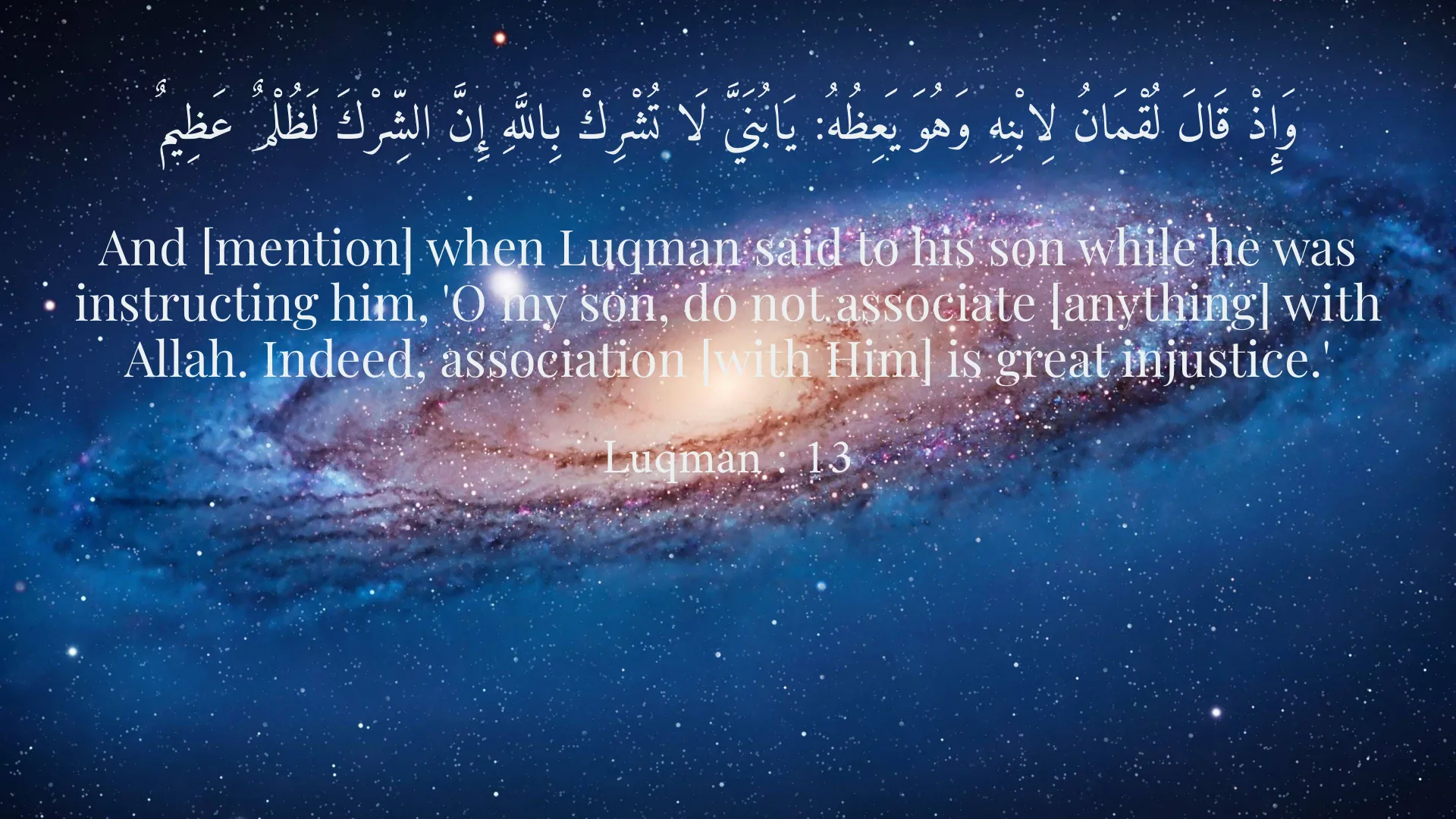
وَإِذْ قَالَ لُقْمَانُ لِابْنِهِ وَهُوَ يَعِظُهُ: يَابُنَيَّ لَا تُشْرِكْ بِاللَّهِ إِنَّ الشِّرْكَ لَظُلْمٌ عَظِيمٌ
And [mention] when Luqman said to his son while he was instructing him, 'O my son, do not associate [anything] with Allah. Indeed, association [with Him] is great injustice.'
Luqman : 13
وَقَالَ الْكُفَّارُ إِنْ هَذَا إِلَّا أَسَاطِيرُ الْأَوَّلِينَ
And the disbelievers said, 'This is not but a false tale of the ancients.'
Al-Mu'minun : 33
قُلْ تَعَالَوْا أَتْلُ مَا حَرَّمَ رَبُّكُمْ عَلَيْكُمْ أَلَّا تُشْرِكُوا بِهِ شَيْئًا وَبِالْوَالِدَيْنِ إِحْسَانًا
Say, 'Come, I will recite what your Lord has prohibited to you - that you not associate anything with Him, and to parents, good treatment.'
Al-An'am : 151
Short Story
A story from Saadi: One day, a group of teenagers was walking through a garden discussing life's issues. They recalled Quranic verses and began to share their thoughts. One said, "I've learned from Luqman that we must always trust in God." Another continued, "And we should respect our parents." Thus, they decided to follow the teachings of the Quran in their lives and gain new experiences together.