Quranic Answer
The Holy Quran, regarded as the definitive book of guidance and direction for humanity, transcends mere textuality to embrace divine wisdom that addresses the numerous existential questions and challenges of life. It serves as an invaluable resource that continues to enlighten individuals on moral, social, individual, and religious matters. The Quran is not merely a collection of verses; it is a comprehensive framework through which one can gain profound insights into the human condition, societal interactions, and the essence of spirituality. This article aims to explore the multi-faceted role of the Quran in addressing the fundamental questions of human existence and its invitation towards deeper understanding. One of the most significant contributions of the Quran is its ability to provide clear, comprehensive answers to essential human questions, such as the purpose of life, the guidelines for interpersonal behavior, and the pathways to achieving both worldly and spiritual bliss. The Quran stands as a timeless testament to these themes, urging individuals to reflect, contemplate, and engage with its teachings. In Surah Al-Ma'idah, verse 3, Allah declares unequivocally, "This day have I perfected your religion for you, completed My favor upon you, and have chosen for you Islam as your religion." This statement underscores the Quran's role as the most complete and final guide for humanity, encapsulating a way of life that encompasses all aspects of human existence. The perfecting of religion as asserted in the Quran reaffirms its timelessness and relevance across different cultures and epochs. The Quran is not merely an ancient manuscript; it is a living document that continues to inspire moral and ethical guidance in light of contemporary challenges such as economic inequality, social injustice, and intercultural tensions. Furthermore, its teachings encourage individuals to navigate these issues with wisdom, compassion, and empathy. Moreover, the Quran emphasizes the importance of knowledge; it does not only provide answers but also compels individuals to seek deeper understanding and engage in lifelong learning. In Surah Al-Mujadila, verse 11, Allah elevates the status of the knowledgeable, stating, "...Allah will raise those who have believed among you and those who were given knowledge, by degrees..." This highlights that acquiring knowledge is not only a means of personal development but also a form of worship that brings individuals closer to divine truth. In a world increasingly characterized by confusion and misinformation, the Quran stands as an unwavering beacon of wisdom. It invites individuals to scrutinize and question the world around them while simultaneously seeking answers through reflection and academic inquiry. There is an inherent acknowledgment in this divine text that while answers to many queries can be found within its verses, it also encourages a pursuit for knowledge beyond those boundaries. This invites a collaborative approach between the Quran and contemporary Islamic scholarship, urging believers to consult knowledgeable figures within their communities for interpretations and contextual understanding. Even with its immense scope of knowledge, it is essential to understand that the Quran may not explicitly address all specific and detailed issues that arise in modern life. For instance, contemporary scientific discoveries and technological advancements have opened new avenues of inquiry that did not exist in earlier times. As such, the Quran serves as a foundational guide, while the pursuit of answers to specific dilemmas often necessitates thoughtful reflection, extensive research, and consultation with scholars who can assist in relating Quranic principles to modern issues. Despite its necessity for consultation, the Quran remains an inspiring guide for individuals grappling with questions of identity, morality, purpose, and existential meaning. It serves as a roadmap leading believers toward a life of fulfillment, compassion, and righteousness. The practice of engaging with the Quran on a deeper level can radically transform an individual's perspective, fostering a more profound connection with Allah, enhancing social relationships, and nurturing a sense of community and belonging. In contemplation of the life's purpose, the Quran poses introspective questions that urge individuals to reflect upon their actions and motivations. It emphasizes accountability, both in this life and the hereafter, instilling a sense of responsibility towards oneself as well as others. This moral framework laid down in the Quran encourages adherents to adopt behaviors that foster harmony and justice, reinforcing the idea that human interactions are vital to achieving spiritual contentment and societal stability. Moreover, the Quran's emphasis on personal spiritual growth transcends mere adherence to rituals by promoting a path of inner development. It urges believers to cultivate mindfulness, sincerity in worship, and a genuine pursuit of spiritual enlightenment. The Quran serves as a compass that directs individuals toward aligning their actions with divine will, encouraging them to constantly strive for improvement and understanding. In conclusion, the Holy Quran stands as an enduring guide, rich in knowledge and wisdom, that has addressed multiple dimensions of human experience throughout centuries. It provides comprehensive insights into fundamental life questions while simultaneously promoting the value of knowledge and understanding. Though the Quran may not address every specific issue faced in modernity, its teachings inspire a journey toward knowledge and moral integrity. Thus, it serves as both a divine revelation and an enduring source of inspiration, guiding individuals to explore, learn, and grow in their lifelong quest for truth and understanding. In navigating the complexities of life, the Quran continues to be a wellspring of guidance for humanity, inviting believers to live a life rooted in faith, knowledge, and righteousness.
Related Verses
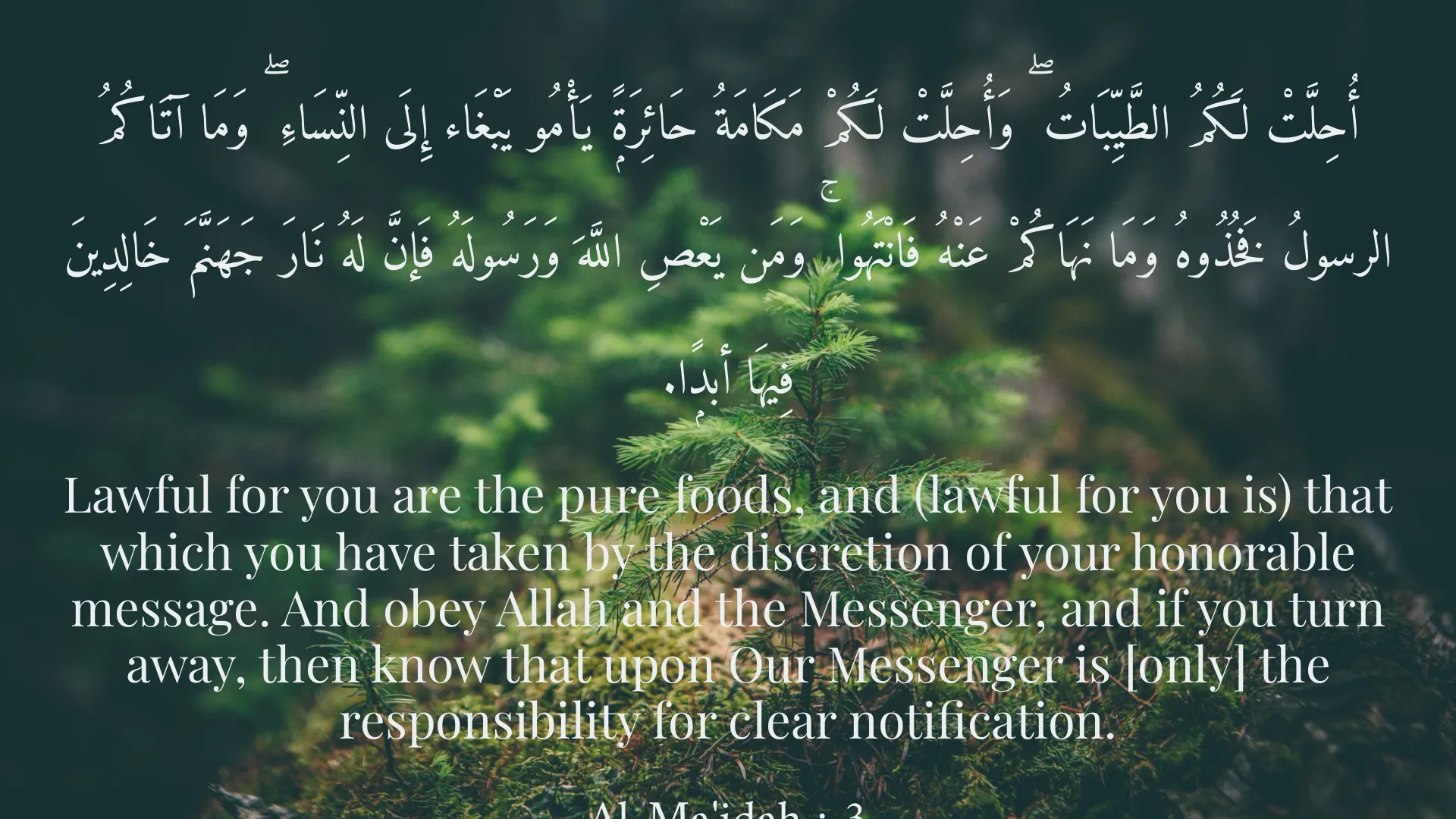
أُحِلَّتْ لَكُمُ الطَّيِّبَاتُ ۖ وَأُحِلَّتْ لَكُمْ مَكَامَةُ حَائِرَةًۭ يَأْمُو يَبْغَاء إِلَى النِّسَاءِ ۖ وَمَا آتَاكُمُ الرسولُ فَخُذُوهُ وَمَا نَهَاكُمْ عَنْهُ فَانْتَهُوا ۚ وَمَن يَعْصِ اللَّهَ وَرَسُولَهُ فَإنَّ لَهُ نَارَ جَهَنَّمَ خَالِدِينَ فِيهَا أبدًۭا.
Lawful for you are the pure foods, and (lawful for you is) that which you have taken by the discretion of your honorable message. And obey Allah and the Messenger, and if you turn away, then know that upon Our Messenger is [only] the responsibility for clear notification.
Al-Ma'idah : 3
يَا أَيُّهَا الَّذِينَ آمَنُوا إِذَا قِيلَ لَكُمْ تَفَسَّحُوا فِي الْمَجَالِسِ فَافْسَحُوا يَفْسَحِ اللَّهُ لَكُمْ ۖ وَإِذَا قِيلَ انْشُزُوا فَانْشُزُوا ۚ يَرْفَعِ اللَّهُ الَّذِينَ آمَنُوا مِنكُمْ وَالَّذِينَ أُوتُوا الْعِلْمَ دَرَجَاتٍ ۖ وَاللَّهُ بِمَا تَعْمَلُونَ خَبِيرٌ.
O you who have believed, when you are told, 'Space yourselves in assemblies,' then make space; Allah will make space for you. And when you are told, 'Arise,' then arise; Allah will elevate those who have believed among you and those who were given knowledge, by degrees.
Al-Mujadila : 11
Short Story
Once upon a time, a man walked through the marketplace filled with questions and life concerns. He remembered an ayah from the Quran that said: "Respect the rights of others and Allah's rights." He decided to look inward and ask God for help to find real answers in his heart. Gradually, he learned that life could become clearer and better if he adhered to the Quranic principles and values.